How carbon fiber sheets are used in surfboard construction, which specs to specify, and how to balance stiffness, feel, and repairability with fiberglass alternatives.
Introduction
A carbon fiber sheet for surfboard building is no longer an exotic experiment — shapers use it in stringers, deck patches, rail reinforcements and full-skin performance boards, and the question is no longer whether carbon works but where in the layup it earns its cost. Carbon sheet gives stiffness without the weight penalty of extra glass, but it also brings different bonding rules, a higher price per square meter, and a visual signature that some riders want visible and others want hidden. This guide covers the carbon fiber sheet uses that make sense on a board, how to choose carbon fiber sheet material by weave and weight, what thickness actually performs, how resin systems interact with carbon, what a panel costs, and how to source flat, cleanly cut sheets instead of warped offcuts.
Whether you are reinforcing a PU blank or building an all-carbon epoxy board, the sections below give you placement rules, numbers and sourcing checks that separate a stiff, light board from one that delaminates in a season.
Why Use a Carbon Fiber Sheet for Surfboard Construction
Carbon earns its place on a surfboard for one reason: specific stiffness. Pound for pound it resists flex far better than fiberglass, so you can add stiffness where the board flexes too much — under the feet, at the rails, along the stringer — without adding the glass and resin needed to get the same effect. The table summarizes where carbon sheet typically lands on a board.
| Zone | Carbon form | Typical thickness | What it changes |
|---|---|---|---|
| Stringer strip | UD or woven strip | 0.5-1.5 mm | Longitudinal stiffness, pop |
| Deck patch (feet area) | Woven sheet, biaxial | 0.2-0.4 mm | Resists dings, limits deck compression |
| Rail panels | Woven sheet, bias cut | 0.2-0.3 mm | Torsional rigidity, rail hold |
| Full skin (performance) | Woven sheet over core | 0.3-0.6 mm total | Max stiffness, minimum weight, premium price |
Most custom boards use carbon as a targeted reinforcement rather than a full skin: you get 80 percent of the stiffness benefit for a fraction of the material cost, and the board still looks like a board.
Carbon Fiber Sheet Uses Across Board Design
The practical carbon fiber sheet uses fall into four categories, each with a different payoff:
- Flex control: a carbon stringer or deck strip changes where the board bends, letting you stiffen the tail for drive or soften the nose for release without changing the blank.
- Ding resistance: a thin woven patch over the deck take-up zone doubles impact resistance in the area that hits the rocks and the board rack first.
- Weight-neutral upgrades: replacing two layers of 6 oz glass with one carbon layer holds stiffness while dropping 150-250 g per board.
- Repair reinforcement: cut carbon patches bridge cracks in EPS cores far better than glass alone, especially around fin boxes.
What does not work: carbon glued over a poorly shaped blank, or carbon under a thick cosmetic glass layer that isolates it from the load path. Carbon only stiffens what it is structurally coupled to.
Choosing Carbon Fiber Sheet Material: Weave, Weight and Thickness
Specifying the right carbon fiber sheet material is three decisions, in order of impact:
- Weave: plain weave (1/1) is stable and cheapest, twill (2/2) drapes better around rails and nose rocker, biaxial (+/- 45) resists torsion — rails want twill, flat deck patches accept plain weave.
- Areal weight: 160-200 gsm for deck patches, 200-300 gsm for stringers and rail panels; heavier cloth is not stiffer per layer once resin ratio drifts.
- Thickness after lamination: a 200 gsm twill with epoxy lands near 0.3 mm cured; budget 0.4-0.6 mm for a full-skin layup and check flex by feel, not by catalog number.
Match resin to the job: epoxy wets carbon cleanly and bonds to PU and EPS; polyester will not bond reliably to carbon and can attack some cores. If the shop laminates with polyester, carbon reinforcement needs an epoxy lam or a mechanical key.
Sizing Carbon Fiber Sheets and Cutting Them Clean
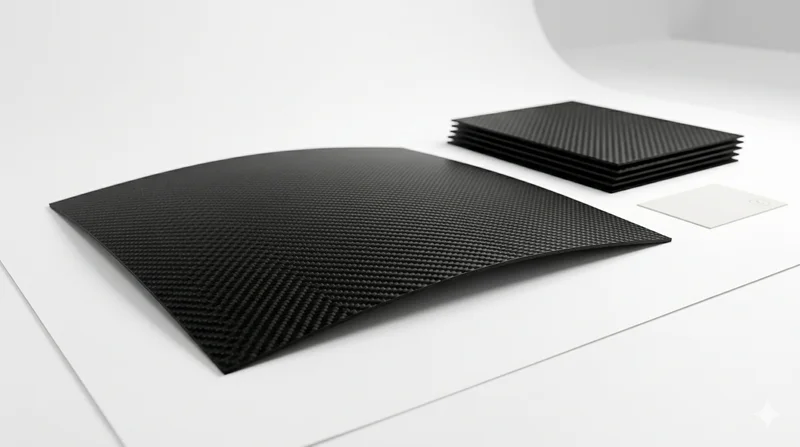
Carbon sheets arrive in standard panels — common sizes are 1000 x 1000 mm and 1200 x 500 mm — and the smart move is to buy flat stock and cut locally rather than accept someone's offcut. Cutting rules that matter on the water side of the board:
- Tools: diamond or PCD router bit, sharp scissors for thin cloth, shear for strip stock; dull tools fuzz the edge and leave loose fibers that wick resin.
- Dust control: carbon dust is conductive and nasty to breathe — cut with extraction, outside the lam room.
- Orientation: mark the roll direction on every piece; 0/90 alignment between deck patch and stringer keeps flex predictable.
- Seal edges: a thin epoxy wipe on cut edges locks fibers before lamination so they do not lift under the squeegee.
Order panels with a flatness tolerance stated — 1 mm over a meter is achievable and matters when you are laminating onto a rocker curve.
Cost of Carbon Fiber Sheet for a Board and Where to Buy
Ballpark material cost for one 6'2" performance shortboard:
- Targeted reinforcement (stringer + deck + rails): 25-45 USD of carbon sheet.
- Full-skin carbon layup: 90-160 USD of carbon plus epoxy, before labor.
- Glass-only equivalent for stiffness: 10-18 USD but 150-250 g heavier.
- Panel pricing: 200 gsm woven sheet runs 12-22 USD per square meter at 10 m2 volume, 8-14 USD at 50 m2.
Source from a supplier who stocks surfboard-grade cloth rather than industrial rollends: ask for the weave designation, areal weight tolerance (±3 percent), and a flatness check before shipping. Suppliers who cut to your template and edge-seal the pieces save you a lam-room afternoon and usually cost less than the offcuts you would otherwise buy.
Frequently Asked Questions
Will a carbon fiber sheet make my board too stiff?
Only if you oversize it. A single 0.3 mm deck patch under the feet stiffens the midsection without killing flex in the nose and tail; a full carbon skin with a heavy stringer does feel tighter, and riders who want a livelier board should keep carbon targeted rather than global. When in doubt, reinforce one zone first and ride it before committing the whole layup.
Can carbon fiber sheet be laminated with polyester resin?
Not reliably. Polyester does not wet or bond carbon the way epoxy does, and it can foam some EPS cores. Use epoxy for any carbon lamination, or if the rest of the board is polyester, isolate the carbon patch with an epoxy lam and a mechanical key so the repair does not pop off on impact.
How do I repair a ding over a carbon patch?
Cut back the damaged glass to sound laminate, sand the carbon to a feather edge without cutting the fibers, clean with acetone, then laminate a slightly larger carbon patch with epoxy and two offset glass layers. Wet out fully — dry carbon under a patch is the usual cause of a repair that looks fine and fails the next hard landing.
Conclusion
A carbon fiber sheet for surfboard work pays when you place it where the board actually flexes: a stringer strip for pop, a deck patch for ding resistance, rail panels for torsional hold, and epoxy resin throughout so the bond holds. Choose weave by geometry, weight by zone, and thickness by feel on a test panel instead of a catalog number, then source flat, edge-clean stock with a stated areal-weight tolerance. Done that way, carbon adds stiffness without the weight of extra glass and without the delamination surprises that come from bonding it wrong. To discuss sheet sizes, weave options and pricing for your next custom build, browse our carbon fiber sheet range or contact our team with your template and laminate schedule.
--- *Word count: 1128*Part of topic
Related Articles
- Carbon Fiber Sheet for Skis: Design, Specs and Sourcing
- Carbon Fiber Plate for Guitar: Design, Specs and Sourcing
- Carbon Fiber Tube for Speaker: Design, Specs and Sourcing
- Carbon Fiber Sheet for Yacht Interior: Design, Specs and Sourcing
- Carbon Fiber Sheet for Skateboard Deck: Design, Specs and Sourcing
- Carbon Fiber Plate for 3D Printer: Design, Specs and Sourcing | YongXian
Interested in Our Products?
Contact our team for competitive pricing and technical specifications.
Get a QuoteRelated Products
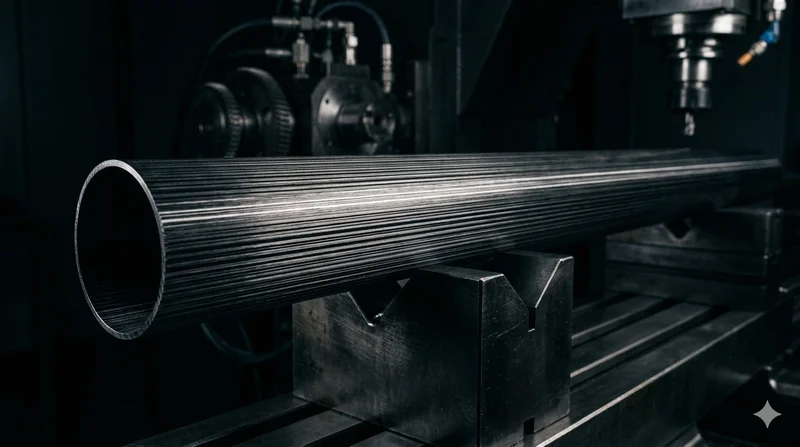
Round Carbon Fiber Tube — UD Unidirectional T700
Unidirectional (UD) round tube with all fibers aligned axially for maximum longitudinal stiffness. Ideal for applications requiring high bending rigidity with minimal weight, such as shafts, struts, and structural reinforcements.
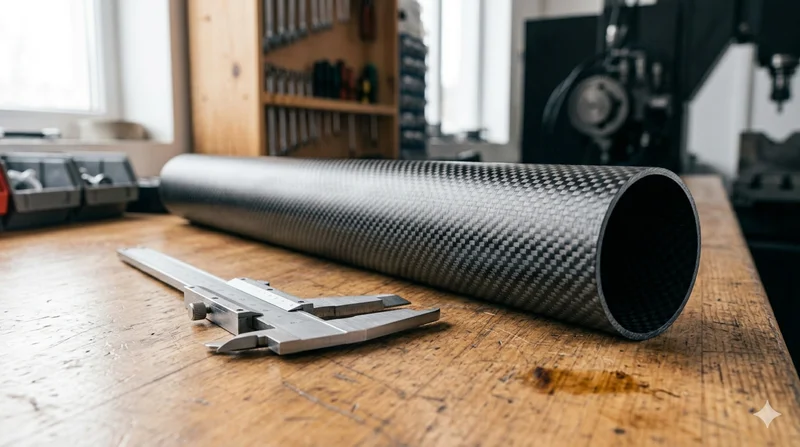
Round Carbon Fiber Tube — 3K Plain Weave T700
Standard round carbon fiber tube manufactured from Toray T700 grade fiber with 3K plain weave. Offers balanced strength and stiffness for general industrial applications including robotics, automation, sports equipment, and aerospace structures.
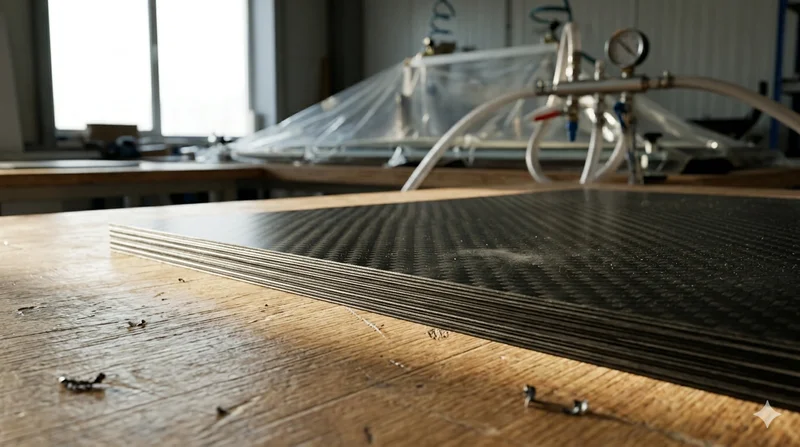
Carbon Fiber Plate — 3K Twill T700 3.0mm
Medium-thickness 3.0mm carbon fiber plate offering significantly higher load capacity while maintaining attractive 3K twill finish. Suitable for structural brackets, reinforcement plates, and load-bearing panels.
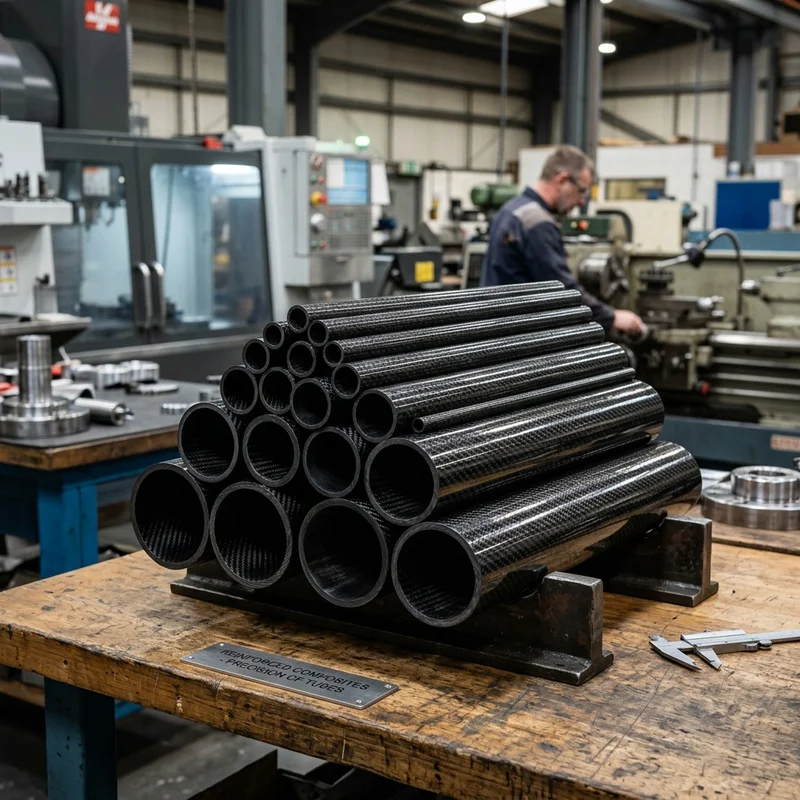
Round Carbon Fiber Tube — 3K Twill
Lightweight and ultra-stiff round tubes ideal for drone frames, robotics, and structural applications.
Carbon Fiber Plate — 3K Twill T700 1.5mm
Thin 1.5mm carbon fiber plate with 3K twill weave surface. Lightweight and stiff, commonly used for covers, panels, drone bodies, and applications requiring a premium aesthetic appearance.