A carbon fiber tube for speaker stands and enclosures gives an audio builder a rigid, lightweight structural member that resists the vibration modes that blur imaging and muddy bass. Audiophiles and OEM designers choose a carbon fiber tube for speaker projects because the high specific stiffness pus
Introduction
A carbon fiber tube for speaker stands and enclosures gives an audio builder a rigid, lightweight structural member that resists the vibration modes that blur imaging and muddy bass. Audiophiles and OEM designers choose a carbon fiber tube for speaker projects because the high specific stiffness pushes resonance above the audible band while keeping the stand or frame easy to move. This guide covers why tube properties matter in audio, the diameter and wall specs that actually control performance, practical carbon fiber tube uses in speaker systems, and how to source from a carbon fiber tube shop so the parts arrive straight, cut clean, and ready to assemble.
If you have ever built a stand that rang like a chime or an enclosure brace that added weight without tightening the bass, the sections below explain what went wrong and how to specify the next tube so the system sounds the way the driver was designed to sound.
Why Carbon Fiber Tube for Speaker Builds Works
In a loudspeaker, unwanted vibration has two paths: airborne energy from the driver excites the cabinet panels, and mechanical energy travels through the stand into the floor and back. A carbon fiber tube for speaker stands attacks the second path. Its axial modulus sits around 120 to 150 GPa at a density near 1.6 g/cm3, so a tube section can be far lighter than a steel or aluminum equivalent while deflecting less under the same load. Less deflection means higher natural frequency, and higher natural frequency means the stand stays out of the bass region where it would color the sound.
- High specific stiffness: roughly three times the stiffness per kilogram of 6061 aluminum, so a slim tube can carry a heavy bookshelf speaker without sway.
- Internal damping: the epoxy matrix dissipates vibration faster than metal, shortening ring-down after transients.
- Dimensional stability: near-zero axial thermal expansion keeps driver alignment steady across room temperature changes.
- Clean aesthetics: visible twill or plain weave under clear coat fits modern listening rooms without extra finishing work.
Carbon is not magic. A thin-walled tube with the wrong diameter can still ring, and a poorly bonded joint will transmit more energy than the material saves. The tube is one element in a damping system, not a replacement for it.
Diameter, Wall and Layup Specs
The table below maps common tube sizes to speaker duties. Values assume a roll-wrapped tube with a 0/90 or mixed layup; pultruded tubes are stiffer axially but weaker in hoop and torsion. Pick the smallest diameter that meets your deflection target, because mass at the top of a stand raises the center of gravity and makes the system easier to tip.
| Speaker Duty | Outer Diameter | Wall Thickness | Layup Note | Typical Use |
|---|---|---|---|---|
| Bookshelf stand column | 25 to 40 mm | 1.5 to 2.5 mm | 0/90 roll-wrapped | Single column per speaker, 5 to 15 kg load |
| Center channel riser | 20 to 30 mm | 1.0 to 2.0 mm | 0/90 or twill | Short risers under TV console |
| Subwoofer brace | 16 to 25 mm | 1.5 to 3.0 mm | Mixed 0/90 and ±45 | Internal cabinet bracing |
| Line array frame | 30 to 50 mm | 2.0 to 3.0 mm | Multi-axial wrap | Rigging members, touring systems |
| Desktop monitor stand | 19 to 25 mm | 1.0 to 1.5 mm | Twill cosmetic | Light monitors under 5 kg |
For stand columns, calculate deflection at the top plate under the speaker weight plus a lateral nudge; aim for a first bending mode well above 200 Hz. If the tube rings when tapped, add sand or damping foam inside rather than jumping to a thicker wall that adds mass without much stiffness gain.
Carbon Fiber Tube Uses in Audio Systems
Beyond stands, carbon fiber tube uses in audio show up anywhere a designer needs stiffness without mass or a clean cylindrical form. Knowing the category keeps the part spec tight.
- Speaker stands and risers: the most common use, where the tube isolates the cabinet from floor-borne vibration and looks intentional in the room.
- Internal cabinet bracing: short tubes bonded between panels break up panel resonance with less weight than MDF braces.
- Port tubes: smooth-bore carbon tubes give a consistent port diameter and resist the chuffing that rough cutouts create at high excursion.
- Microphone and lighting booms: in studio rigs, the same stiffness-to-weight argument carries booms that must not droop or transmit handling noise.
Carbon fiber tube strength is high in tension and bending along the fiber direction, but point loads at clamps can crush the wall. Use bonded or sleeved fittings rather than bare set screws, and spread clamp load with a split collar when you must attach hardware mid-span.
Sourcing from a Carbon Fiber Tube Shop
When you approach a carbon fiber tube shop, send five items: outer diameter, inner diameter or wall, cut length and quantity, finish (matte, gloss, or raw sanded for bonding), and whether ends need squaring or chamfering. A shop that receives all five can quote from stock or roll schedule in one pass; a shop that receives only "tube for speakers" will guess at a wall that may ring or sag.
Check straightness and roundness on arrival, especially for columns longer than 600 mm. Ask for a cut-to-length service rather than trimming on site, because abrasive cutting of carbon needs dust control and a diamond wheel; a clean shop cut also gives you square ends that seat flush on top and bottom plates. For small runs, buy from stock sizes to avoid roll minimums, and keep one spare tube per project for the inevitable mis-cut.
If you need a carbon fiber tube for sale in a cosmetic weave, confirm the outer ply is the weave you want and not a structural wrap hidden under paint. Ask for a sample photo of the actual finish, because "3K twill" can mean anything from a deep gloss to a dry matte depending on the clear coat.
Frequently Asked Questions
Does a carbon fiber tube for speaker stands really improve sound?
It can, when the stand is the weak link. A stiff, well-damped tube pushes stand resonance above the bass region and reduces energy returned to the cabinet, which can tighten low-frequency definition. If the cabinet itself is resonant or the speaker is already on a solid mass-loaded stand, the audible difference will be small.
What size carbon fiber tube should I use for a bookshelf speaker stand?
For a 5 to 15 kg bookshelf speaker, a 25 to 40 mm outer diameter tube with a 1.5 to 2.5 mm wall is a common starting point. Calculate the bending deflection at the top plate and confirm the first mode is well above 200 Hz. If the stand feels lively when tapped, add internal damping before moving to a larger diameter.
Can I cut and drill a carbon fiber tube at home?
Yes, with the right precautions. Use a diamond abrasive wheel or fine carbide tool, support the tube to prevent tear-out, and wear respiratory protection because carbon dust is harmful to inhale. Seal cut edges with a thin epoxy coat to keep fibers from lifting, and avoid point-loading holes with bare bolts.
Conclusion
A carbon fiber tube for speaker projects pays off when diameter, wall, and layup are matched to the load and the resonance target, not when you pick the lightest tube on the shelf. Use the stiffness advantage to push stand modes above the audible band, treat joints and clamps as carefully as the tube itself, and source cut-to-length parts with documented finish and straightness. When you are ready to spec a build, browse our carbon fiber tube range or contact our team with your diameter, wall, length, and finish requirements.
Part of topic
Related Articles
- Carbon Fiber Sheet for Yacht Interior: Design, Specs and Sourcing
- Carbon Fiber Sheet for Skateboard Deck: Design, Specs and Sourcing
- Carbon Fiber Plate for 3D Printer: Design, Specs and Sourcing | YongXian
- Carbon Fiber Rod for Construction Reinforcement: Design, Specs and Sourcing | YongXian
- Carbon Fiber Plate for Signage: Design, Specs and Sourcing | YongXian
- Carbon Fiber Sheet for Furniture: Design, Specs and Sourcing | YongXian
Interested in Our Products?
Contact our team for competitive pricing and technical specifications.
Get a QuoteRelated Products
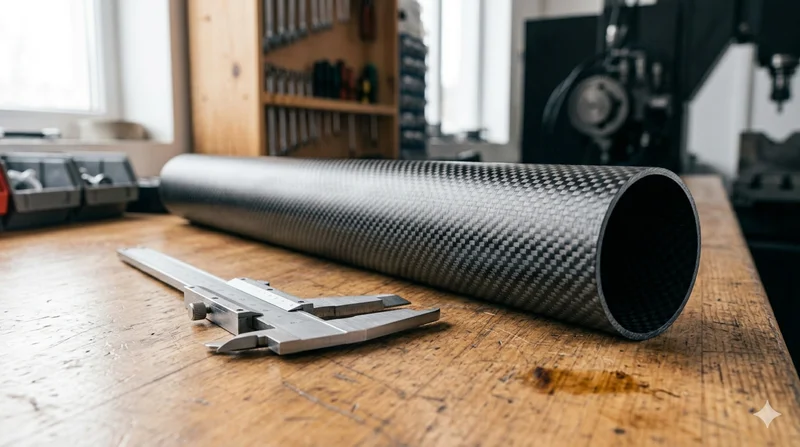
Round Carbon Fiber Tube — 3K Plain Weave T700
Standard round carbon fiber tube manufactured from Toray T700 grade fiber with 3K plain weave. Offers balanced strength and stiffness for general industrial applications including robotics, automation, sports equipment, and aerospace structures.
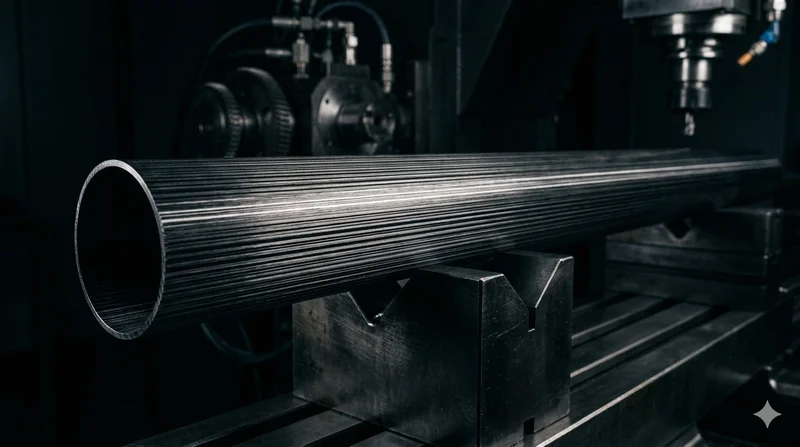
Round Carbon Fiber Tube — UD Unidirectional T700
Unidirectional (UD) round tube with all fibers aligned axially for maximum longitudinal stiffness. Ideal for applications requiring high bending rigidity with minimal weight, such as shafts, struts, and structural reinforcements.
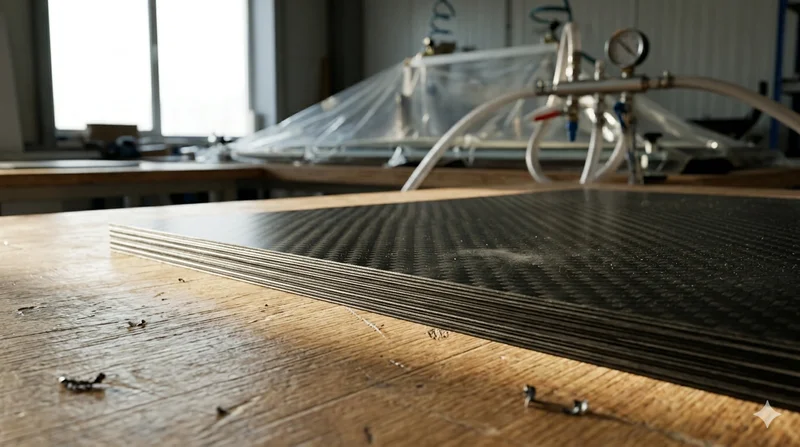
Carbon Fiber Plate — 3K Twill T700 3.0mm
Medium-thickness 3.0mm carbon fiber plate offering significantly higher load capacity while maintaining attractive 3K twill finish. Suitable for structural brackets, reinforcement plates, and load-bearing panels.
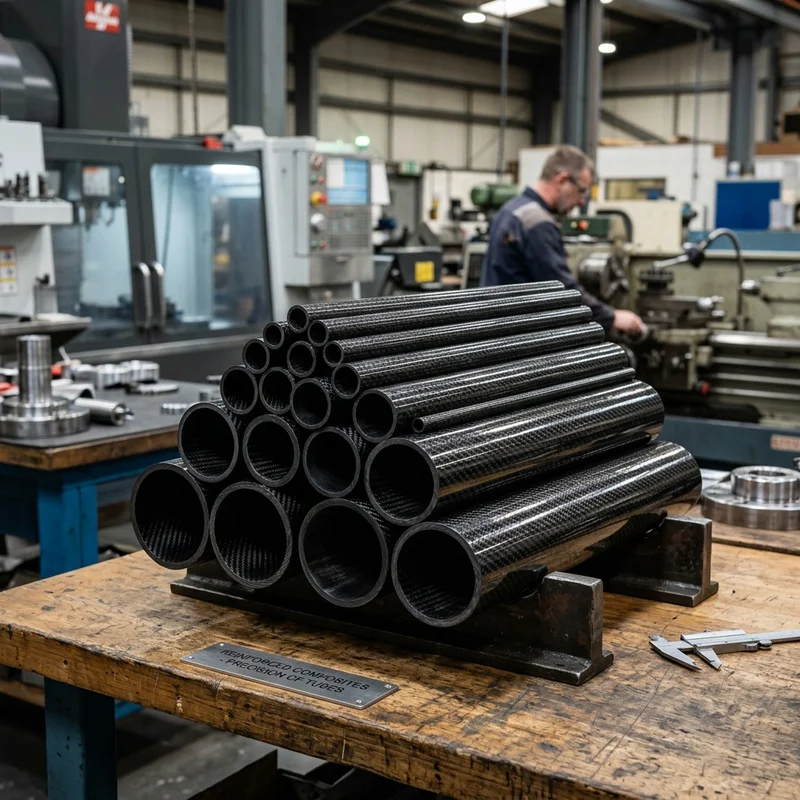
Round Carbon Fiber Tube — 3K Twill
Lightweight and ultra-stiff round tubes ideal for drone frames, robotics, and structural applications.
Square Carbon Fiber Tube — 3K Twill T700
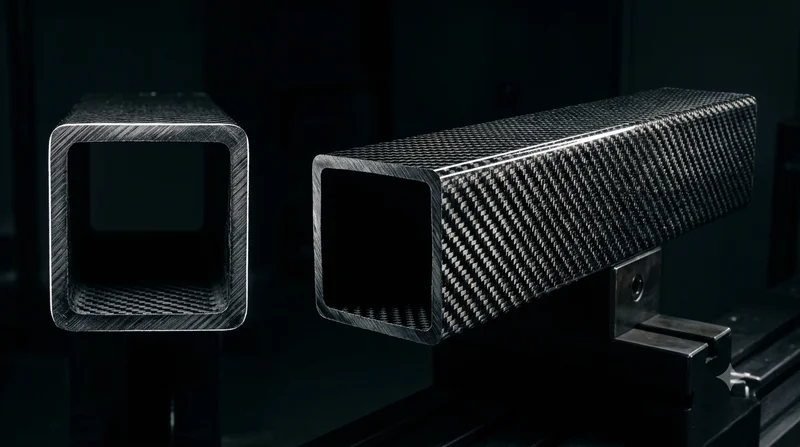
Square cross-section carbon fiber tube manufactured with 3K twill weave for torsional strength. Preferred for structural frames, trusses, and support columns where rectangular geometry offers design flexibility.