A carbon fiber sheet for furniture can be a smart material choice when a design needs a thin profile, high stiffness and a distinctive visual surface. Designers use carbon fiber sheets in tabletops, cabinet fronts, shelving accents, reception desks and custom interior pieces where traditional wood,
Introduction
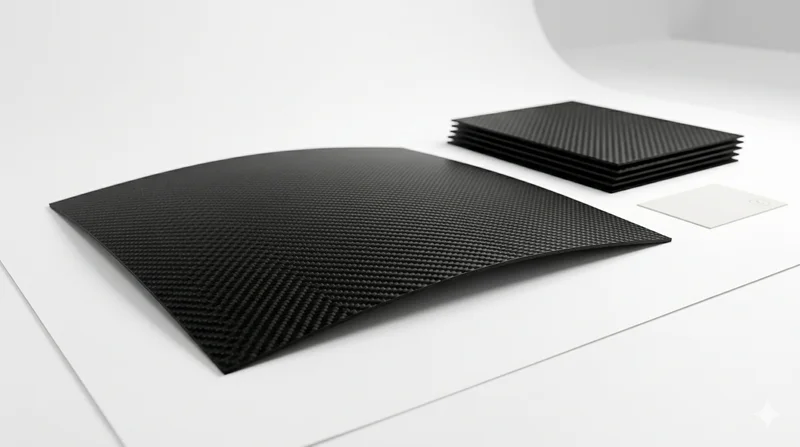
A carbon fiber sheet for furniture can be a smart material choice when a design needs a thin profile, high stiffness and a distinctive visual surface. Designers use carbon fiber sheets in tabletops, cabinet fronts, shelving accents, reception desks and custom interior pieces where traditional wood, metal or laminate may be too heavy or visually ordinary. This guide explains where carbon fiber sheet material works best in furniture, which specifications matter, and how to source panels that look good and hold up in daily use.
Furniture applications are different from aerospace or motorsports. The load case is usually lighter, but appearance, edge feel, scratch resistance and cost matter more. A successful project balances structural performance with finish quality, so the specification should cover both engineering and visual requirements.
Where carbon fiber sheets work in furniture design
Carbon fiber is not a replacement for every furniture material. It works best where its stiffness-to-weight ratio, thin section and surface pattern add real value. The table below shows common furniture uses and the practical reasons to choose carbon fiber.
| Furniture application | Typical carbon fiber sheet use | Key benefit | What to watch |
|---|---|---|---|
| Tabletops and desk surfaces | Thin solid sheet or carbon skin over core | Stiff, lightweight, premium look | Scratch resistance, edge finish |
| Cabinet doors and fronts | Decorative panel, bonded veneer sheet | Modern appearance, low added weight | Flatness, adhesive compatibility |
| Shelving and display panels | Solid plate or sandwich panel | High stiffness for span | Deflection, mounting method |
| Reception and retail fixtures | Visible carbon fiber sheets with matte/gloss finish | Brand impact, durable surface | Fingerprints, repairability |
| Custom interior accents | CNC-cut inserts, trim, covers | Precise shapes, consistent weave | Cost per part, edge sealing |
For large flat surfaces, a full carbon fiber plate can be expensive. Many furniture makers use a carbon fiber skin bonded to plywood, MDF, honeycomb or foam core. This keeps the visual effect while controlling weight and cost. The right structure depends on span, support points and how the user interacts with the piece.
Choosing the right carbon fiber sheet material
The best carbon fiber sheet material for furniture depends on whether the panel is structural, decorative, or both. A decorative cabinet front has different needs than a cantilever shelf.
- Solid carbon fiber sheet: good for small structural parts, trims and premium surfaces. It offers high stiffness but costs more per square meter.
- Carbon fiber sandwich panel: useful for larger spans where weight must stay low. The core selection affects stiffness, screw holding and edge detail.
- Carbon veneer over substrate: often the most practical choice for furniture. It provides the carbon look with lower material cost.
- Weave and finish: 3K twill is common for furniture because the pattern is recognizable and visually balanced. Matte finishes hide fingerprints better than gloss.
Also consider the environment. Furniture near windows may see UV exposure; kitchen or hospitality furniture may need resistance to cleaning chemicals and moisture. Ask for resin and coating information that matches the real use environment, not just a generic datasheet.
Specifications to include before sourcing
A clear specification prevents the common gap between a beautiful sample and a disappointing production batch. When sourcing carbon fiber sheets for furniture, include both performance and appearance requirements.
| Specification | What to define | Why it matters |
|---|---|---|
| Thickness | Nominal thickness and tolerance | Affects stiffness, fit and weight |
| Panel size | Finished size or oversize for CNC trimming | Controls yield and edge quality |
| Layup | 0/90, twill, quasi-isotropic, core structure | Determines strength and flatness |
| Surface finish | Gloss, matte, clear coat, UV protection | Controls look, wear and maintenance |
| Edge detail | Chamfer, round-over, sealed edge, banding | Improves safety and durability |
| Machining | CNC cutting, holes, pockets, inserts | Ensures parts fit during assembly |
Do not forget packaging and handling. Carbon fiber surfaces can scratch during transport, especially gloss panels. Ask suppliers to use protective film, separators and corner protection. For furniture brands, cosmetic damage in shipping is as costly as a dimensional defect.
Sourcing tips and quality checks
When evaluating a supplier, look for experience with visible composite panels, not just industrial carbon fiber parts. Furniture customers notice weave alignment, surface pinholes, edge quality and color consistency.
- Request a finished sample: evaluate the actual weave, gloss level, edge feel and coating quality under normal room light.
- Check flatness: large panels should be checked on a flat reference surface. Warped panels create installation problems.
- Review machining capability: if you need CNC-cut furniture parts, confirm hole accuracy, edge sealing and dust control.
- Confirm batch consistency: ask how the supplier controls weave orientation, resin batch and finish process across repeat orders.
- Test the final assembly: mount the panel in the real furniture frame and check load, vibration, cleaning and daily handling.
If you are ordering custom carbon fiber sheets, start with a prototype or first article. A small approval run helps confirm that the visual standard and the mechanical performance match the design intent before committing to volume.
Frequently Asked Questions
Is carbon fiber sheet good for furniture?
Yes, carbon fiber sheet can be excellent for furniture when used in the right places. It offers high stiffness, low weight and a distinctive appearance. It is especially useful for premium tabletops, decorative fronts, shelving accents and custom fixtures. For large or cost-sensitive parts, a carbon skin over a core is often more practical than a solid plate.
Can carbon fiber sheets be used for tabletops?
Carbon fiber sheets can be used for tabletops, either as solid panels or as a carbon surface bonded to a stable core. The key considerations are flatness, surface coating, scratch resistance and edge treatment. For daily-use tables, a durable clear coat and proper edge sealing help the surface stay attractive over time.
How do you maintain carbon fiber furniture panels?
Maintain carbon fiber furniture panels by cleaning them with a soft cloth and mild, non-abrasive cleaner. Avoid harsh solvents unless the coating supplier confirms compatibility. Matte finishes may hide minor wear better than gloss, but both benefit from protective pads, careful handling and avoiding sharp impacts on edges.
Conclusion
Using a carbon fiber sheet for furniture is most effective when the design takes advantage of its stiffness, low weight and visual character. Choose the right structure, define the finish and edge details, and work with a supplier who understands visible composite quality. If you are planning a custom furniture panel or component, browse our carbon fiber products or contact YongXian to discuss material options, samples and production support.
Part of topic
Related Articles
- Carbon Fiber Plate for Medical Device: Design, Specs and Sourcing | YongXian
- Carbon Fiber Sheet for Sporting Goods: Design, Specs and Sourcing | YongXian
- Carbon Fiber Sheet for Automotive Parts: Design, Specs and Sourcing | YongXian
- Carbon Fiber Rod for Fishing Rod Blank: Design, Specs and Sourcing | YongXian
- Carbon Fiber Plate for Robotics: Design, Specs and Sourcing | YongXian
- Carbon Fiber Tube for Bicycle Frame: Tube Sets, Joints and Sourcing | YongXian
Interested in Our Products?
Contact our team for competitive pricing and technical specifications.
Get a QuoteRelated Products

Round Carbon Fiber Tube — 3K Plain Weave T700
Standard round carbon fiber tube manufactured from Toray T700 grade fiber with 3K plain weave. Offers balanced strength and stiffness for general industrial applications including robotics, automation, sports equipment, and aerospace structures.

Round Carbon Fiber Tube — UD Unidirectional T700
Unidirectional (UD) round tube with all fibers aligned axially for maximum longitudinal stiffness. Ideal for applications requiring high bending rigidity with minimal weight, such as shafts, struts, and structural reinforcements.

Carbon Fiber Plate — 3K Twill T700 3.0mm
Medium-thickness 3.0mm carbon fiber plate offering significantly higher load capacity while maintaining attractive 3K twill finish. Suitable for structural brackets, reinforcement plates, and load-bearing panels.

Round Carbon Fiber Tube — 3K Twill
Lightweight and ultra-stiff round tubes ideal for drone frames, robotics, and structural applications.
Carbon Fiber Plate — 3K Twill T700 1.5mm
Thin 1.5mm carbon fiber plate with 3K twill weave surface. Lightweight and stiff, commonly used for covers, panels, drone bodies, and applications requiring a premium aesthetic appearance.