A carbon fiber plate for medical device applications is often selected when engineers need a strong, lightweight structure that does not block X-ray imaging. From orthopedic fixation components and surgical table accessories to imaging equipment supports and rehabilitation devices, a carbon fiber pl
Introduction
A carbon fiber plate for medical device applications is often selected when engineers need a strong, lightweight structure that does not block X-ray imaging. From orthopedic fixation components and surgical table accessories to imaging equipment supports and rehabilitation devices, a carbon fiber plate can combine stiffness, corrosion resistance and radiolucency in ways that metals struggle to match. This guide covers the material properties that matter, the design and machining details to specify, and the supplier checks that reduce risk before production.
Medical device projects carry extra responsibility. A plate that works in an industrial fixture may not be acceptable in a clinical environment if the resin system, surface finish, cleaning compatibility or documentation is incomplete. The right choice starts with the device function, patient contact category and imaging requirements, then moves to a controlled manufacturing specification.
Why use a carbon fiber plate in medical devices
The main reason teams choose a carbon fiber plate is radiolucency: carbon fiber composites allow X-rays to pass through with much less interference than aluminum, stainless steel or titanium. That can improve visibility during imaging-guided procedures and reduce artifacts around the device.
| Property | Carbon fiber plate | Aluminum | Stainless steel | Why it matters |
|---|---|---|---|---|
| Radiolucency | High | Low | Very low | Clearer X-ray or fluoroscopy images |
| Density | ~1.5-1.6 g/cm3 | ~2.7 g/cm3 | ~7.9 g/cm3 | Lighter devices and easier handling |
| Specific stiffness | High | Medium | Medium | Rigid support with less mass |
| Corrosion resistance | Good with suitable resin | Good with treatment | Good, grade dependent | Handles cleaning and clinical environments |
| Magnetic behavior | Non-magnetic | Non-magnetic | Some grades magnetic | Useful near imaging equipment |
A full carbon fiber plate is not automatically the best answer for every device. Metals may still be better for high-impact bearing surfaces, sharp threaded features, or low-cost disposable parts. The decision should be based on the full device requirement: imaging, load, sterilization, cleaning, service life and regulatory documentation.
Design specifications for a medical carbon fiber plate
For medical device applications, the drawing should define more than geometry. It should describe the material, finish and acceptance criteria clearly enough that two production lots behave the same way.
- Layup and orientation: use 0/90 or quasi-isotropic layups for balanced stiffness. Unidirectional layers can be efficient but should be balanced to avoid warping.
- Thickness and flatness: specify nominal thickness, tolerance and flatness, especially for plates used in imaging tables or mounting interfaces.
- Resin system: select an epoxy or other resin system compatible with the expected cleaning agents and temperature range. Request material data from the supplier.
- Surface finish: define matte, gloss, sealed or coated surfaces. A sealed surface can reduce fiber exposure after machining.
- Edge treatment: machined carbon fiber edges can be sharp. Specify chamfers, rounded edges or sealing for safe handling.
If the component may contact patients or be used in a sterile field, involve your regulatory and materials team early. The composite plate, coating, adhesive and machining process all affect the final device assessment. Do not treat material selection as only a purchasing task.
Machining and quality control for custom carbon fiber plate
A custom carbon fiber plate is usually CNC cut, drilled, slotted or milled from a cured laminate. Composite machining needs different controls than metal machining because fibers can fray, delaminate or generate fine dust.
| Process step | Key control | Risk if ignored |
|---|---|---|
| CNC cutting | Sharp diamond or abrasive tooling, proper feed | Frayed edges, delamination |
| Drilling | Backer support, correct drill geometry | Exit burrs, fiber pull-out |
| Countersinking | Depth control and tool wear checks | Poor fastener fit, surface damage |
| Edge sealing | Compatible sealant or coating | Exposed fibers, cleaning issues |
| Inspection | Dimensions, flatness, visual defects | Assembly problems, inconsistent quality |
Ask the supplier for first article samples and a dimensional report. For medical device programs, also ask how they separate composite dust from other materials, how they protect finished surfaces, and whether they can maintain lot traceability. A capable supplier should be able to explain their process controls clearly.
Sourcing a carbon fiber plate for medical device programs
When sourcing a carbon fiber plate for medical device use, evaluate the supplier as a manufacturing partner, not only a sheet vendor. The right supplier should understand both composite processing and the documentation expectations of controlled industries.
- Material traceability: request fiber, resin and batch records. Traceability supports quality investigations and device documentation.
- Process consistency: ask about cure cycles, thickness control, flatness checks and visual inspection criteria.
- Custom capability: confirm whether the supplier can provide custom carbon fiber plate cutting, drilling, edge sealing and protective packaging.
- Documentation: request material datasheets, test reports and inspection records relevant to your specification.
- Communication: a good supplier will ask about load case, imaging needs, cleaning environment and assembly method before quoting.
For early-stage projects, start with small prototype batches. Test the part in the actual assembly, including fasteners, covers, cleaning process and imaging conditions. This catches problems that a flat material datasheet cannot show.
Frequently Asked Questions
Why is a carbon fiber plate used in medical imaging equipment?
A carbon fiber plate is used in medical imaging equipment because it is radiolucent, meaning it allows X-rays to pass through with less interference than most metals. It also offers high stiffness and low weight, which helps create stable patient supports, positioning devices and equipment components without adding unnecessary mass.
Is carbon fiber plate safe for medical devices?
Carbon fiber plate can be suitable for medical devices when the right resin system, surface finish and manufacturing controls are used. Safety depends on the application, including whether there is patient contact, exposure to cleaning agents, or sterilization requirements. Always evaluate the complete component and confirm documentation with your supplier and regulatory team.
Can a custom carbon fiber plate be machined to tight tolerances?
Yes. A custom carbon fiber plate can be CNC machined to tight tolerances when the supplier uses proper tooling, fixturing and inspection. The achievable tolerance depends on thickness, geometry, hole size and layup. For critical interfaces, define tolerances, flatness and edge quality clearly in the drawing and request first article inspection.
Conclusion
Selecting a carbon fiber plate for medical device use requires more than choosing a lightweight material. You need to balance radiolucency, stiffness, finish, machining quality and documentation. Define the application clearly, specify the layup and surface requirements, and qualify a supplier who can provide consistent custom carbon fiber plate production. To review available options or discuss a custom project, visit our carbon fiber products page or contact YongXian for technical support and sourcing.
Part of topic
Related Articles
- Carbon Fiber Sheet for Furniture: Design, Specs and Sourcing | YongXian
- Carbon Fiber Sheet for Sporting Goods: Design, Specs and Sourcing | YongXian
- Carbon Fiber Sheet for Automotive Parts: Design, Specs and Sourcing | YongXian
- Carbon Fiber Rod for Fishing Rod Blank: Design, Specs and Sourcing | YongXian
- Carbon Fiber Plate for Robotics: Design, Specs and Sourcing | YongXian
- Carbon Fiber Tube for Bicycle Frame: Tube Sets, Joints and Sourcing | YongXian
Interested in Our Products?
Contact our team for competitive pricing and technical specifications.
Get a QuoteRelated Products

Round Carbon Fiber Tube — 3K Plain Weave T700
Standard round carbon fiber tube manufactured from Toray T700 grade fiber with 3K plain weave. Offers balanced strength and stiffness for general industrial applications including robotics, automation, sports equipment, and aerospace structures.

Round Carbon Fiber Tube — UD Unidirectional T700
Unidirectional (UD) round tube with all fibers aligned axially for maximum longitudinal stiffness. Ideal for applications requiring high bending rigidity with minimal weight, such as shafts, struts, and structural reinforcements.

Carbon Fiber Plate — 3K Twill T700 3.0mm
Medium-thickness 3.0mm carbon fiber plate offering significantly higher load capacity while maintaining attractive 3K twill finish. Suitable for structural brackets, reinforcement plates, and load-bearing panels.

Round Carbon Fiber Tube — 3K Twill
Lightweight and ultra-stiff round tubes ideal for drone frames, robotics, and structural applications.
Carbon Fiber Plate — 3K Twill T700 1.5mm
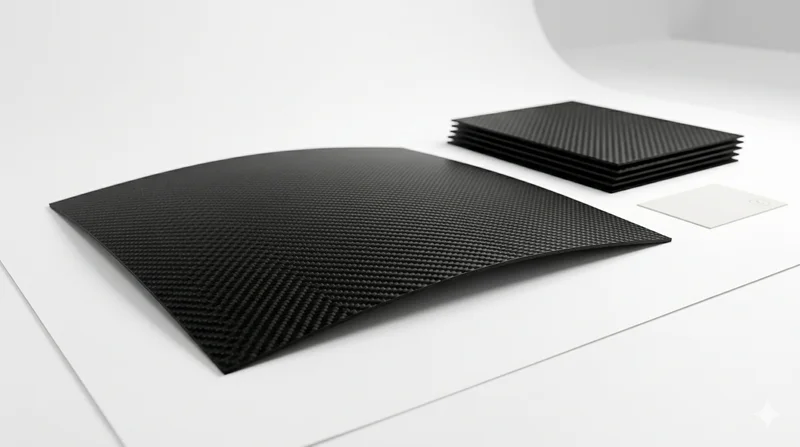
Thin 1.5mm carbon fiber plate with 3K twill weave surface. Lightweight and stiff, commonly used for covers, panels, drone bodies, and applications requiring a premium aesthetic appearance.