A carbon fiber plate polishing service takes a CNC-cut, slightly resin-rich plate and returns a flat, glossy, dimensionally stable panel ready for displays, fixtures, or visible structure. Buyers usually request polishing after carbon fiber plate cutting, but the operation is far more than cosmetics
Introduction
A carbon fiber plate polishing service takes a CNC-cut, slightly resin-rich plate and returns a flat, glossy, dimensionally stable panel ready for displays, fixtures, or visible structure. Buyers usually request polishing after carbon fiber plate cutting, but the operation is far more than cosmetics: it removes a controlled layer from the face, tightens surface roughness by an order of magnitude, and interacts directly with the carbon fiber plate thickness you designed the joint around. This guide covers the full process from prep to final buff, quantifies material removal, explains edge and carbon fiber plate custom finish options, and gives the cost numbers shops actually quote per square meter.
If you have ever received plates that looked mirror-bright on the sample but dull in production, or polished faces that no longer sat flat against a fixture, the sections below explain what went wrong and how to specify the finish so the second order lands right.
What a Carbon Fiber Plate Polishing Service Covers
Polishing in this context means improving the cured face of a flat plate: leveling the resin-rich skin, closing pinholes from the mold or vacuum bag, and bringing face roughness down from as-cut values to a specular or satin finish. It is different from cutting to size, machining countersinks, or edge profiling, although all of them often appear on the same work order.
- Face leveling: removing ridges, bag wrinkle marks, and peel-ply texture from the molded surface.
- Pinhole closure: filling micro-voids in the resin layer so gloss does not read as pitting under showroom light.
- Roughness reduction: taking face Ra from roughly 3 to 6 micrometers down to 0.4 to 0.8 micrometers.
- Thickness control: removing a predictable 0.05 to 0.15 mm per face across the full polished area.
What polishing does not do is fix waviness from a bad cure, straighten a bowed plate, or restore thickness that an earlier aggressive grind already removed. Those need re-manufacture, not another pass on the buffing line.
Carbon Fiber Plate Cutting Before the Polish
Sequence matters: cut first, polish second. After carbon fiber plate cutting on a CNC router or waterjet, edges are square but the face near the cut can show micro-chipping and exposed fiber; polishing before final sizing would grind those defects into the finish instead of removing them. Face both sides, break the edges with fine abrasive paper, and only then mount the plate for face polishing.
Flatness tolerance also interacts with polish. If you order plates at nominal thickness and then polish one face, the opposite face stays where it was while the polished side drops, which is fine for cosmetic panels. If the plate must register flat against a mating surface after polishing, specify finished thickness after polish, not before, so the shop does not deliver a panel that is both thin and out of flat.
Process Steps by Carbon Fiber Plate Thickness
The table below is a standard manual-to-semi-automatic sequence used on flat carbon fiber plates. Material removed is cumulative per face; Ra values are typical measured results on resin-rich surfaces, not laboratory ideals. Thin plates under 2 mm get a shorter, gentler sequence to avoid sand-through.
| Step | Abrasive / Tool | Target Ra | Face Removed | Purpose |
|---|---|---|---|---|
| 1. Prep | Diamond or carbide end mill, 240 grit paper | as-cut | 0.00 | True the face, knock down burrs |
| 2. Fill | Low-shrink epoxy paste | as-cut | 0.00 | Close pinholes and bag marks |
| 3. Rough wet sand | 180 grit, wet, crosshatch | 3.2-6.3 um | 0.05-0.08 | Level ridges and filler |
| 4. Medium wet sand | 400 grit, wet, rotated 90 degrees | 1.6-3.2 um | 0.02-0.04 | Remove 180 grit scratches |
| 5. Fine wet sand | 800 grit, wet | 0.8-1.6 um | 0.01-0.02 | Prepare for compound |
| 6. Buff | Cloth wheel + polishing compound | 0.4-0.8 um | 0.00-0.01 | Specular or satin gloss |
| 7. Protect (optional) | Clear UV coat, sprayed | 0.4-0.8 um | +0.02-0.04 | Lock gloss, block yellowing |
Total face loss on steps 1 through 6 lands near 0.08 to 0.15 mm, which is why polished plates are often ordered 0.2 mm oversize on carbon fiber plate thickness when the fit is critical. Skipping the fill step is the most common shortcut: it saves an hour and leaves pinholes that scatter light and read as defects under display lighting.
Carbon Fiber Plate Custom Edge and Surface Finishes
Buyers rarely need only a polished face. A carbon fiber plate custom order usually pairs the face finish with edge work and a specified gloss level, because the edge is what the customer sees first on a framed panel.
- Edge profiles: rounded, chamfered, or pencil edges after face polish, cut with a diamond wheel and hand-deburred.
- Gloss grades: mirror above 90 gloss units, satin around 40 to 60, matte under 20 with a fine orbital scuff.
- One-side vs two-side: bonding faces often stay matte for adhesive bite while the visible face goes mirror.
- Protective film: applied after final buff so the polished face survives shipping and installation.
Specify gloss with a number or a reference sample, not the word "shiny." Shops reading a numeric target can choose the grit path that hits it; shops reading "shiny" will guess, and the guess shows up at inspection.
Cost, Lead Time and How to Quote
Shop pricing for plate polishing tracks labor time more than material. Small-batch manual polish on plates up to 300 by 300 mm typically runs 12 to 35 USD per square meter for a full six-step face finish, with setup adding 40 to 80 USD per batch. Automated line polishing drops per-unit cost about 25 to 30 percent above 50 square meters but adds fixture cost. Lead time is usually 4 to 8 working days inside a normal plate order; polish-only rework on panels you already received adds about a week plus return freight.
When you request a quote from a carbon fiber plate polishing service, send four things: finished thickness with tolerance, required Ra or gloss number with a reference sample, one-side or two-side polish, and annual volume. Shops that receive all four answer in one round; shops that receive only "please polish" answer with assumptions you will discover at inspection.
Frequently Asked Questions
How much thickness does a carbon fiber plate polishing service remove?
Expect roughly 0.08 to 0.15 mm off each polished face through a full wet-sand and buff sequence, before any optional clear coat. If your stacking tolerance is tighter than 0.1 mm, order the plate oversize and treat polishing as a sizing operation, or specify a maximum finished thickness and let the shop choose the grit path that hits it.
Can a polished plate still be cut to final size afterward?
Yes, but true the faces after polish and re-deburr, because the buff can round an edge slightly and a fresh cut will expose raw laminate again. If both face finish and tight outline matter, finish the outline first, mask the polished zone, and only touch the faces afterward.
Is a mirror polish worth it for machine fixture plates?
Usually not. Fixtures care about flatness, thickness control, and scratch resistance, not gloss; a fine 800-grit satin finish delivers the dimensional accuracy at half the labor cost. Save full mirror polish for visible product panels, instrument bezels, and anything a customer will hold in their hand.
Conclusion
A carbon fiber plate polishing service is a controlled material-removal process, not a beauty pass: complete carbon fiber plate cutting first, fill before you sand, walk the grit progression without skipping, expect 0.08 to 0.15 mm of face loss per side, and keep every structural ply intact so stiffness stays at spec. Specify finished thickness, target Ra or gloss, one-side or two-side polish, and volume when you approach a shop, and you will get a quote you can compare instead of a guess you have to inspect your way out of. To review polished plate stock, tolerance options, and finishing services, browse our carbon fiber plate range or contact our team with your drawing and required gloss.
Part of topic
Related Articles
- Carbon Fiber Tube Polishing: Process, Tolerance and Cost
- Carbon Fiber Rod Diameter Sizes: Standard Specs and Selection
- Carbon Fiber Plate Thickness Chart: Standard Sizes and Selection
- Carbon Fiber Scrap Buyers: Channels, Pricing and Notes | YongXian
- Carbon Fiber Plate Waste Recycling: Process, Yield and Economics
- Carbon Fiber Sheet Recycling Service: Process, Yield and Economics
Interested in Our Products?
Contact our team for competitive pricing and technical specifications.
Get a QuoteRelated Products

Carbon Fiber Robotic Arm Tube — High-Stiffness Lightweight Replacement
Precision-wound carbon fiber tubes for robotic arm links, replacing steel or aluminum in collaborative robots (cobots) and industrial manipulators. Achieve 3× the specific stiffness of aluminum with significant weight reduction, enabling faster acceleration and higher payload capacity.
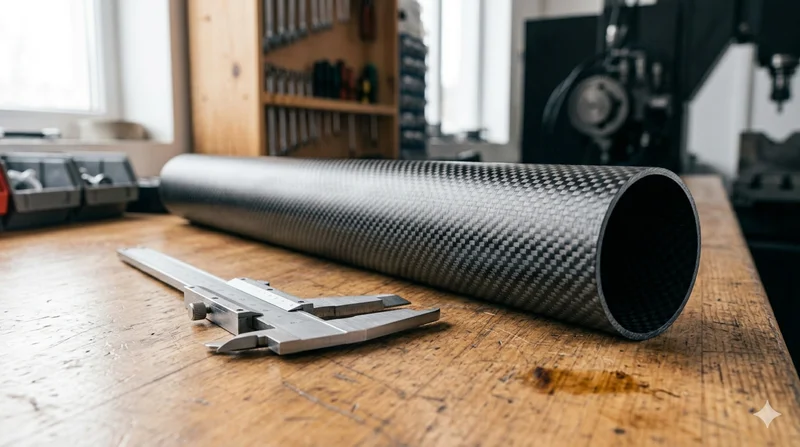
Round Carbon Fiber Tube — 3K Plain Weave T700
Standard round carbon fiber tube manufactured from Toray T700 grade fiber with 3K plain weave. Offers balanced strength and stiffness for general industrial applications including robotics, automation, sports equipment, and aerospace structures.
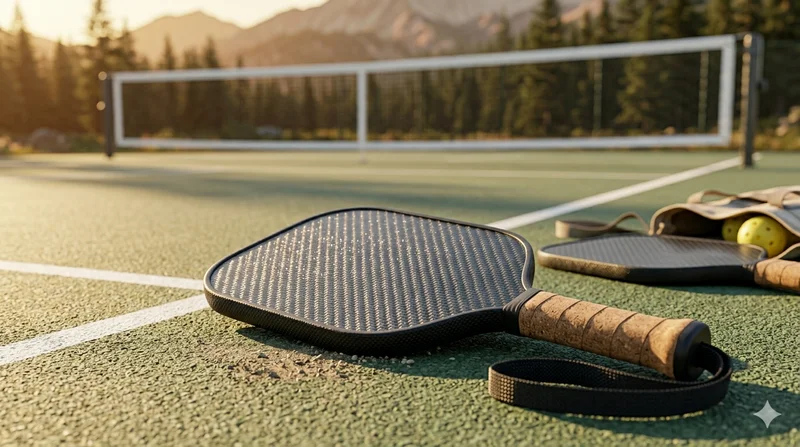
Carbon Fiber Pickleball Paddle
High-performance pickleball paddle with Toray T700 carbon fiber face and polypropylene honeycomb core. Delivers excellent power-to-weight ratio, spin generation, and vibration dampening for competitive play.
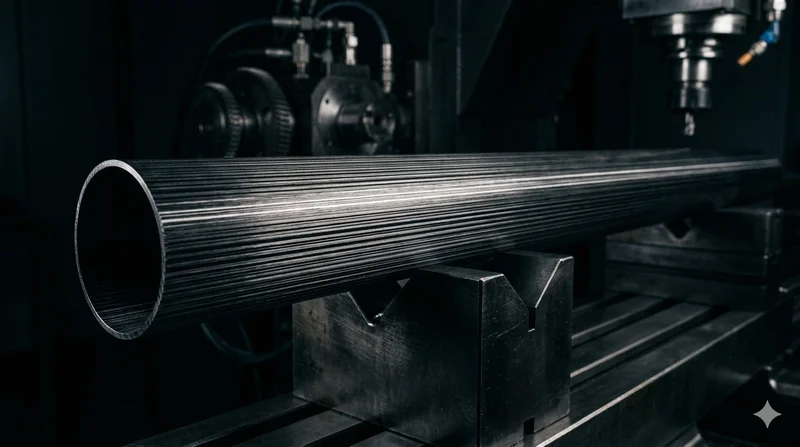
Round Carbon Fiber Tube — UD Unidirectional T700
Unidirectional (UD) round tube with all fibers aligned axially for maximum longitudinal stiffness. Ideal for applications requiring high bending rigidity with minimal weight, such as shafts, struts, and structural reinforcements.
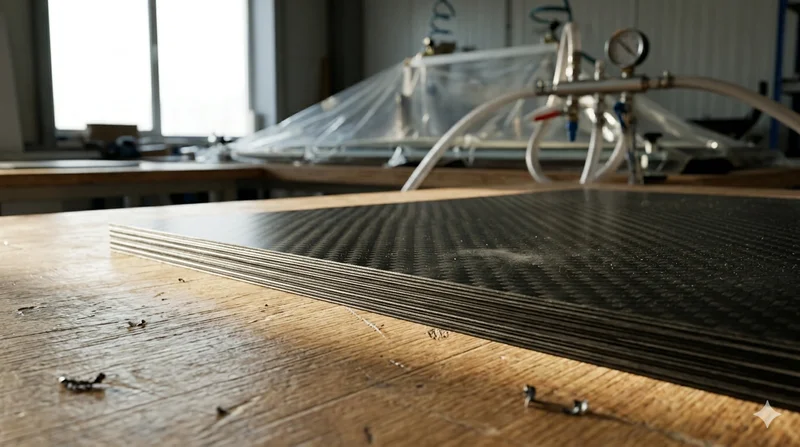
Carbon Fiber Plate — 3K Twill T700 3.0mm
Medium-thickness 3.0mm carbon fiber plate offering significantly higher load capacity while maintaining attractive 3K twill finish. Suitable for structural brackets, reinforcement plates, and load-bearing panels.