The carbon fiber plate thickness chart is the first thing most buyers check when they specify a laminate sheet for a structural part, a cosmetic cover, or a machining blank. Standard stock plates run from 0.5 mm decorative skins up to 20 mm structural slabs, and each step in the carbon fiber plate t
Introduction
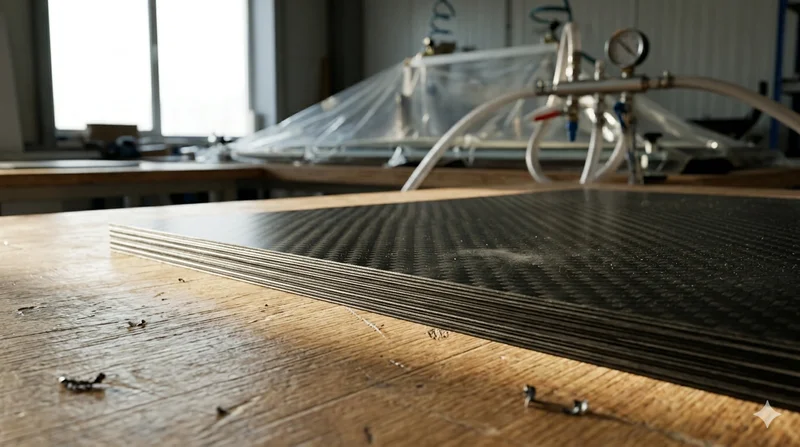
The carbon fiber plate thickness chart is the first thing most buyers check when they specify a laminate sheet for a structural part, a cosmetic cover, or a machining blank. Standard stock plates run from 0.5 mm decorative skins up to 20 mm structural slabs, and each step in the carbon fiber plate thickness range changes stiffness, weight, cost, and machining time in predictable ways. This guide lays out the standard sizes, shows how thickness drives mechanical behavior, and gives a clear selection framework so you can match a full carbon fiber plate to the load case instead of guessing from a catalog photo.
Whether you are cutting brackets for a robot cell or ordering flat stock for a tooling fixture, the numbers below turn a vague request like "make it strong enough" into a specification a factory can quote without a week of email.
Carbon Fiber Plate Thickness Chart: Standard Stock Range
The table below is the working carbon fiber plate thickness chart used for common stock plates. Values assume a standard 3K twill or plain-weave laminate cured under press or autoclave, with density near 1.6 g/cm3 and fiber volume around 60 percent. Weight is per square meter, so you can multiply by your panel area to estimate shipping load and handling requirements.
| Thickness (mm) | Weight (kg/m2) | Typical Tolerance | Common Use |
|---|---|---|---|
| 0.5 | 0.8 | +/- 0.05 | Cosmetic skins, RC models, overlays |
| 1.0 | 1.6 | +/- 0.08 | Covers, drone plates, display panels |
| 1.5 | 2.4 | +/- 0.08 | Brackets, enclosures, gimbal parts |
| 2.0 | 3.2 | +/- 0.10 | Machine guards, jigs, brackets |
| 3.0 | 4.8 | +/- 0.12 | Structural brackets, fixtures |
| 5.0 | 8.0 | +/- 0.15 | Tooling plates, vacuum tables |
| 8.0 | 12.8 | +/- 0.20 | Heavy fixtures, load plates |
| 10.0 | 16.0 | +/- 0.25 | Test rigs, base plates |
| 12.0 | 19.2 | +/- 0.30 | High-load fixtures, mold bases |
| 20.0 | 32.0 | +/- 0.40 | Heavy tooling, reference slabs |
Stock sheet sizes usually pair with these thicknesses: 500 x 500 mm, 1000 x 1000 mm, and 1200 x 2400 mm are the three most common formats. Thicker plate above 10 mm is often sold cut-to-size rather than full sheet, because stiffness makes full sheets hard to handle and expensive to ship flat.
How Plate Thickness Drives Stiffness and Weight
Bending stiffness of a plate scales with the cube of thickness. Doubling thickness multiplies stiffness by roughly eight while only doubling mass. That relationship is why the carbon fiber plate thickness chart is not a linear menu: a 3 mm plate is not twice as stiff as a 1.5 mm plate, it is about eight times stiffer in bending, and a 6 mm plate is eight times stiffer again than 3 mm.
- Weight: rises linearly with thickness, about 1.6 kg per square meter for each millimeter of standard laminate.
- Bending stiffness: rises with the cube of thickness, so small jumps in the chart buy large gains in deflection control.
- Tensile capacity: also rises roughly linearly with thickness, which matters more for pull-through and bolted joints than for pure bending.
- Cost: material cost tracks weight, but machining time and cure cycles rise faster on thick plate, so price per kilogram often drops while price per part rises.
For a simply supported panel under uniform load, center deflection drops quickly as you move down the thickness chart. If your deflection limit is tight, stepping one size up on the carbon fiber plate thickness chart usually costs far less than adding ribs or a second layer later.
Full Carbon Fiber Plate vs Core Sandwich Panels
A full carbon fiber plate is a solid laminate with carbon fabric and resin through the whole section. A sandwich panel replaces the middle with a foam, honeycomb, or balsa core and skins it with thin carbon facesheets. Both can hit the same outer dimensions, but they behave differently under the same load.
Sandwich panels win on stiffness-to-weight when out-of-plane loads are modest and the core is properly bonded: a 20 mm PMI-cored panel can out-bend a 5 mm solid plate at a fraction of the mass. Solid plate wins when you need to machine features through the section, drill bolt holes without core crush, take point loads from clamps, or when impact and moisture ingress make a bonded core a liability. For most jig and fixture work the carbon fiber plate thickness chart applies directly to solid stock; reserve sandwich construction for large flat panels where weight dominates the budget.
Selecting Thickness: A Practical Framework
Work through these steps in order before you request a quote, and most selection mistakes disappear:
- Define the load: point load, distributed pressure, or pure clamping force, and whether it is static or repeated.
- Set the deflection limit: a common rule for fixtures is span divided by 250 as the maximum center sag under working load.
- Check fastener needs: bolted joints need enough thickness for thread engagement or backing plates; below 3 mm, plan for washers or bonded inserts.
- Allow for machining: pockets and counterbores remove stiffness; start thicker than the finished web you need, typically by at least 1 mm.
- Weigh the handling cost: plate above 8 mm needs two people and a cart; if the part must stay light, reconsider sandwich or ribbed design first.
- Confirm stock: the sizes in this carbon fiber plate thickness chart ship from stock; off-chart thicknesses become a custom cure with longer lead time.
If two sizes both pass the deflection check, take the thinner one and add a bonded rib only when the geometry allows. Overspecifying thickness is the most common expensive mistake in flat-plate procurement.
Frequently Asked Questions
What is the most common carbon fiber plate thickness for structural brackets?
For machine brackets and robotic end-of-arm tooling, 3 mm to 5 mm solid plate covers most light-to-medium duty cases. Under 3 mm you start giving up bolted joint integrity and point-load resistance; above 8 mm the weight penalty usually argues for a sandwich or ribbed design instead. Start with the carbon fiber plate thickness chart at 3 mm and step up only when the deflection calculation demands it.
How tight is the thickness tolerance on stock plate?
Stock press-cured plate typically holds +/- 0.08 to 0.15 mm in the 1 to 5 mm range, and wider bands as thickness grows, as shown in the chart. Autoclave and precision ground plate can hold tighter flatness, but the thickness itself still varies a few hundredths across the sheet. If a fit depends on exact thickness, specify grinding after cure or design the joint with shims.
Can I machine pockets into thick carbon fiber plate?
Yes, with the right tooling and dust control. CNC routing with compression or diamond-coated end mills, a vacuum table, and dry or minimum-liquid lubrication gives clean edges. Remember that a pocket cut halfway through a 5 mm plate leaves a 2.5 mm web, so re-check stiffness at the thinnest section rather than assuming the full plate thickness still applies.
Conclusion
The carbon fiber plate thickness chart is a decision tool, not a price list. Standard stock from 0.5 mm to 20 mm covers cosmetic skins through heavy tooling, stiffness scales with the cube of thickness while weight scales linearly, and full carbon fiber plate remains the right default whenever you must machine features, take point loads, or drill bolted joints through the section. Match thickness to load and deflection first, confirm the size exists in stock, and step up one chart entry at a time instead of jumping two sizes "to be safe." For stock sizes, cut-to-size service, and help running the numbers on your part, browse our carbon fiber plate range or contact our engineering team with your drawing and load case.
Part of topic
Related Articles
- Carbon Fiber Tube Polishing: Process, Tolerance and Cost
- Carbon Fiber Rod Diameter Sizes: Standard Specs and Selection
- Carbon Fiber Scrap Buyers: Channels, Pricing and Notes | YongXian
- Carbon Fiber Plate Waste Recycling: Process, Yield and Economics
- Carbon Fiber Sheet Recycling Service: Process, Yield and Economics
- Carbon Fiber Rod Testing Service: Methods, Standards and Cost | YongXian
Interested in Our Products?
Contact our team for competitive pricing and technical specifications.
Get a QuoteRelated Products
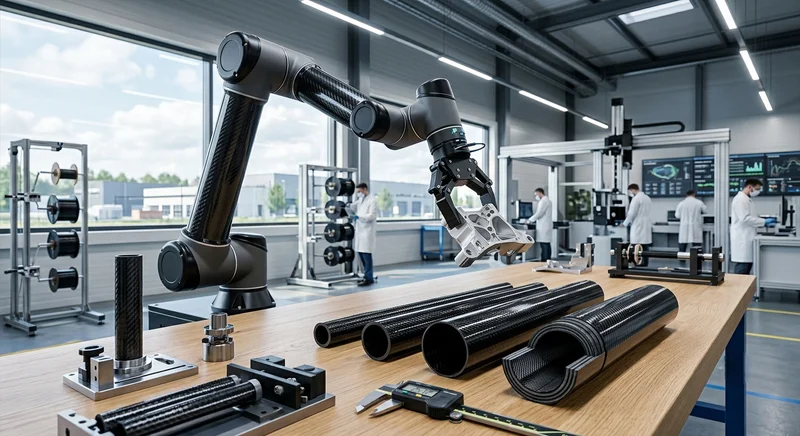
Carbon Fiber Robotic Arm Tube — High-Stiffness Lightweight Replacement
Precision-wound carbon fiber tubes for robotic arm links, replacing steel or aluminum in collaborative robots (cobots) and industrial manipulators. Achieve 3× the specific stiffness of aluminum with significant weight reduction, enabling faster acceleration and higher payload capacity.
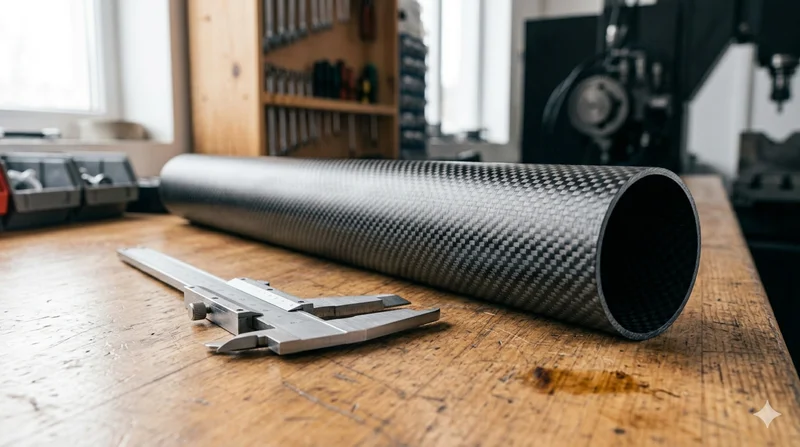
Round Carbon Fiber Tube — 3K Plain Weave T700
Standard round carbon fiber tube manufactured from Toray T700 grade fiber with 3K plain weave. Offers balanced strength and stiffness for general industrial applications including robotics, automation, sports equipment, and aerospace structures.
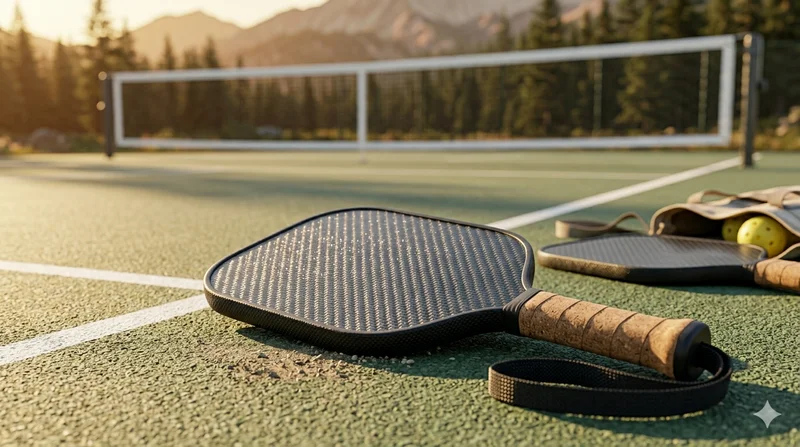
Carbon Fiber Pickleball Paddle
High-performance pickleball paddle with Toray T700 carbon fiber face and polypropylene honeycomb core. Delivers excellent power-to-weight ratio, spin generation, and vibration dampening for competitive play.
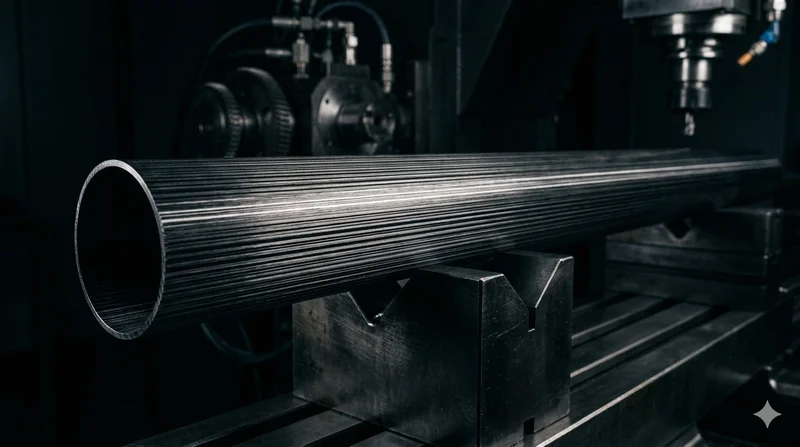
Round Carbon Fiber Tube — UD Unidirectional T700
Unidirectional (UD) round tube with all fibers aligned axially for maximum longitudinal stiffness. Ideal for applications requiring high bending rigidity with minimal weight, such as shafts, struts, and structural reinforcements.
Carbon Fiber Plate — 3K Twill T700 3.0mm
Medium-thickness 3.0mm carbon fiber plate offering significantly higher load capacity while maintaining attractive 3K twill finish. Suitable for structural brackets, reinforcement plates, and load-bearing panels.