The carbon fiber tube vs aluminum tube question appears in almost every lightweight structural design review, from drone frames and robotic arms to camera jigs and bicycle components. Both materials ship as standard round and rectangular stock, both can be cut to length in a day, and both look credi
Introduction
The carbon fiber tube vs aluminum tube question appears in almost every lightweight structural design review, from drone frames and robotic arms to camera jigs and bicycle components. Both materials ship as standard round and rectangular stock, both can be cut to length in a day, and both look credible on a bill of materials. The difference is that carbon fiber tube trades cost and machinability for a dramatic cut in mass, while aluminum tube trades weight for isotropic behavior, easy welding and a price tag three to five times lower per meter. This article compares the two on the numbers that actually decide a design: density, specific stiffness, tensile and compressive strength, thermal expansion, damping, corrosion behavior, machining cost and joining methods, then maps each material to the applications where it wins.
If you are specifying a tube for a load-bearing frame, the sections below give you the data to defend the choice in a design review rather than arguing from brand preference.
Carbon Fiber Tube vs Aluminum Tube: Side by Side
The table compares a typical pultruded or roll-wound carbon fiber tube (T700-class fiber, epoxy matrix, 0/90 layup) against a 6061-T6 aluminum tube of the same outer diameter and wall thickness. Values are engineering norms, not a substitute for a supplier datasheet, but the ratios between the columns are stable across vendors.
| Property | Carbon fiber tube | Aluminum tube (6061-T6) | Practical effect |
|---|---|---|---|
| Density | 1.55-1.60 g/cm3 | 2.70 g/cm3 | Carbon part is about 42 percent lighter at equal wall |
| Elastic modulus (axial) | 120-150 GPa | 69 GPa | Carbon tube is roughly 2x stiffer axially |
| Specific stiffness | 75-95 kN m/kg | 26 kN m/kg | Carbon delivers about 3x stiffness per kilogram |
| Tensile strength (axial) | 700-1200 MPa | 310 MPa | Carbon is 2.3-4x stronger in tension |
| Compressive strength | 500-700 MPa | 210 MPa | Carbon still leads, but matrix-sensitive |
| Thermal expansion (axial) | -1 to 0 um/m K | 23.6 um/m K | Carbon stays dimensionally stable with temperature |
| Anisotropy | High, direction-dependent | None | Aluminum behaves the same in every direction |
| Elongation at break | 1.0-1.8 percent | 12-18 percent | Aluminum deforms visibly before failing |
| Impact tolerance | Low, delaminates | High, dents | Aluminum gives warning; carbon fails suddenly |
| Corrosion | Inert | Needs anodize or coating | Carbon wins in salt and chemical exposure |
| Typical cost per meter (25 mm OD) | 8-25 USD | 2-6 USD | Aluminum is 3-5x cheaper |
Read the rows together and the pattern is clear: carbon fiber tube wins every mass-normalized metric and loses every absolute-cost and damage-tolerance metric. The design question is therefore never which material is better in general, but which failure mode your application can afford.
Carbon Fiber Tube Strength and Stiffness Compared
Axial carbon fiber tube strength is the headline number, but the layup decides how much of it you can use. A 0-degree pultruded tube puts most fibers along the axis and delivers the tensile values in the table; a woven or filament-wound tube trades 15-25 percent of axial stiffness for hoop strength and torsional rigidity. Aluminum, being isotropic, gives the same 310 MPa yield and 69 GPa modulus regardless of orientation, which simplifies analysis but caps performance.
Three behavior differences matter more than the peak values in practice:
- Failure mode: carbon fiber tube fails by brittle fracture and delamination with little warning, while aluminum yields, necks and deforms first. Safety-critical structures usually pair carbon with a proof load or inspection interval.
- Compression and buckling: thin-walled carbon tubes buckle locally at lower strains than the table suggests, so compressive members need higher wall thickness or internal reinforcement.
- Fatigue: carbon fiber tube strength retains 85-95 percent of static value after 10 million cycles in well-made tubes, whereas 6061-T6 loses roughly half its fatigue strength by the same count.
For stiffness-driven designs such as a robotic arm end effector or a camera slider, the 3x specific stiffness advantage means you can hit the same deflection target with roughly one third the mass, which compounds into smaller motors, shorter braking distances and lower shipping cost.
Carbon Fiber Tube vs Steel: Where Aluminum Sits
Adding steel to the comparison clarifies the trade space. Steel (304 stainless or 4130 chromoly) runs at 7.9 g/cm3, 200 GPa modulus and 500-900 MPa tensile strength, giving it the highest absolute stiffness of the three but the worst specific stiffness at about 25 kN m/kg, essentially equal to aluminum per kilogram. Carbon fiber tube vs steel is therefore a mass argument, not a stiffness argument: where steel wins is bearing load, wear surface, weldability and cost of complex geometries.
Aluminum sits between the extremes. It is lighter than steel by a factor of three, cheaper than carbon by a factor of three to five, anodizes to a hard surface, and accepts standard fasteners and adhesives without special tooling. When the design budget cannot absorb carbon fiber tube prices and the mass budget cannot absorb steel, 6061-T6 aluminum tube is the default answer, which is why it dominates drone frames under 250 grams, industrial machine guarding and most classroom robotics kits.
Machining, Joining and Thermal Behavior
Aluminum machines like a textbook metal: carbide end mills at 300-800 m/min surface speed, clean tapped holes, press fits held to H7, and TIG welding that any local shop can do. Carbon fiber tube needs diamond or PCD tooling, dust extraction, sealed edges to prevent delamination, and joints made with adhesive, press fit or through-bolt with spreader plates. Welding is off the table entirely.
Thermal behavior splits the same way. Aluminum's 23.6 um/m K expansion moves a 500 mm member about 12 um per 10 C, which is harmless in a machine frame but disqualifying for an optical bench. Carbon fiber tube axial expansion is near zero, so optical mounts, metrology fixtures and satellite structures stay aligned through temperature swings. Conversely, aluminum's 167 W/m K thermal conductivity dissipates motor heat along the frame, while carbon's 5-10 W/m K keeps heat where it is generated.
Frequently Asked Questions
Is carbon fiber tube stronger than aluminum tube?
In axial tension and compression, yes: a typical carbon fiber tube delivers 700-1200 MPa tensile strength against 310 MPa for 6061-T6, at less than 60 percent of the density. Aluminum wins on elongation and impact, so a carbon tube reaches its limit without visible deformation while an aluminum tube dents and bends first. For structures that must survive collision or abuse loading, aluminum's warning before failure is a genuine safety advantage.
When is aluminum tube the better choice?
Choose aluminum tube when absolute cost matters, when the part needs welding, when impact or drop damage is expected, or when isotropic behavior simplifies your analysis. Typical wins include machine guards, low-mass drone frames under 250 grams, furniture, heat-sinking structures and any prototype where the extra mass does not change system performance.
Can I join carbon fiber tube to aluminum hardware?
Yes, and it is common practice. Use adhesive bonding with a prepared surface, or a mechanical joint with a through-bolt and spreader plates to avoid point loading the laminate. Isolate the carbon from bare aluminum with a glass-fiber sleeve or primer layer in wet or salt environments, because direct carbon-aluminum contact in an electrolyte sets up galvanic corrosion that attacks the aluminum first.
Conclusion
The carbon fiber tube vs aluminum tube decision is a mass-versus-cost and warning-versus-no-warning trade, not a verdict on which material is objectively superior. Carbon fiber tube wins specific stiffness by roughly 3x, tensile strength by 2-4x and dimensional stability under temperature, and it does so at three to five times the price per meter with brittle failure and adhesive-only joining. Aluminum tube wins absolute cost, weldability, dent tolerance and thermal conductivity, and it remains the right answer whenever the added mass does not compromise the system. Specify the load case first, check the failure mode you can tolerate second, and the material choice follows from the table above. To compare tube stock, wall options and cut-to-length services for either material, browse our carbon fiber tube range or contact our engineering team with your drawing and load requirements.
Part of topic
Related Articles
- Carbon Fiber Compression Molded Plate: Process, Specs and Sourcing
- Carbon Fiber Plate Machining: Tolerances, Cost and Suppliers
- Carbon Fiber Plate vs Aluminum Plate: Key Differences Compared
- Carbon Fiber Plate Polishing Service: Process, Tolerance and Cost
- Carbon Fiber Tube Polishing: Process, Tolerance and Cost
- Carbon Fiber Rod Diameter Sizes: Standard Specs and Selection
Interested in Our Products?
Contact our team for competitive pricing and technical specifications.
Get a QuoteRelated Products
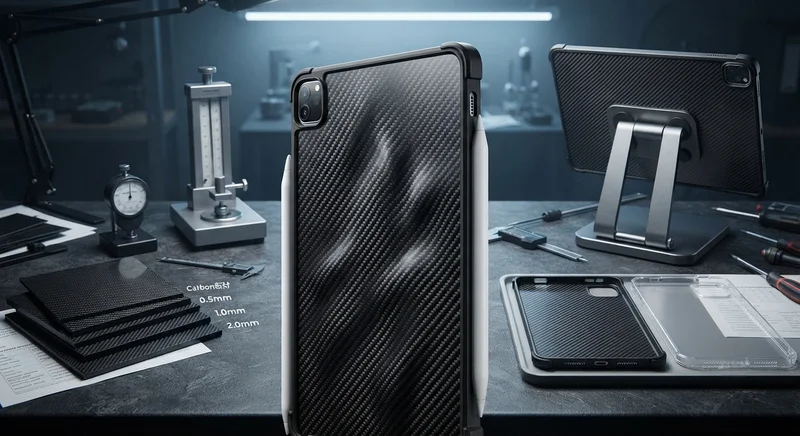
Carbon Fiber Tablet Case — Ultra-Light Protective Shell
Lightweight carbon fiber protective case for tablets and iPads. Molded from T700 3K prepreg with reinforced corner protection. Adds minimal weight while providing superior rigidity and drop protection compared to polycarbonate or silicone cases. Ideal for field workers, enterprise deployments, and professionals requiring durable tablet protection.
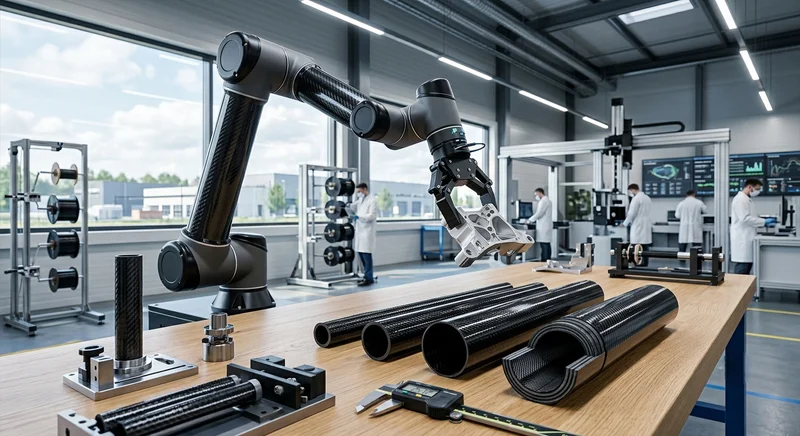
Carbon Fiber Robotic Arm Tube — High-Stiffness Lightweight Replacement
Precision-wound carbon fiber tubes for robotic arm links, replacing steel or aluminum in collaborative robots (cobots) and industrial manipulators. Achieve 3× the specific stiffness of aluminum with significant weight reduction, enabling faster acceleration and higher payload capacity.
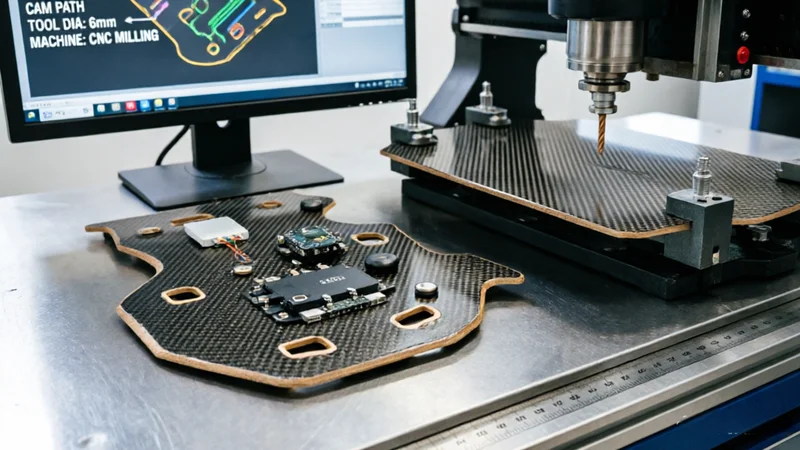
Carbon Fiber Drone Frame Base Plate — 3K Twill T700
CNC-machined carbon fiber base plates for drone frame assemblies. Cut from 3K twill weave T700 prepreg with precision CNC routing. Pre-drilled mounting patterns compatible with common flight controller and power distribution board layouts. Available in 1.5mm to 5mm thickness.
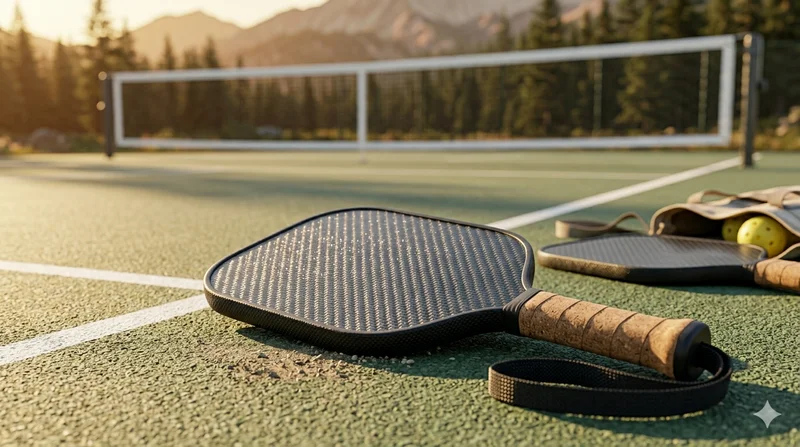
Carbon Fiber Pickleball Paddle
High-performance pickleball paddle with Toray T700 carbon fiber face and polypropylene honeycomb core. Delivers excellent power-to-weight ratio, spin generation, and vibration dampening for competitive play.
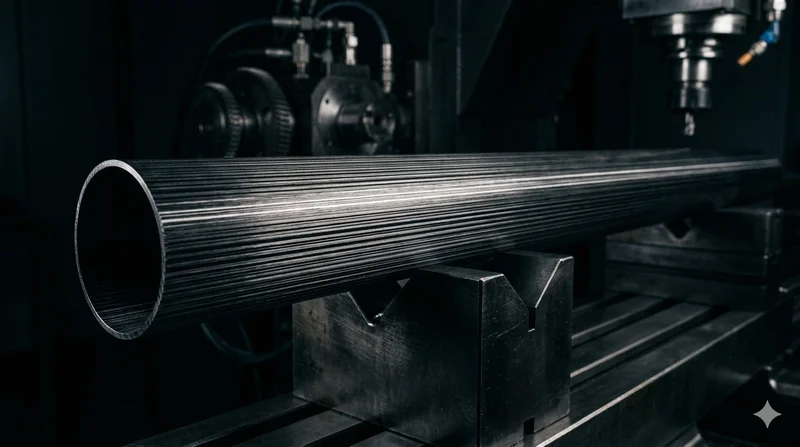
Round Carbon Fiber Tube — UD Unidirectional T700
Unidirectional (UD) round tube with all fibers aligned axially for maximum longitudinal stiffness. Ideal for applications requiring high bending rigidity with minimal weight, such as shafts, struts, and structural reinforcements.