The carbon fiber compression molded plate is one of the most economical ways to turn dry or pre-impregnated carbon fabric into a flat structural part at volume, and it sits between cheap hand-layup panels and expensive autoclave laminates on both price and performance. Compression molding closes a c
Introduction
The carbon fiber compression molded plate is one of the most economical ways to turn dry or pre-impregnated carbon fabric into a flat structural part at volume, and it sits between cheap hand-layup panels and expensive autoclave laminates on both price and performance. Compression molding closes a charged mold under heat and pressure, cures the resin in minutes instead of hours, and produces plates with repeatable thickness, Class A surfaces and embedded features that would take extra machining on a cured sheet. This guide explains the process step by step, the specs you can realistically quote, how mold design decides cost, what compression molding costs compared with other carbon fiber plate manufacturing routes, and how to qualify a supplier when you need a carbon fiber plate custom program rather than one-off sheets.
If you are comparing compression molded plates against autoclave prepreg or vacuum-infused panels, the sections below give you the numbers on cycle time, mechanical spread, minimum order quantity and where each route wins.
What Is a Carbon Fiber Compression Molded Plate?
A compression molded plate is a flat or near-flat laminate produced by placing a measured charge of carbon fiber — chopped strand, sheet molding compound or a stack of woven plies — into a matched metal mold, closing it under high pressure and curing with heat. The mold defines thickness, edge condition and any holes or bosses in one step, so the part leaves the press close to final shape.
| Route | Typical cycle | Fiber form | Plate thickness | Relative cost at 500 pcs |
|---|---|---|---|---|
| Compression molding | 2-8 min | Chopped SMC or woven stack | 1.5-12 mm | Low to medium |
| Autoclave prepreg | 4-12 h | Prepreg weave, UD tape | 0.5-10 mm | High |
| RTM / vacuum infusion | 30-120 min | Dry fabric in closed mold | 2-20 mm | Medium |
| Hand layup + vacuum bag | 2-6 h | Dry or wet fabric | 2-25 mm | Low at 10 pcs, poor repeatability |
For flat plates in the 500 to 50,000 piece range, compression molding is usually the cheapest route that still holds ±0.2 mm thickness and a surface ready for bonding or painting without rework.
Compression Molding in Carbon Fiber Plate Manufacturing
The process has five controlled steps, and each one shows up in the final plate quality:
- Charge preparation: woven plies are cut to a nested pattern, or SMC is weighed to a charge weight within ±2 percent; too little material leaves dry spots, too much causes fiber wash and thickness drift.
- Preheat and load: the mold runs at 120-160 C for epoxy and 150-180 BMC/phenolic systems; the charge is placed while the mold is at temperature so flow starts immediately.
- Press cycle: close fast, then apply 5-15 MPa of pressure; venting windows let trapped air escape before gelation locks the surface.
- Cure and cool: hold until exotherm peaks, then cool under slight pressure to limit spring-in; a 3-6 minute cycle is typical for thin epoxy plates.
- Deflash and inspect: trim flash, check thickness at a defined grid, and verify flatness before bonding or machining.
Because the mold is steel and the cycle is short, part-to-part variation is mostly a charge-weight and temperature control question — which is why a qualified carbon fiber plate manufacturing line logs cavity temperature and charge weight for every shot.
Specs and Tolerances You Can Quote
Realistic specification ranges for a production compression molded plate, measured at 23 C and 50 percent relative humidity after 24 h conditioning:
- Thickness: ±0.15 mm on 2-6 mm plate across the grid, ±0.25 mm near edges where flow front slows.
- Flatness: 0.4 mm over 300 mm standard; 0.2 mm available on stress-relieved, precision-ground tooling.
- Tensile strength: 350-600 MPa for woven fabric laminates, 180-320 MPa for chopped SMC at 60-65 percent fiber by weight.
- Tensile modulus: 45-75 GPa woven, 25-40 GPa chopped — the number to quote when stiffness, not strength, drives the design.
- Surface: Class A on the tool side, fiber read acceptable on the non-tool side unless a cosmetic veil is specified.
Call out fiber orientation in the drawing: quasi-isotropic stacks behave differently from 0/90 dominated plates under bending, and the mold maker needs the schedule to cut the charge pattern correctly.
Designing a Carbon Fiber Plate Custom Compression Mold
Tooling decides both the piece price and the lead time, so a carbon fiber plate custom program lives or dies on mold design. Five decisions matter most:
- Steel grade: P20 tool steel for runs under 10,000 shots, H13 hardened to 48-52 HRC for longer lives and better polish retention.
- Shrink allowance: epoxy carbon laminates shrink 0.1-0.3 percent; the tool is cut oversize so the cured plate lands on nominal.
- Ejector strategy: flat plates stick, so perimeter ejector pins or a slight draft of 0.5-1 degree on side walls prevent warp on release.
- Integrated features: molded-in holes and bosses save a machining op, but every feature adds a shut-off face that must be tight to ±0.02 mm to avoid flash.
- Venting: perimeter vents at 0.01-0.02 mm depth move air out without letting resin leak.
Budget 3,000-12,000 USD for a single-cavity plate mold depending on size and features, amortized over the first 500 pieces at 6-24 USD per part — the main reason compression molding only wins above a few hundred pieces.
Cost, MOQ and Supplier Qualification
Ballpark piece prices for a 3 mm woven plate, 200 x 300 mm, at three volumes:
- 500 pieces: 12-20 USD each including deflash, excluding tooling.
- 5,000 pieces: 6-10 USD each, tooling fully amortized.
- 50,000 pieces: 3.5-6 USD each with automated trimming.
- Lead time: 4-6 weeks for tooling plus first articles, then 2-3 weeks for production lots.
Qualify a supplier by asking for a shot log from a comparable mold, a dimensional report on a 10-piece sample, and their plan for controlling charge weight. Confirm they run carbon in a dedicated or well-isolated press — carbon dust in a shared toolroom contaminates other molds — and that they can provide a certificate of conformance with each lot.
Frequently Asked Questions
Is a compression molded plate as strong as an autoclave plate?
Not at the same fiber volume. Autoclave prepreg typically reaches 60-65 percent fiber with very low void content, giving higher absolute strength. Compression molded woven plates at 55-60 percent fiber with voids under 1 percent come within 10-15 percent of autoclave tension values at a fraction of the cycle cost, which is why structural brackets, enclosures and equipment plates are routinely compression molded.
What is the minimum order quantity for custom compression molded plates?
Practical MOQ is 300-500 pieces once tooling is cut; some suppliers will run 100-piece engineering batches at a 20-40 percent premium to validate the mold. Below that, hand-layup or CNC-machined plate from stock sheet is cheaper because you avoid the tooling amortization.
Can compression molding produce plates with molded-in holes?
Yes — inserts in the tool form holes during cure, holding position within ±0.10 mm and saving a drilling operation. Holes close to the edge or with tight tolerance still benefit from a post-cure ream, because flow front fiber orientation near shut-offs is less controlled than in the field of the plate.
Conclusion
The carbon fiber compression molded plate wins when volume, repeatability and surface quality all matter at once: a matched steel mold gives you Class A faces, integrated features and cycle times measured in minutes, while keeping piece price below autoclave and RTM routes above a few hundred units. Quote specs by feature — thickness grid, flatness span, fiber form — design the tool with shrink, venting and ejection settled up front, and qualify suppliers on shot logs rather than brochures. To review compression molding options, tooling lead times and pricing for your next carbon fiber plate program, browse our carbon fiber plate range or contact our engineering team with your drawing, resin system and annual volume.
Part of topic
Related Articles
- Carbon Fiber Plate Machining: Tolerances, Cost and Suppliers
- Carbon Fiber Plate vs Aluminum Plate: Key Differences Compared
- Carbon Fiber Tube vs Aluminum Tube: Key Differences Compared
- Carbon Fiber Plate Polishing Service: Process, Tolerance and Cost
- Carbon Fiber Tube Polishing: Process, Tolerance and Cost
- Carbon Fiber Rod Diameter Sizes: Standard Specs and Selection
Interested in Our Products?
Contact our team for competitive pricing and technical specifications.
Get a QuoteRelated Products
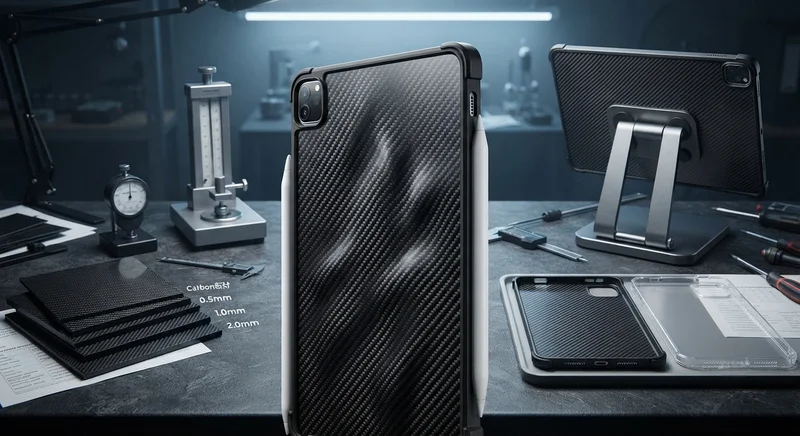
Carbon Fiber Tablet Case — Ultra-Light Protective Shell
Lightweight carbon fiber protective case for tablets and iPads. Molded from T700 3K prepreg with reinforced corner protection. Adds minimal weight while providing superior rigidity and drop protection compared to polycarbonate or silicone cases. Ideal for field workers, enterprise deployments, and professionals requiring durable tablet protection.
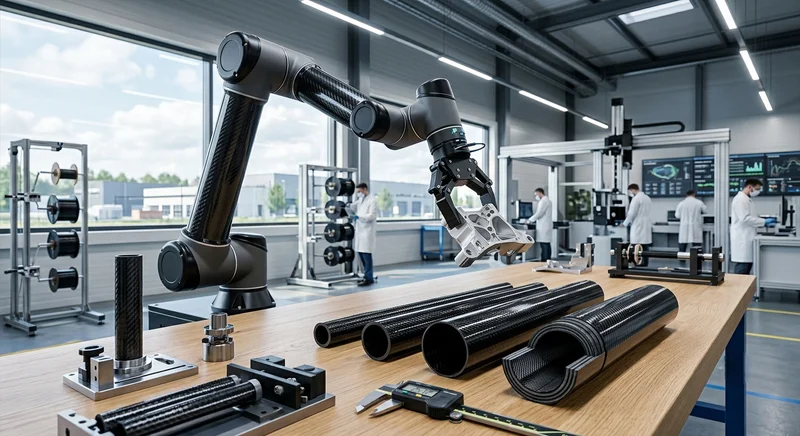
Carbon Fiber Robotic Arm Tube — High-Stiffness Lightweight Replacement
Precision-wound carbon fiber tubes for robotic arm links, replacing steel or aluminum in collaborative robots (cobots) and industrial manipulators. Achieve 3× the specific stiffness of aluminum with significant weight reduction, enabling faster acceleration and higher payload capacity.
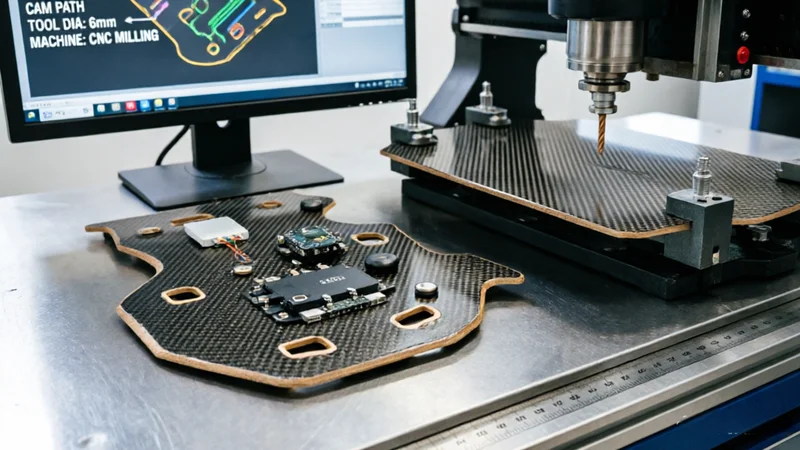
Carbon Fiber Drone Frame Base Plate — 3K Twill T700
CNC-machined carbon fiber base plates for drone frame assemblies. Cut from 3K twill weave T700 prepreg with precision CNC routing. Pre-drilled mounting patterns compatible with common flight controller and power distribution board layouts. Available in 1.5mm to 5mm thickness.
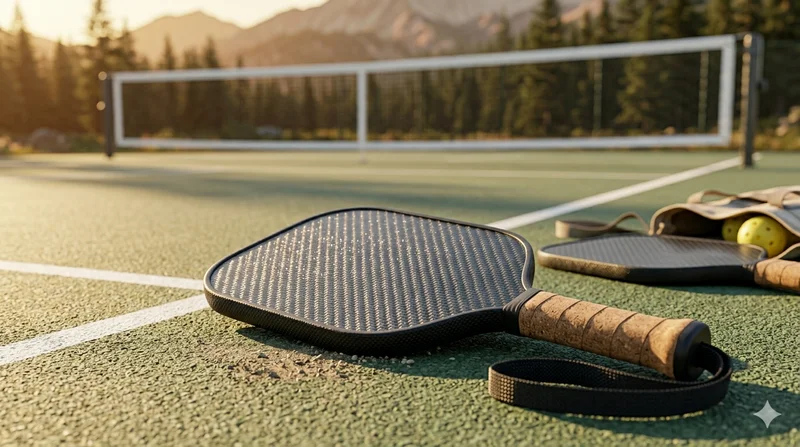
Carbon Fiber Pickleball Paddle
High-performance pickleball paddle with Toray T700 carbon fiber face and polypropylene honeycomb core. Delivers excellent power-to-weight ratio, spin generation, and vibration dampening for competitive play.
Round Carbon Fiber Tube — UD Unidirectional T700
Unidirectional (UD) round tube with all fibers aligned axially for maximum longitudinal stiffness. Ideal for applications requiring high bending rigidity with minimal weight, such as shafts, struts, and structural reinforcements.