The carbon fiber tube CIF price on a supplier quotation is one of the most cited numbers in international tube procurement, and also one of the most misunderstood. CIF stands for Cost, Insurance and Freight under the Incoterms rules, and the figure folds three separate obligations into a single deli
Introduction
The carbon fiber tube CIF price on a supplier quotation is one of the most cited numbers in international tube procurement, and also one of the most misunderstood. CIF stands for Cost, Insurance and Freight under the Incoterms rules, and the figure folds three separate obligations into a single delivered-cost number. Buyers who read it as a simple product price often discover destination charges, insurance gaps, or missing documents only after the container has already shipped. This guide breaks the carbon fiber tube CIF price into its cost elements, shows how a carbon fiber tube supplier builds the quote, lists the paperwork that must accompany the cargo, and gives practical tips for comparing CIF offers across markets, including carbon fiber tubes USA-bound shipments.
Whether you order a first sample lot or a full container of pultruded tubes, understanding the structure behind the number lets you compare quotations on equal terms and avoid the classic landed-cost surprises that erode project budgets.
What the Carbon Fiber Tube CIF Price Includes
Under Incoterms 2020, a CIF quote means the seller pays for the goods, the ocean freight to the named destination port, and marine insurance covering the buyer's risk in transit. The seller clears the goods for export; the buyer handles import clearance, duties, and destination charges.
- Product cost: raw carbon fiber, resin, curing, CNC cutting, inspection, and packaging for export.
- Export side costs: export declaration, customs clearance, origin documentation, and inland haulage to the departure port.
- Ocean freight: the sea carriage to the destination port named in the contract.
- Marine insurance: cargo cover, typically Institute Cargo Clauses (C) or (A), for 110 percent of CIF value.
- Export documents: commercial invoice, packing list, bill of lading, insurance certificate, and certificate of origin.
What a CIF quote does not include is equally important: import duties, destination terminal handling, customs brokerage, and inland delivery beyond the discharge port stay with the buyer. Ask your carbon fiber tube supplier to state these exclusions in writing before you compare numbers.
CIF Price Breakdown by Cost Element
The table below shows a realistic per-unit breakdown for a mixed pallet of 3K carbon fiber tubes shipped from Ningbo to Rotterdam, based on typical 2026 rates.
| Cost Element | Per Unit (USD) | Share of CIF | Notes |
|---|---|---|---|
| Tube product cost (FOB) | 14.20 | 84.1% | Includes resin, cure, CNC cut, QC, export packing |
| Ocean freight allocation | 1.85 | 11.0% | LCL slot; full container lowers this by 20-35% |
| Marine insurance | 0.21 | 1.2% | 110% CIF value at roughly 0.12% premium |
| Export docs and clearance | 0.35 | 2.1% | Invoice, packing list, B/L, origin certificate |
| CIF unit price | 16.61 | 100% | Named port of destination, Incoterms 2020 |
Freight is the most volatile line. Spot rates on Asia to Europe lanes can swing 40 percent within a quarter, so a CIF price valid for seven days is a normal protection for the supplier, not an attempt to lock you in. Always check the validity window against your own approval cycle.
Carbon Fiber Tube Price: CIF vs FOB and EXW
Three Incoterms dominate tube quotations, and the headline carbon fiber tube price moves materially depending on which one you accept.
- EXW (Ex Works): lowest product price; you arrange everything from the factory gate, including export clearance you may not be licensed to perform.
- FOB (Free On Board): seller delivers and clears export at the departure port; you book freight and insurance. Best when you have a forwarder already.
- CIF (Cost, Insurance, Freight): seller pays to the destination port with insurance attached. Simplest for buyers without their own freight contracts, but the freight margin is baked into the quote.
If two suppliers quote different terms, normalize them before comparing. An EXW price 18 percent below CIF may still lose once freight, insurance, and forwarder fees are added. Request FOB and CIF quotes from the same supplier in one email so the delta isolates freight and insurance rather than product differences.
How a Carbon Fiber Tube Supplier Builds the Quote
Understanding the supplier's internal math helps you negotiate the right lines instead of pushing for a discount on the wrong one.
- Material index: carbon fiber tow and resin prices, sometimes linked to a quarterly index clause.
- Order volume: MOQ breaks and machine setup amortization; doubling volume rarely doubles cost but usually trims unit price 5-12 percent.
- Freight class: dimensional weight, hazmat status of resins, and whether the tubes ship LCL or FCL.
- Insurance tier: clause (C) is cheapest; clause (A) with wider perils adds a small premium.
- Risk buffer: exchange-rate movement, port congestion, and re-quote exposure during long validity windows.
When you negotiate, target the freight allocation and the risk buffer first. Product cost is usually the least flexible line once specifications are frozen.
Carbon Fiber Tubes USA: What Changes in a CIF Quote
Shipments bound for the United States carry a few distinct features. ISF (Importer Security Filing) must be filed 24 hours before loading, and the buyer needs a customs bond and an importer of record regardless of Incoterm. US port congestion at Los Angeles and Long Beach can add demurrage risk that prudent sellers price into the freight line.
Classification also matters: carbon fiber tubes usually fall under heading 6815.13 or a plastics heading depending on composition and country, and duty rates differ accordingly. Ask your supplier for the HS code printed on the invoice so you can verify the duty with your broker before the goods sail, not after arrival.
Documents That Travel with a CIF Shipment
Missing paperwork is the most common cause of storage charges at destination. A complete CIF document set includes:
- Commercial invoice: description, HS code, Incoterm, currency, and unit values that match the packing list.
- Packing list: dimensions, net and gross weight, carton count, and tube markings.
- Bill of lading: consignee and notify party correct for your import arrangement.
- Insurance certificate: policy number, coverage clause, and insured amount at 110 percent of CIF value.
- Certificate of origin: needed for tariff preference claims in several destinations.
- Inspection report: dimensional and surface checks, useful for both customs and incoming QA.
Frequently Asked Questions
Who pays destination charges under a CIF carbon fiber tube contract?
The seller pays freight and insurance to the named destination port, but unloading, terminal handling, import duties, customs brokerage, and inland delivery beyond the port are the buyer's responsibility unless the contract says otherwise. Confirm each line in writing before shipment to avoid surprises at discharge.
How often does a carbon fiber tube CIF price get re-quoted?
Most suppliers hold CIF quotes for 7 to 15 days because ocean freight and fuel surcharges move quickly. Product-only FOB prices often stay valid longer. If your approval cycle is slow, ask for a validity extension tied to a deposit rather than assuming the first number will hold.
Is CIF cheaper than arranging freight myself with FOB pricing?
It depends on your buying power. Large importers with forwarder contracts often beat the freight margin inside a CIF quote and prefer FOB. Smaller orders and first-time buyers usually find CIF simpler and competitive, since the supplier consolidates freight at better rates than a one-off shipment can achieve.
Conclusion
The carbon fiber tube CIF price is a composite number, not a product sticker. It bundles tube cost, export clearance, ocean freight, and marine insurance to a named port, and it deliberately excludes import-side charges you still need to budget. By normalizing Incoterms before comparison, validating the freight and insurance lines, and insisting on a complete document set, you turn a vague headline figure into a controllable landed cost. To review tube specifications and request a transparent CIF quotation, explore our carbon fiber tube range or contact our export team for a cost breakdown with clear validity terms.
Part of topic
Related Articles
- Carbon Fiber Sheet Import Guide: Tariffs, Documents and Tips
- Carbon Fiber Tube Export China: Process, Cost and Documents
- Carbon Fiber Tube Lead Time: Factors, Benchmarks and Planning
- Carbon Fiber Sheet Lead Time: Factors, Benchmarks and Planning
- Carbon Fiber Tube MOQ Supplier: Suppliers, Quantities and Tips
- Carbon Fiber Sheet Minimum Order Quantity: Suppliers, Quantities and Tips
Interested in Our Products?
Contact our team for competitive pricing and technical specifications.
Get a QuoteRelated Products

Carbon Fiber Robotic Arm Tube — High-Stiffness Lightweight Replacement
Precision-wound carbon fiber tubes for robotic arm links, replacing steel or aluminum in collaborative robots (cobots) and industrial manipulators. Achieve 3× the specific stiffness of aluminum with significant weight reduction, enabling faster acceleration and higher payload capacity.
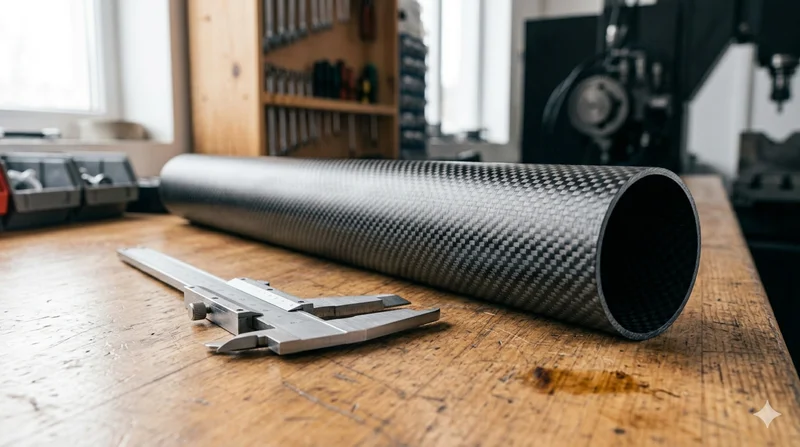
Round Carbon Fiber Tube — 3K Plain Weave T700
Standard round carbon fiber tube manufactured from Toray T700 grade fiber with 3K plain weave. Offers balanced strength and stiffness for general industrial applications including robotics, automation, sports equipment, and aerospace structures.
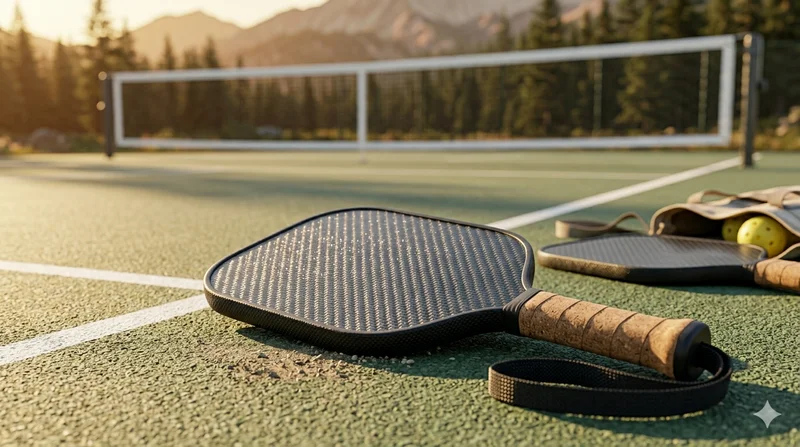
Carbon Fiber Pickleball Paddle
High-performance pickleball paddle with Toray T700 carbon fiber face and polypropylene honeycomb core. Delivers excellent power-to-weight ratio, spin generation, and vibration dampening for competitive play.
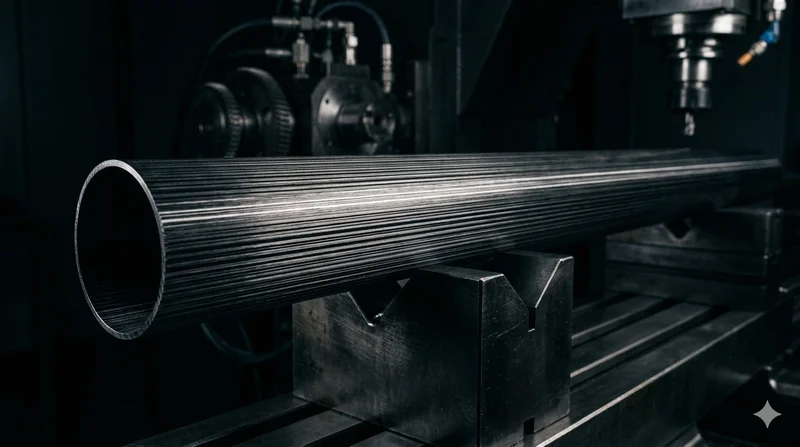
Round Carbon Fiber Tube — UD Unidirectional T700
Unidirectional (UD) round tube with all fibers aligned axially for maximum longitudinal stiffness. Ideal for applications requiring high bending rigidity with minimal weight, such as shafts, struts, and structural reinforcements.
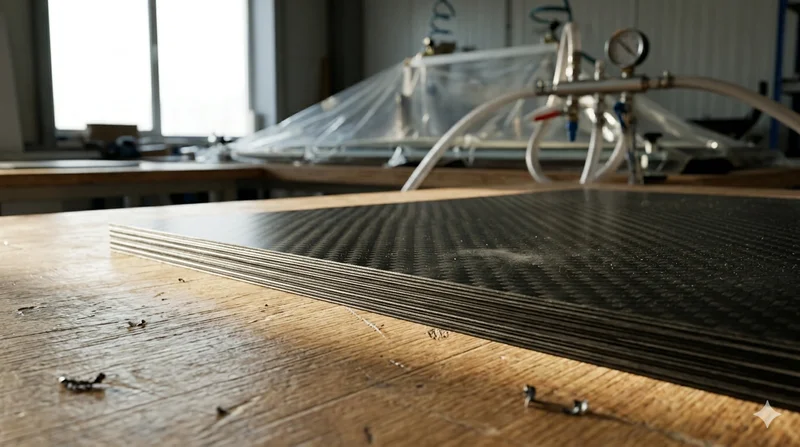
Carbon Fiber Plate — 3K Twill T700 3.0mm
Medium-thickness 3.0mm carbon fiber plate offering significantly higher load capacity while maintaining attractive 3K twill finish. Suitable for structural brackets, reinforcement plates, and load-bearing panels.