This carbon fiber sheet import guide is written for buyers who already know the sheet they need and now have to move it across a border without surprises. Importing carbon fiber sheets is less about the product itself and more about classification, valuation, documentation, and supplier discipline.
Introduction
This carbon fiber sheet import guide is written for buyers who already know the sheet they need and now have to move it across a border without surprises. Importing carbon fiber sheets is less about the product itself and more about classification, valuation, documentation, and supplier discipline. Get those four right and the carbon fiber sheet price you negotiated stays intact through customs; get them wrong and storage fees, re-classification penalties, or a rejected entry can erase your margin in a single shipment. The guide below walks through tariff classification with realistic examples, shows how to compute landed cost line by line, lists the documents every entry needs, and ends with a practical way to choose between carbon fiber sheets suppliers before you commit.
Whether you import a pallet for a workshop or a container for production, the same rules apply — only the numbers change.
Tariff Classification in the Carbon Fiber Sheet Import Guide
Everything starts with the tariff number. Carbon fiber sheets are commonly classified under heading 6815.13 for articles of carbon fiber, but sheets with a dominant plastic matrix may fall under a plastics heading instead. The wrong heading changes your duty rate, your preferential claim, and sometimes your admissibility.
| Possible Classification | Typical Description | Duty Range (indicative) | When It Applies |
|---|---|---|---|
| Heading 6815.13 | Articles of carbon fiber, plates and sheets | 0-6.5% | Carbon fiber dominant, structural sheets |
| Plastics heading (varies) | Plates of plastics with carbon fiber filler | 0-6.5% | Resin-dominant composites in some countries |
| Finished goods heading | Sheet cut and worked into a specific part | varies | Substantial transformation before import |
Duty ranges above are indicative only; rates differ by country and by trade agreement. Ask your supplier for the composition statement, request a binding tariff ruling from your customs authority when volumes justify it, and keep the ruling number with the entry file. Classification disputes discovered after arrival are the expensive kind.
Carbon Fiber Sheet Price: Building the Landed Cost
The negotiated carbon fiber sheet price is the starting line, not the finish. Landed cost adds every charge between the factory gate and your warehouse door.
- Product cost: sheets, custom cutting, packaging, and export-side charges if not already in the quote.
- International freight: sea or air, plus fuel and security surcharges.
- Insurance: typically 0.1-0.3 percent of insured value for standard cargo cover.
- Import duty: applied to the customs value (usually CIF) at your classified rate.
- Taxes: VAT, GST, or sales tax, often recoverable for registered businesses.
- Local charges: terminal handling, customs brokerage, port storage, and inland delivery.
A worked example: sheets at 6,200 USD FOB, freight 780 USD, insurance 12 USD, duty at 2.7 percent on a 6,992 USD customs value equals 189 USD, plus 340 USD in local charges. Total landed cost lands near 8,521 USD against a 6,200 USD product price — a 37 percent uplift that must be in your business case before you approve the purchase.
Documents Every Carbon Fiber Sheet Import Needs
Customs authorities do not negotiate; they either find the paperwork or hold the cargo. Assemble this set before the vessel sails:
- Commercial invoice: accurate description, tariff number claimed, Incoterm, currency, and values.
- Packing list: sheet dimensions, thickness, quantity, weight, and package marks.
- Transport document: bill of lading or air waybill with correct consignee details.
- Certificate of origin: needed whenever you claim preferential duty rates.
- Import declaration: filed by you or your broker, matching invoice and packing list exactly.
- Material or test certificates: increasingly requested for composite materials entering regulated markets.
For US-bound shipments, add the importer security filing and a customs bond. For EU-bound shipments, confirm whether REACH or product safety declarations apply to your specific sheet chemistry.
Choosing Between Carbon Fiber Sheets Suppliers
Vetting suppliers protects the import before it starts. Use this shortlist when you compare offers:
- Export documentation history: ask for redacted copies of invoices and declarations they have filed.
- Consistent specs: request thickness and flatness tolerances in writing, not in a brochure.
- Where to buy carbon fiber responsibly: verify business registration, factory address, and audit reports rather than relying on marketplace ratings alone.
- Sample policy: a supplier willing to ship a paid sample is usually more confident than one who refuses.
- Communication cadence: slow pre-sale responses become slower post-shipment responses.
Split the award if needed: qualify two carbon fiber sheets suppliers, run a trial import with the stronger document trail, and keep the second source active for continuity.
Frequently Asked Questions
Do I pay duty on carbon fiber sheets every time I import?
You pay the applicable duty rate on each entry unless a trade agreement reduces or eliminates it with a valid certificate of origin. Some jurisdictions allow duty drawback on re-exported goods, and bonded warehouses let you defer duty until the sheets are released into your market.
How do I verify the carbon fiber sheet price I was quoted is fair?
Normalize the Incoterm first, then compare at least three offers at the same specification, quantity, and delivery port. Add freight, duty, and local charges to each to see landed cost rather than headline price, and check that thickness, weave, and finish are identical before judging the numbers.
What is the most common mistake in a carbon fiber sheet import?
Arriving with a description too vague for classification — "composite panel" or "plastic sheet" invites the customs officer to decide for you, usually at a higher rate or with a hold for testing. Write the material composition, weave, and dimensions explicitly on the invoice.
Conclusion
A successful carbon fiber sheet import guide experience reduces to four disciplines: classify before you ship, compute landed cost honestly, keep documents exact, and qualify suppliers with the same rigor you apply to the material itself. Follow those and the carbon fiber sheet price you negotiated is the price you keep. To compare specifications with a supplier that ships complete document sets as standard, view our carbon fiber sheet range or request an import-ready quotation from our team.
Part of topic
Related Articles
- Carbon Fiber Tube Export China: Process, Cost and Documents
- Carbon Fiber Tube CIF Price: Cost Breakdown, Documents and Tips
- Carbon Fiber Tube Lead Time: Factors, Benchmarks and Planning
- Carbon Fiber Sheet Lead Time: Factors, Benchmarks and Planning
- Carbon Fiber Tube MOQ Supplier: Suppliers, Quantities and Tips
- Carbon Fiber Sheet Minimum Order Quantity: Suppliers, Quantities and Tips
Interested in Our Products?
Contact our team for competitive pricing and technical specifications.
Get a QuoteRelated Products

Carbon Fiber Robotic Arm Tube — High-Stiffness Lightweight Replacement
Precision-wound carbon fiber tubes for robotic arm links, replacing steel or aluminum in collaborative robots (cobots) and industrial manipulators. Achieve 3× the specific stiffness of aluminum with significant weight reduction, enabling faster acceleration and higher payload capacity.
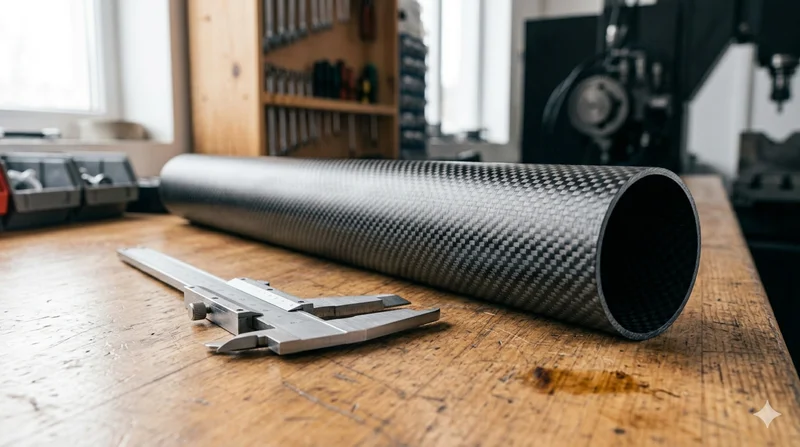
Round Carbon Fiber Tube — 3K Plain Weave T700
Standard round carbon fiber tube manufactured from Toray T700 grade fiber with 3K plain weave. Offers balanced strength and stiffness for general industrial applications including robotics, automation, sports equipment, and aerospace structures.
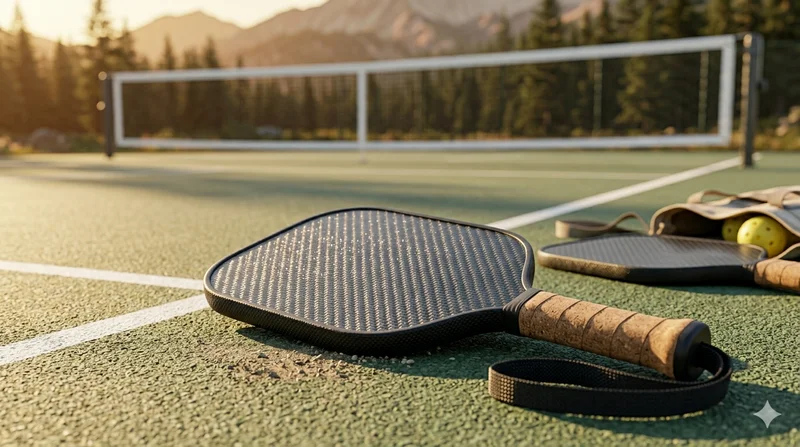
Carbon Fiber Pickleball Paddle
High-performance pickleball paddle with Toray T700 carbon fiber face and polypropylene honeycomb core. Delivers excellent power-to-weight ratio, spin generation, and vibration dampening for competitive play.
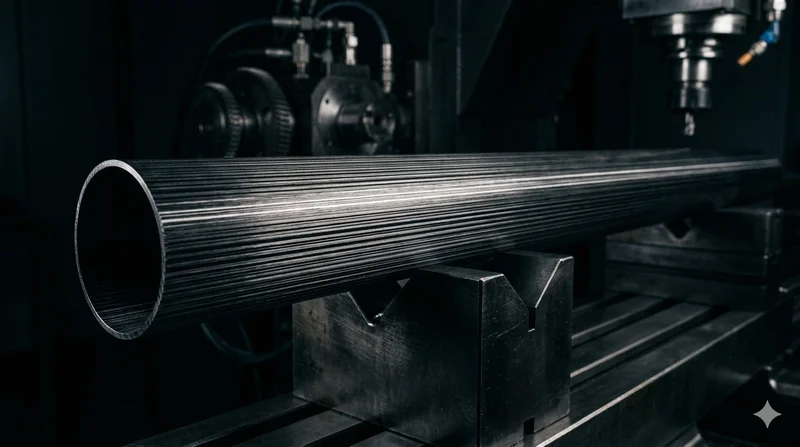
Round Carbon Fiber Tube — UD Unidirectional T700
Unidirectional (UD) round tube with all fibers aligned axially for maximum longitudinal stiffness. Ideal for applications requiring high bending rigidity with minimal weight, such as shafts, struts, and structural reinforcements.
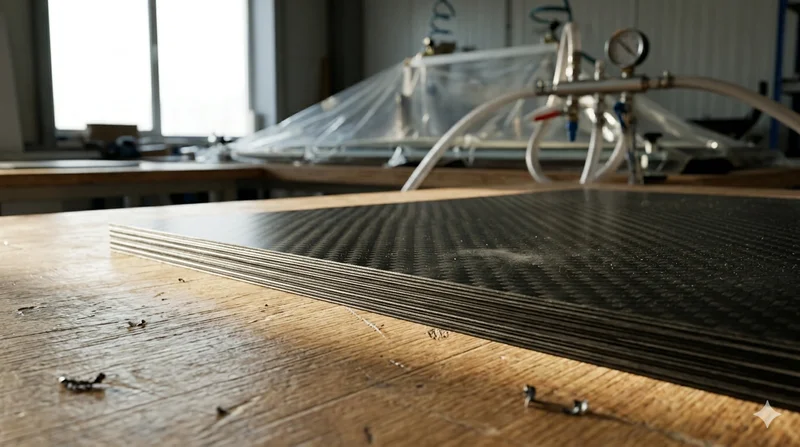
Carbon Fiber Plate — 3K Twill T700 3.0mm
Medium-thickness 3.0mm carbon fiber plate offering significantly higher load capacity while maintaining attractive 3K twill finish. Suitable for structural brackets, reinforcement plates, and load-bearing panels.