This carbon fiber rod buyer guide is designed for engineers, product teams, and purchasing managers who need straight, lightweight, and stiff rods for real applications. Carbon fiber rods are common in drones, kites, RC models, measurement tools, medical devices, robotics, and industrial linkages. W
Introduction
This carbon fiber rod buyer guide is designed for engineers, product teams, and purchasing managers who need straight, lightweight, and stiff rods for real applications. Carbon fiber rods are common in drones, kites, RC models, measurement tools, medical devices, robotics, and industrial linkages. While rods look like simple commodities, performance varies widely with fiber content, resin system, straightness, and surface finish. Choosing the right carbon fiber rod supplier is the difference between a smooth build and repeated fit or failure issues.
A smart buying process starts with the application, not the catalog. Define the load, diameter, length, and environment before you request quotes. Then compare rod construction methods, check tolerances, and confirm how the supplier controls quality. The sections below give you a clear framework to evaluate options, understand carbon fiber rod price drivers, and avoid common sourcing mistakes.
Know the Rod Types and Where Each Fits
Carbon fiber rods are produced in several forms, and each fits a different job. Solid pultruded rods deliver high axial stiffness and consistent diameter, making them a go-to choice for push rods, frames, and tension members. Roll-wrapped or pulwound tubes are sometimes confused with rods, but a true rod is solid and behaves differently in bending and buckling.
- Solid pultruded rods: High fiber volume in the axial direction, excellent tensile stiffness, economical in standard sizes.
- Machined or ground rods: Pultruded blanks finished to tighter diameter or surface requirements for precision assemblies.
- Custom layup rods: Less common, used when a specific bending or torsional response is required.
Match the rod type to the load case. If your part sees mostly axial tension, a standard pultruded rod is efficient. If it sees bending or off-axis loads, you may need a larger diameter, a different layup, or a tube instead of a rod. A knowledgeable carbon fiber rod manufacturer will ask about the load before recommending a size.
Key Specifications to Put in Your RFQ
Clear specifications reduce back-and-forth and prevent surprises at delivery. When you request quotes, include the details that affect both performance and manufacturability. This makes carbon fiber rod price comparisons meaningful.
| Specification | What to Include | Buyer Tip |
|---|---|---|
| Diameter | Nominal diameter and tolerance (e.g., 3.0 mm ±0.05 mm) | Tighter tolerances raise cost; specify only where needed |
| Length | Cut length, end finish, and quantity per length | Pre-cut lengths reduce shop time and waste |
| Straightness | Maximum bow per meter or total length | Critical for linkages, guides, and rotating assemblies |
| Surface | As-pultruded, sanded, ground, or coated | Ground surfaces help with bonding and bearing fits |
| Environment | Temperature, UV, chemicals, moisture | Drives resin selection and protective coating |
Also state the expected volume and delivery cadence. Many suppliers price prototypes, small batches, and production runs differently, and lead time can change significantly between them.
How to Vet a Carbon Fiber Rod Supplier and Manufacturer
A reliable carbon fiber rod supplier should demonstrate control over materials, process, and inspection. Do not rely on catalog photos alone. Ask direct questions and request evidence.
- Material traceability: Can the supplier identify fiber and resin batches for each lot?
- Dimensional inspection: Do they measure diameter, length, and straightness with calibrated tools?
- Consistency across lots: Can they provide samples from the same production run for approval?
- Secondary operations: Do they offer cutting, chamfering, centerless grinding, or kitting?
- Communication: Do they answer technical questions clearly and flag risks early?
For new suppliers, start with a small trial order. Check diameter at multiple points, roll the rods on a flat surface to assess straightness, and inspect the surface for fuzzing, voids, or resin-rich patches. These simple checks catch most issues before they reach your assembly line.
Carbon Fiber Rod Buyer Guide: Price, Lead Time, and Mistakes
Carbon fiber rod price is influenced by diameter, tolerance, length, surface finish, fiber grade, and order quantity. Small diameters with tight tolerances can cost more per meter than larger, standard rods because yield and inspection time increase. Custom colors, coatings, or ground finishes also add cost.
Lead time varies with stock availability. Standard diameters may ship quickly, while unusual sizes or tight-tolerance ground rods require production scheduling. Confirm packaging as well: rods should be protected in rigid tubes or trays to prevent bowing during transport.
Common mistakes include buying by diameter alone, ignoring straightness, and assuming all carbon fiber rods share the same modulus. Another mistake is skipping a fit check on the first batch. Even a trusted carbon fiber rod manufacturer can have lot-to-lot variation, so incoming inspection should be part of your process. Finally, avoid over-specifying. If a standard tolerance works, it will save cost and shorten lead time.
Frequently Asked Questions
What is the difference between a carbon fiber rod and a carbon fiber tube?
A rod is solid, while a tube is hollow. Rods are simple, strong in tension, and easy to use as pins or linkages. Tubes offer higher bending stiffness for a given weight because material is distributed away from the center. Choose a rod for compact axial members; choose a tube when bending stiffness per gram matters most.
How tight should diameter tolerance be for most applications?
For general framing or hobby use, a standard tolerance such as ±0.1 mm is often enough. For bearing fits, precision guides, or bonded inserts, you may need ±0.02 mm to ±0.05 mm or a ground finish. Tighter tolerances increase cost, so match them to the function of the part.
Can a supplier cut carbon fiber rods to custom lengths?
Yes. Most suppliers offer cut-to-length service with abrasive saws to reduce splintering. Provide the exact length, quantity, and end condition. For high volumes, pre-cut and deburred rods save labor and improve consistency at assembly.
Conclusion
The best buying outcomes come from clear specifications, realistic tolerances, and a supplier who can prove consistency. Use this carbon fiber rod buyer guide to structure your RFQ, compare quotes fairly, and qualify a partner before scaling up. If you are sourcing rods for a new project, browse our carbon fiber products or contact our team for support with sizing, tolerances, and custom orders.
Part of topic
Related Articles
- Carbon Fiber Plate Buyer Guide: How to Choose a Supplier
- Carbon Fiber Tube Buyer Guide: How to Choose a Supplier
- Carbon Fiber Sheet Import Guide: Tariffs, Documents and Tips
- Carbon Fiber Tube Export China: Process, Cost and Documents
- Carbon Fiber Tube CIF Price: Cost Breakdown, Documents and Tips
- Carbon Fiber Tube Lead Time: Factors, Benchmarks and Planning
Interested in Our Products?
Contact our team for competitive pricing and technical specifications.
Get a QuoteRelated Products
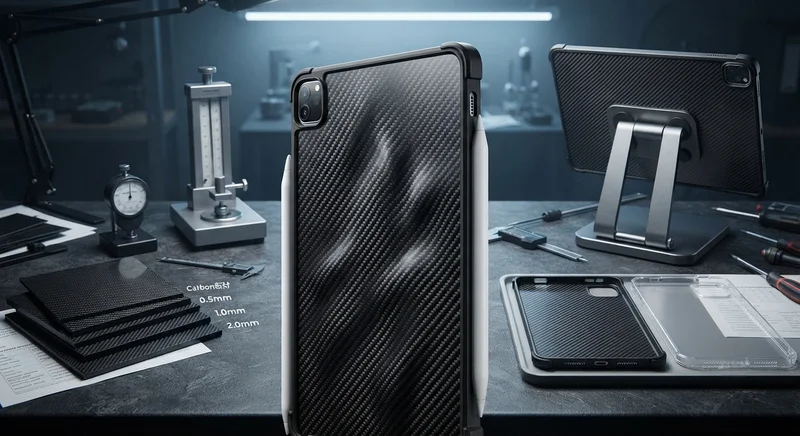
Carbon Fiber Tablet Case — Ultra-Light Protective Shell
Lightweight carbon fiber protective case for tablets and iPads. Molded from T700 3K prepreg with reinforced corner protection. Adds minimal weight while providing superior rigidity and drop protection compared to polycarbonate or silicone cases. Ideal for field workers, enterprise deployments, and professionals requiring durable tablet protection.
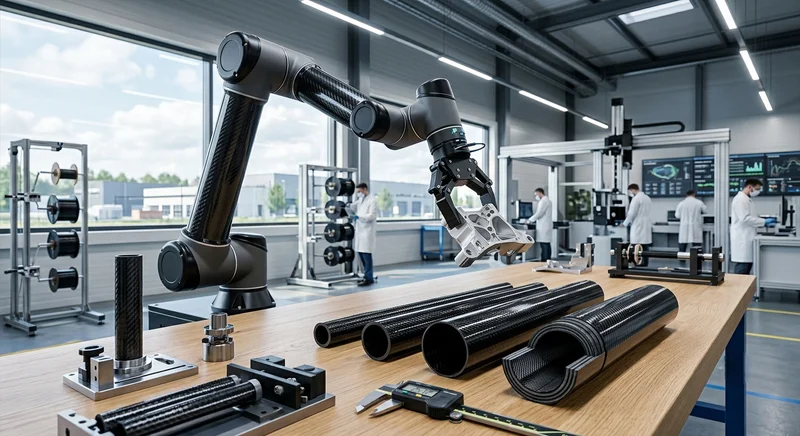
Carbon Fiber Robotic Arm Tube — High-Stiffness Lightweight Replacement
Precision-wound carbon fiber tubes for robotic arm links, replacing steel or aluminum in collaborative robots (cobots) and industrial manipulators. Achieve 3× the specific stiffness of aluminum with significant weight reduction, enabling faster acceleration and higher payload capacity.
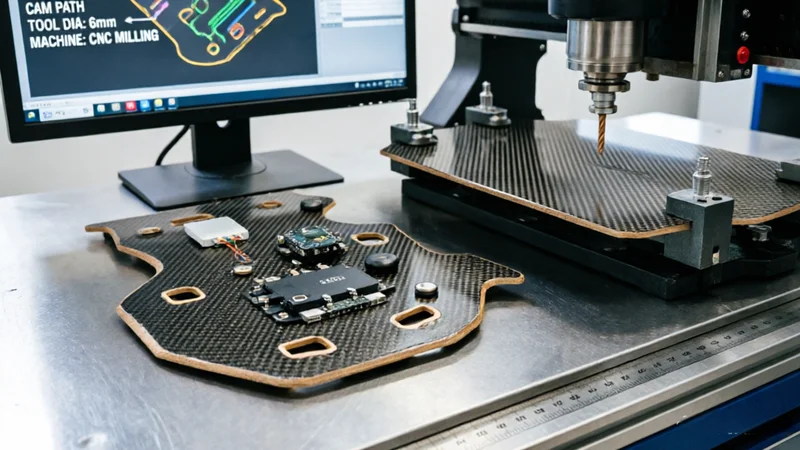
Carbon Fiber Drone Frame Base Plate — 3K Twill T700
CNC-machined carbon fiber base plates for drone frame assemblies. Cut from 3K twill weave T700 prepreg with precision CNC routing. Pre-drilled mounting patterns compatible with common flight controller and power distribution board layouts. Available in 1.5mm to 5mm thickness.
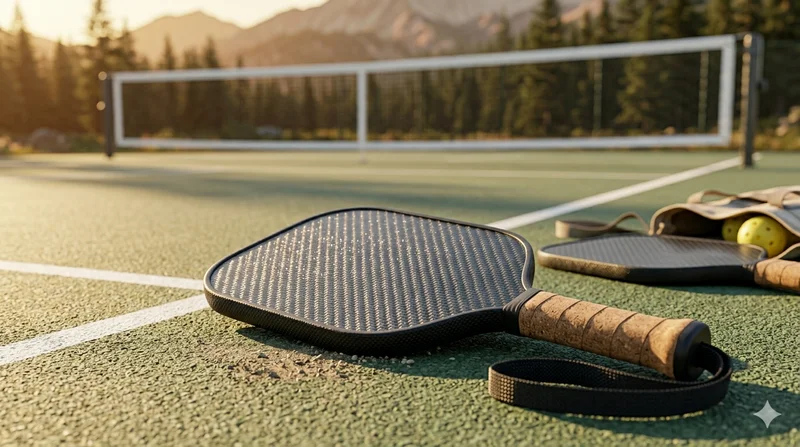
Carbon Fiber Pickleball Paddle
High-performance pickleball paddle with Toray T700 carbon fiber face and polypropylene honeycomb core. Delivers excellent power-to-weight ratio, spin generation, and vibration dampening for competitive play.
Round Carbon Fiber Tube — 3K Plain Weave T700
Standard round carbon fiber tube manufactured from Toray T700 grade fiber with 3K plain weave. Offers balanced strength and stiffness for general industrial applications including robotics, automation, sports equipment, and aerospace structures.