Becoming a carbon fiber supplier for spacex -class programs is less about owning an autoclave and more about proving control: every roll of fiber, every mix of resin and every cure cycle has to be traceable, documented and repeatable to an auditable standard. Aerospace primes and the tiered supply c
Introduction
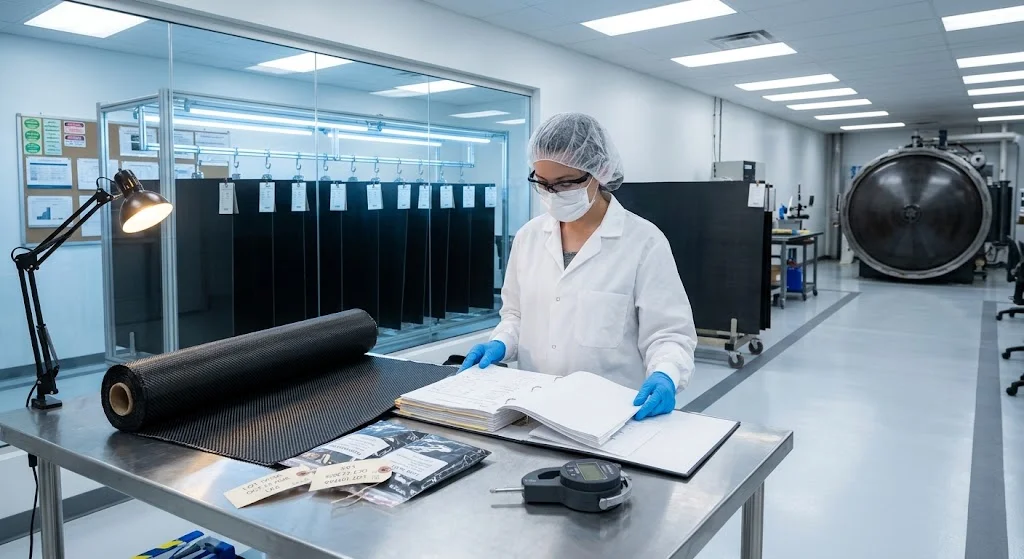
Becoming a carbon fiber supplier for spacex-class programs is less about owning an autoclave and more about proving control: every roll of fiber, every mix of resin and every cure cycle has to be traceable, documented and repeatable to an auditable standard. Aerospace primes and the tiered supply chain behind them buy process capability first and capacity second, which is why a small shop with a clean quality system can beat a large mill that cannot produce the paperwork.
This guide covers what a carbon fiber supplier must hold and demonstrate — certification, traceability, inspection and change control — how buyers shortlist the best carbon fiber supplier for a program, and how a carbon fiber manufacturer in india competes on cost and lead time inside the same global chain.
What a Carbon Fiber Supplier for SpaceX-Class Programs Must Prove
The public bar for aerospace composite work is well known and does not depend on any single customer: a certified quality management system, controlled processes, and evidence that the part you ship is the part you qualified. Buyers at this level ask for the same core documents regardless of program, and a supplier that can produce them on the first request moves to the top of the shortlist.
| Requirement | What it covers | Typical evidence requested |
|---|---|---|
| AS9100 quality system | Aerospace QMS over design, production and traceability | Certificate with scope covering composites, current audit status |
| Nadcap composites audit | Process-specific accreditation for composite manufacturing | Accreditation letter and audit score for the relevant process |
| Material traceability | Resin lot, fiber batch and out-time history per part | Batch numbers recorded on the traveler and the certificate |
| First article inspection | Dimensional and material verification of the first article | AS9102 forms filled for the part number in question |
| Cure and process records | Autoclave or oven charts, calibration of instruments | Cure log per lot, calibration certificates for sensors |
| Counterfeit prevention | Chain of custody for regulated materials | Purchase records from authorized distributors, no broker stock |
Certificates open the door; traceability is what keeps it open. A buyer who asks which roll of T700-class fiber went into a specific panel, and when it left the freezer, expects an answer in minutes rather than a promise to investigate.
Certification and Documentation Every Carbon Fiber Supplier Must Provide
Paperwork in aerospace is not administrative overhead — it is the product evidence. The standard package a serious buyer requests before a purchase order looks predictable, and preparing it in advance shortens qualification dramatically.
- Material certificates: mill certificates for fiber and resin, with mechanical properties and shelf-life status for prepreg lots.
- Process records: cure charts, vacuum logs and calibration dates tied to the lot number of the delivered parts.
- Inspection data: ultrasonic or tap-test results where the drawing calls for them, plus dimensional reports against the model.
- Change control: written notification before any substitution of fiber, resin, cure cycle or sub-tier source.
- Configuration control: the revision level of the drawing used, so a re-run of the order matches the qualified build.
Ask any carbon fiber supplier for these five items before samples, not after: a supplier that produces them cleanly on the first request is a supplier already running an aerospace-grade system.
How to Choose the Best Carbon Fiber Supplier
The best carbon fiber supplier for a given program is the one whose process window matches your part, not the one with the longest client list. Qualification questions that separate capable shops from aspirational ones are concrete: what is your maximum cure temperature and uniformity, what inspection method is standard, how do you handle out-of-life prepreg, and which sub-tier do you buy from. Visit the floor if the program justifies it — the state of the layup room, the labeling on the freezers and the calibration stickers on the ovens tell you more than any brochure.
Commercial structure matters as much as technical fit: a supplier that quotes a realistic lead time, flags minimum order quantities early and writes the change-control terms into the contract will not surprise you at the worst moment of a build schedule.
Carbon Fiber Manufacturer in India: Cost and Lead Time Trade-offs
A carbon fiber manufacturer in india competes in this chain through labor cost, growing composite capability and proximity to fast-growing domestic aerospace and defense programs. For non-flight-critical tooling, ground fixtures and secondary structures, Indian shops frequently quote 20-40% below North American or European sources with respectable lead times. The qualification burden stays the same — AS9100 certification, traceability and inspection evidence do not change by geography — so the decision comes down to audit results, sample quality and total landed cost including freight and duty.
Practical sourcing pattern: dual-source the qualified part list, keep the flight-critical items with the incumbent that has the flight history, and move fixtures, jigs and ground support parts to the lower-cost source as audit evidence accumulates.
Frequently Asked Questions
What certifications must a carbon fiber supplier for spacex-class work hold?
The widely required baseline is an AS9100 quality management system with composites in scope, supported where the process demands it by Nadcap composite accreditation, documented material traceability, first article inspection to AS9102 and controlled calibration. Individual programs add contractual requirements on top of that baseline, but no public certification is specific to one customer.
How long does supplier qualification usually take?
Auditing an existing certified supplier and approving first articles commonly takes several months; building a new process from scratch runs longer and depends on how much testing the program requires. Suppliers that pre-assemble the documentation package — certificates, traceability examples, inspection reports — consistently clear the process faster.
Is a carbon fiber manufacturer in india a viable alternative for aerospace orders?
For tooling, ground fixtures and secondary structures, yes, and cost savings of 20-40% are commonly quoted once freight and duty are counted. Flight-critical hardware still needs the same certification and inspection evidence as anywhere else, so evaluate the audit result and sample quality rather than geography alone.
Conclusion
Becoming the carbon fiber supplier a top-tier aerospace program trusts is a documentation exercise backed by disciplined process control: certifications current, lots traceable, inspections recorded and changes declared. Evaluate suppliers on evidence rather than claims, and the qualification process becomes predictable for both sides.
YongXian supplies carbon fiber sheet, plate and tube with full material certification and CNC cutting to drawing, supporting programs that need documented aerospace-grade supply. Browse our carbon fiber range or contact our engineering team with your specification and annual volume.
Part of topic
Related Articles
- How to Evaluate a Custom Carbon Fiber Parts Manufacturer
- Carbon Fiber Drone Price Guide: What Each Class Costs in 2026
- Carbon Fiber Manufacturer in India: Capacity, Capabilities and Buyer Notes
- Carbon Fibre Custom Plate: A UK Buyer Guide
- Carbon Fiber Cloth Supplier Guide: How to Evaluate 3K, 12K and Weave Types
- Carbon Fiber Tube Price in BD: Bangladesh Market and Import Guide
Interested in Our Products?
Contact our team for competitive pricing and technical specifications.
Get a QuoteRelated Products

Round Carbon Fiber Tube — 3K Plain Weave T700
Standard round carbon fiber tube manufactured from Toray T700 grade fiber with 3K plain weave. Offers balanced strength and stiffness for general industrial applications including robotics, automation, sports equipment, and aerospace structures.
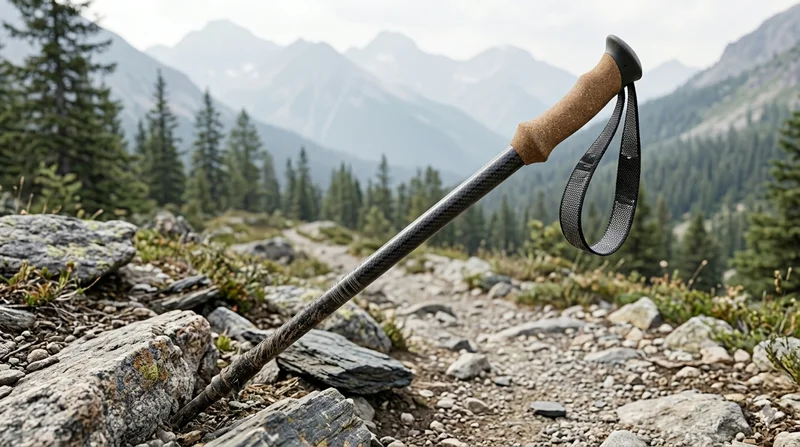
Carbon Fiber Trekking Pole
Lightweight carbon fiber trekking pole manufactured from high-grade carbon fiber tube. Weighs only 160g per pole while providing superior shock absorption and durability for hiking, trail running, and backpacking.

Carbon Fiber Pickleball Paddle
High-performance pickleball paddle with Toray T700 carbon fiber face and polypropylene honeycomb core. Delivers excellent power-to-weight ratio, spin generation, and vibration dampening for competitive play.

Square Carbon Fiber Tube — 3K Twill T700
Square cross-section carbon fiber tube manufactured with 3K twill weave for torsional strength. Preferred for structural frames, trusses, and support columns where rectangular geometry offers design flexibility.

Round Carbon Fiber Tube — 3K Twill
Lightweight and ultra-stiff round tubes ideal for drone frames, robotics, and structural applications.