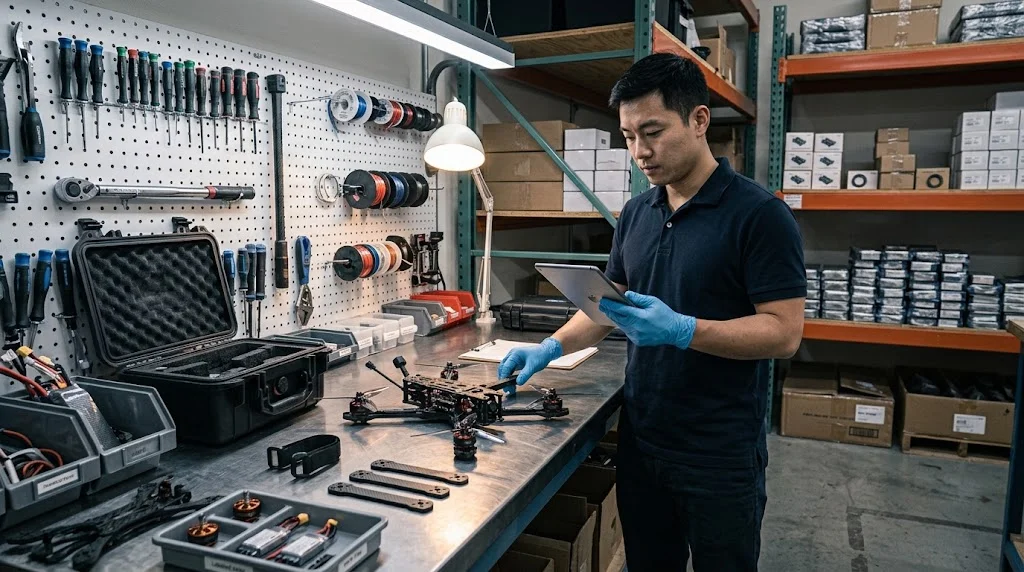
A carbon fiber drone price is never one number — it is a stack of decisions about frame, payload, redundancy and certification, and the same word covers a $400 racing quad and a $150,000 survey aircraft. The useful question is which of those decisions actually move the price, and which are marketing
Introduction
A carbon fiber drone price is never one number — it is a stack of decisions about frame, payload, redundancy and certification, and the same word covers a $400 racing quad and a $150,000 survey aircraft. The useful question is which of those decisions actually move the price, and which are marketing.
This guide sets out carbon fiber drone price ranges by class, breaks a typical build into components so you can see where carbon appears, compares carbon fiber drone frame price across tiers, and closes with the operating math that shows when the extra outlay on carbon fiber drones returns in flight hours, payload and transport cost.
Carbon Fiber Drone Price by Class
Prices below are typical 2026 market ranges for bought-in platforms or full custom builds, excluding enterprise software subscriptions. The spread inside each class reflects payload, redundancy and how much of the airframe is carbon.
| Class | Frame material | Typical price | What the money buys |
|---|---|---|---|
| FPV racing / freestyle | Carbon plate frame | $350-900 | 4-6S powertrain, 5-7 in props, spare arms |
| Inspection quadcopter | Carbon tube arms | $2,500-9,000 | Zoom/thermal payload, RTK, dual links |
| Cinema / heavy lift | Carbon tube frame | $8,000-35,000 | 10-25 kg payload, redundancy, quick-release mounts |
| Spraying / agriculture | Carbon-reinforced arms | $8,000-40,000 | Tank, pump, radar altimeter, foldable rig |
| Mapping VTOL | Full carbon airframe | $25,000-150,000 | Hybrid endurance, PPK survey grade, parachute |
The pattern is consistent: as price rises, the airframe share falls while the payload and avionics share climbs. On a $600 FPV build the frame is 15-25% of cost; on a $60,000 VTOL it is under 10% — which is why arguing about frame material makes sense at the low end and payload quality dominates at the high end.
Two entries deserve a note. FPV pricing assumes you build from a kit; buying a tuned, bound-and-flown quad adds $100-300 for setup. Agricultural pricing assumes a single battery set — most spraying operations need four to six packs, which adds $2,000-6,000 before anyone talks about frames.
What Drives the Carbon Fiber Drone Price
Four factors explain almost all of the spread between two quotes that look identical on paper.
- Payload: a thermal camera adds $1,500-6,000, a LiDAR pod $8,000-40,000; the airframe must be sized to carry it, which feeds back into frame cost.
- Redundancy: dual flight controllers, redundant ESCs and a second battery bus can double the avionics bill and add 30-40% to the airframe, because each branch needs its own mounting and wiring.
- Material and build volume: prepreg autoclave carbon costs several times more than wet-layup plate; a one-off custom frame carries tooling that a 500-unit run spreads thin.
- Compliance: documentation, fail-safe testing and spare-part traceability add engineering hours that a hobby-grade platform simply does not carry.
When comparing quotes, ask which of these four the price includes. Two builds a thousand dollars apart often differ only in how much redundancy and paperwork one of them carries.
Carbon Fiber Drone Frame Price Across Tiers
The frame is the piece buyers most often replace, so its price deserves its own line. A carbon fiber drone frame price rises with size, layup quality and how much tooling it embeds.
| Frame | Plate thickness | Frame weight | Price range |
|---|---|---|---|
| 5 in FPV freestyle | 4-5 mm plate | 110-160 g | $45-140 |
| 7 in long range | 5-6 mm plate | 170-240 g | $70-190 |
| Inspection quad (600 mm) | Tube + plate mix | 450-900 g | $300-1,200 |
| Cinema heavy lift (900 mm) | Pultruded tubes | 1.4-3.0 kg | $900-4,500 |
Buying frames direct from a plate-cutting shop instead of a branded kit typically saves 30-50%, but you take on arm geometry, hardware selection and the isolation details yourself — which is fine if you are comfortable specifying bolt torque and edge radii.
Where Carbon Fiber Drones Pay for Themselves
For commercial operators, the relevant comparison is cost per flight hour rather than sticker price. Carbon frames weigh less, so transport cases stay under airline limits, batteries cycle fewer amp-hours per mission, and the airframe rarely needs straightening after a hard landing. A mapping outfit flying 20 missions a month typically recovers a $3,000 frame premium inside two seasons through battery life and payload headroom alone, before counting the value of the extra flight time the weight saving buys.
The case is weaker for platforms that live in a crate: a spraying drone that flies short, heavy missions and gets washed daily gains little from exotic materials, and operators in that segment rightly buy arms that are cheap to replace rather than light to carry.
There is also a resale angle: airframes with carbon tube arms and documented flight hours hold value better than molded plastic frames, because buyers can inspect the laminate for dents and delamination. If you replace platforms every two or three years, residual value can return 10-20% of the original carbon premium.
Frequently Asked Questions
What is a realistic carbon fiber drone price for a first commercial build?
Budget $3,000-9,000 for a ready-to-fly inspection quad with a basic camera and RTK, or $2,000-4,000 if you assemble it yourself from a carbon frame kit. Moving to thermal or a heavier payload typically pushes the total past $10,000 once licensing and spares are included.
How much does a carbon fiber drone frame price add over an aluminum one?
On small frames, carbon adds roughly $30-70 over a comparable aluminum frame while saving 70-100 g. On large tube frames the gap widens in absolute terms, but the frame share of total cost falls, so the material choice changes flight performance more than it changes the invoice.
Are carbon fiber drones cheaper to run over their lifetime?
Somewhat, for active commercial schedules: lower frame weight reduces battery throughput and transport weight, and carbon frames do not bend out of true the way aluminum arms do. The dominant lifetime costs remain batteries, payload maintenance and insurance, so material choice should follow the mission profile rather than lead it.
Conclusion
A carbon fiber drone price is best read as a stack: payload first, redundancy second, airframe third. Match the class to the mission, ask which of the four cost drivers a quote includes, and treat the carbon premium as a performance decision measured in flight hours rather than a line item to minimize.
YongXian supplies carbon fiber plate, tube and CNC-cut frame parts for drone builders, from 4 mm FPV plate to pultruded heavy-lift tubes. Browse our carbon fiber range or contact our engineering team with your frame drawing and expected annual volume.
Related Articles
- How to Evaluate a Custom Carbon Fiber Parts Manufacturer
- Carbon Fiber Supplier for SpaceX-Class Programs: What Aerospace Buying Requires
- Carbon Fiber Manufacturer in India: Capacity, Capabilities and Buyer Notes
- Carbon Fibre Custom Plate: A UK Buyer Guide
- Carbon Fiber Cloth Supplier Guide: How to Evaluate 3K, 12K and Weave Types
- Carbon Fiber Tube Price in BD: Bangladesh Market and Import Guide
Interested in Our Products?
Contact our team for competitive pricing and technical specifications.
Get a QuoteRelated Products

Round Carbon Fiber Tube — 3K Plain Weave T700
Standard round carbon fiber tube manufactured from Toray T700 grade fiber with 3K plain weave. Offers balanced strength and stiffness for general industrial applications including robotics, automation, sports equipment, and aerospace structures.
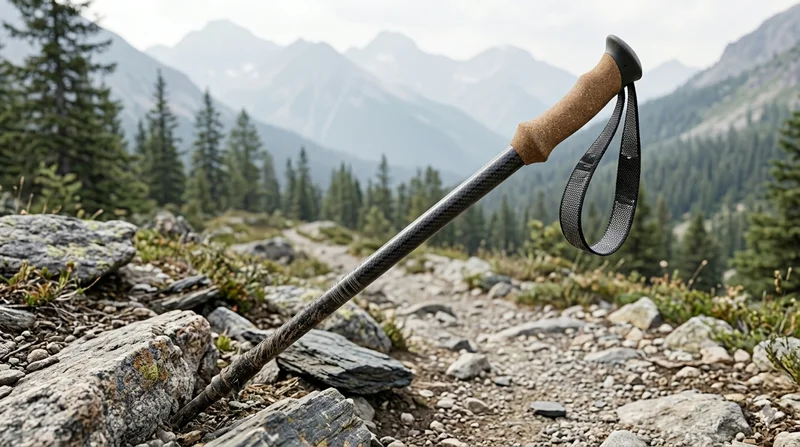
Carbon Fiber Trekking Pole
Lightweight carbon fiber trekking pole manufactured from high-grade carbon fiber tube. Weighs only 160g per pole while providing superior shock absorption and durability for hiking, trail running, and backpacking.

Carbon Fiber Pickleball Paddle
High-performance pickleball paddle with Toray T700 carbon fiber face and polypropylene honeycomb core. Delivers excellent power-to-weight ratio, spin generation, and vibration dampening for competitive play.

Square Carbon Fiber Tube — 3K Twill T700
Square cross-section carbon fiber tube manufactured with 3K twill weave for torsional strength. Preferred for structural frames, trusses, and support columns where rectangular geometry offers design flexibility.

Round Carbon Fiber Tube — 3K Twill
Lightweight and ultra-stiff round tubes ideal for drone frames, robotics, and structural applications.