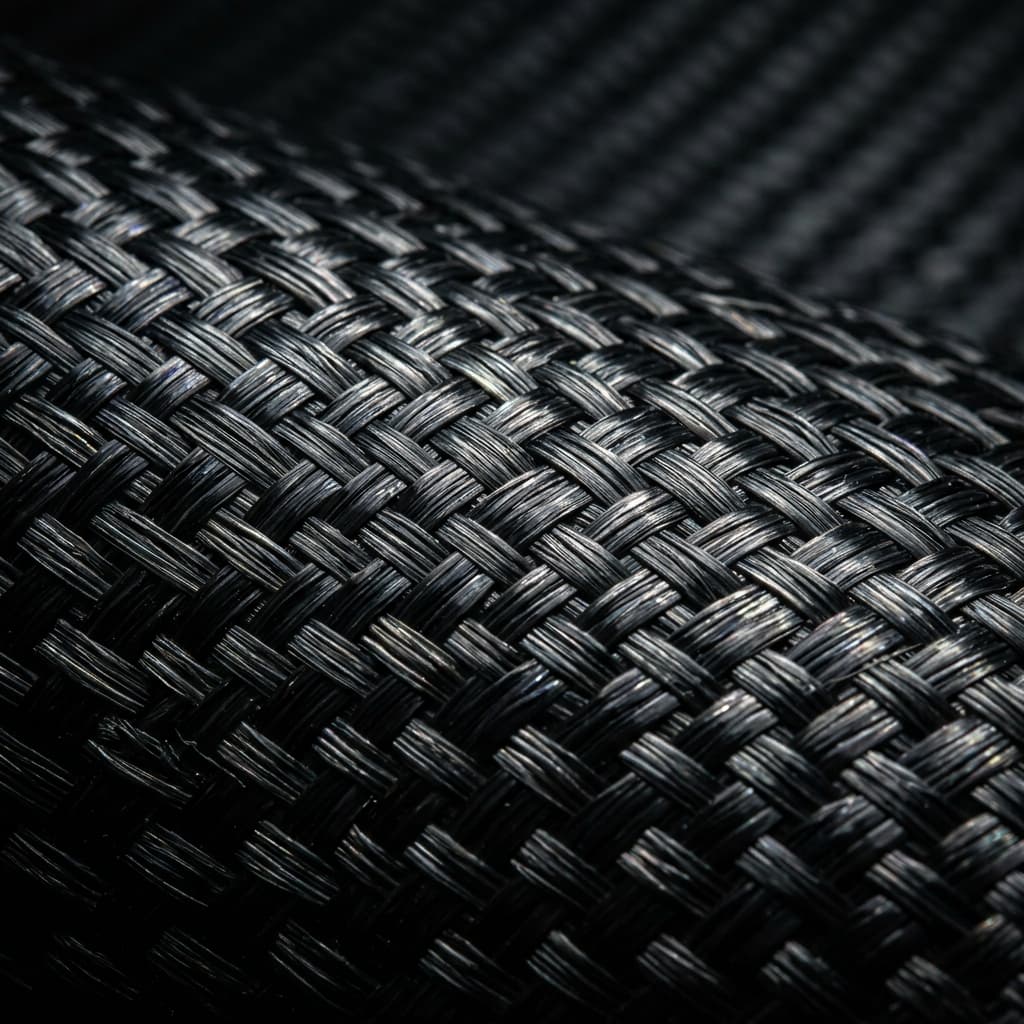
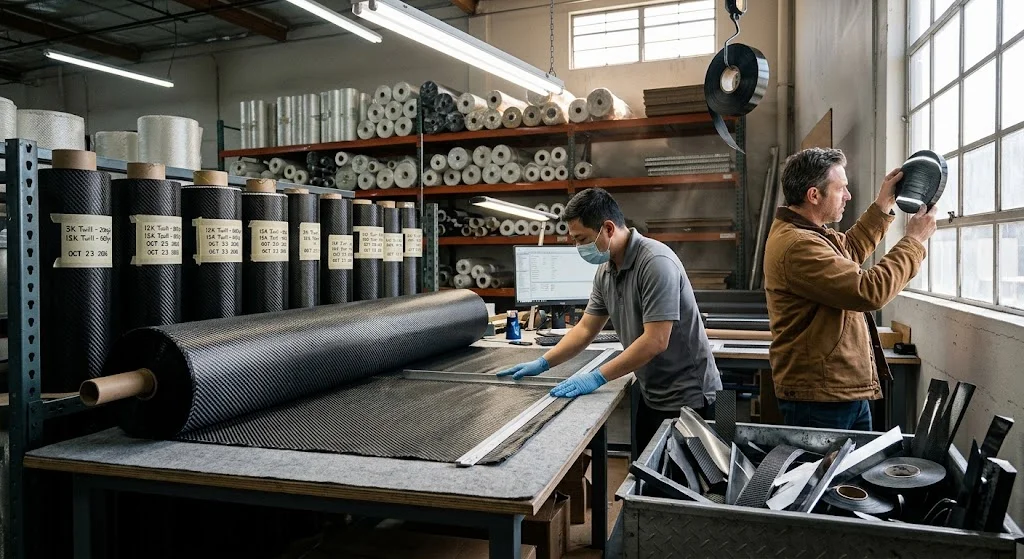
Choosing a carbon fiber cloth supplier is not a price comparison — it is a specification audit. The same "3K twill" listing can be a certified aerospace-grade prepreg fabric with a batch certificate or a decorative upholstery roll with unknown resin content and inconsistent areal weight, and the dif
Introduction
Choosing a carbon fiber cloth supplier is not a price comparison — it is a specification audit. The same "3K twill" listing can be a certified aerospace-grade prepreg fabric with a batch certificate or a decorative upholstery roll with unknown resin content and inconsistent areal weight, and the difference only shows up after you have laid up forty parts. This guide gives you the numbers and the questions: 3K versus 12K tow selection, weave types that actually matter for structural work, what a legitimate carbon fiber fabric supplier discloses before you pay, and the MOQ and lead-time bands you should expect.
Covered here: a direct 3K/12K comparison with cost and handling data, the four weave families and where each belongs in a layup schedule, the disclosure checklist that separates a real supplier from a listing for carbon fiber material for sale, and the inspection steps that catch a bad roll before it reaches your mold.
3K vs 12K Carbon Fiber Cloth: Tow Size Selection
Tow size — the number of filaments per bundled strand — is the first decision, and it drives surface finish, cost per part, and how forgiving the fabric is during layup. The table below prices a standard 200 g/m² twill roll against the 12K equivalent.
| Parameter | 3K tow | 6K tow | 12K tow |
|---|---|---|---|
| Filaments per tow | 3,000 | 6,000 | 12,000 |
| Typical areal weight | 190-220 g/m² | 200-240 g/m² | 200-240 g/m² |
| Visual weave scale | fine, near-smooth finish | medium | bold, high-contrast pattern |
| Price per meter (200 g twill) | $18-32 | $15-28 | $12-22 |
| Drapability over tight radii | best | good | fair; thicker tows bridge small curves |
| Common use | visible automotive and sporting surfaces | structural panels, drone frames | tube winding, large industrial laminates |
The cost gap looks small per meter but compounds: a 3K roll costs 30-50% more than 12K at the same areal weight, yet covers fewer square meters per kilogram of finished part when you count the extra resin required to wet out the finer tow. For structural work that will never be seen, 12K is the rational default. For a hood, a guitar body, or a fairing where the weave is the product, 3K justifies its premium.
Weave Types: Plain, Twill, Satin and Unidirectional
Weave construction determines how the fabric behaves under the roller and how the finished surface reads. Four families cover almost every structural application.
- Plain weave (1/1): the most stable weave — threads interlace at every crossing, so the fabric holds its shape and resists distortion during cut and layup. Best for flat panels and for anyone learning hand layup; the downside is slightly lower conformability over compound curves.
- Twill (2/2): the diagonal pattern you see on most "carbon look" products. The 2/2 float lets the fabric shear more easily, which makes it the default for contoured parts — motorcycle tanks, camera cages, ergonomic grips. Expect 15-25% better drape than plain at the same areal weight.
- Satin (4-harness or 8-harness): longer float lengths give the smoothest surface and the best conformity over deep draws, but the fabric is delicate — a snag during layup pulls a tow out of alignment and the flaw is permanent under clear coat. Use satin for aerospace fairings and high-value cosmetic parts, not for production hand layup.
- Unidirectional (UD): all fibers parallel, held by a thin stitch thread. No weave crimp means maximum tensile and compressive performance per gram, which is why UD plies form the core of almost every structural laminate schedule. UD is not a surface material — it needs a woven face ply or a peel ply to look finished.
A real carbon fiber fabric supplier stocks all four families and can tell you the stitch yarn material (polyester is standard, nylon for higher tear resistance) and the panel width without checking a system.
What a Carbon Fiber Fabric Supplier Must Disclose
Price and stock lists are marketing. The following five data points separate a supply chain from a storefront — ask for all five before you commit to a roll.
- Fiber designation: Toray T300, T700, T800, or equivalent domestic grade. "Aerospace grade" without a grade name is not a specification.
- Areal weight tolerance: ±5 g/m² is standard production; ±10 g/m² suggests a lower-tier line. Request the certificate of analysis for the batch, not a generic datasheet.
- Resin content (for prepreg): 35-45% by weight is the normal structural window. Outside that range, confirm the system is engineered for the deviation — out-of-autoclave prepregs sometimes run higher.
- Width and roll length: standard rolls are 1 m or 1.27 m wide, 50-100 m long. Odd widths usually mean rewound remnant stock, which is fine for prototypes but track the batch origin.
- Shelf life and storage: prepreg needs frozen storage (-18 °C) and a documented out-life at room temperature. Dry fabric is simpler but still benefits from humidity-controlled warehousing to prevent sizing damage.
For carbon fiber material for sale from an unknown listing, these five questions are your fastest filter: a supplier who cannot answer is selling appearance, not material.
MOQ, Lead Time and Price Bands
Expect three tiers from any serious carbon fiber cloth supplier. Mill-direct container orders (100-500 kg, 6-10 weeks) land at $12-22/m for standard 200 g twill. Distributor stock (same-day to 5-day, 1-roll MOQ) runs $18-32/m with cut-to-width available. Small-batch or specialty weaves (custom widths, hybrid carbon-glass, colored tows) carry a 20-40% premium and 3-4 week lead times. The break-even for leaving distributor stock is roughly 200-300 meters per year — below that, the freight, customs entry, and frozen-storage setup eat the per-meter savings.
Frequently Asked Questions
Should I buy 3K or 12K carbon fiber cloth for a structural project?
For hidden structural work — tube winding, internal frames, drone chassis — 12K offers the same mechanical performance at 20-35% lower cost per part. Choose 3K when the weave is visible or when the part has tight radii that benefit from finer tow drape. Both are legitimate; the wrong choice is paying 3K prices for a part that will be painted over.
How do I verify a carbon fiber cloth supplier before placing a large order?
Request a batch certificate of analysis for areal weight and fiber designation, order a 1-2 meter test roll, and inspect the weave under raking light for pull-outs and width inconsistency. Check that the stated g/m² matches a simple scale measurement of a 100 mm square cut from the roll. Repeat orders should reference the same batch number until you have qualified the line.
What is the difference between dry carbon fiber cloth and prepreg?
Dry cloth is the woven fabric alone — you supply the resin via wet layup, vacuum infusion, or a film adhesive. Prepreg has the resin system already metered into the fabric at 35-45% by weight and requires frozen storage plus a controlled cure (oven or autoclave). Prepreg gives tighter fiber volume control and higher void performance; dry cloth is cheaper, shelf-stable, and more forgiving of irregular part geometries.
Conclusion
Evaluating a carbon fiber cloth supplier comes down to specification discipline: match tow size to whether the weave is seen, pick the weave family your geometry demands, and refuse to buy without the five disclosure points — fiber grade, areal weight tolerance, resin content, roll dimensions, and storage history. The cheapest listing for carbon fiber material for sale is rarely the cheapest part when a rejected batch costs a production week.
YongXian supplies certified 3K, 6K and 12K carbon fiber cloth in plain, twill, satin and unidirectional weaves, with prepreg and dry options, batch documentation, and custom roll widths for production programs. Browse our carbon fiber fabric range or contact our engineering team with your areal weight, weave and annual volume.
Part of topic
Related Articles
- Carbon Fiber Manufacturer in India: Capacity, Capabilities and Buyer Notes
- Carbon Fibre Custom Plate: A UK Buyer Guide
- Carbon Fiber Tube Price in BD: Bangladesh Market and Import Guide
- Carbon Fiber Drone Frame Price: Tiers, Thickness, and Cost Drivers
- Carbon Fibre Sheet Custom Size Guide: Ordering Cut-to-Size Plates for UK and EU Buyers
- Carbon Fiber Sheets for Sale Near Me: A Local Sourcing Guide
Interested in Our Products?
Contact our team for competitive pricing and technical specifications.
Get a QuoteRelated Products

Round Carbon Fiber Tube — 3K Plain Weave T700
Standard round carbon fiber tube manufactured from Toray T700 grade fiber with 3K plain weave. Offers balanced strength and stiffness for general industrial applications including robotics, automation, sports equipment, and aerospace structures.

Square Carbon Fiber Tube — 3K Twill T700
Square cross-section carbon fiber tube manufactured with 3K twill weave for torsional strength. Preferred for structural frames, trusses, and support columns where rectangular geometry offers design flexibility.

Carbon Fiber Pickleball Paddle
High-performance pickleball paddle with Toray T700 carbon fiber face and polypropylene honeycomb core. Delivers excellent power-to-weight ratio, spin generation, and vibration dampening for competitive play.
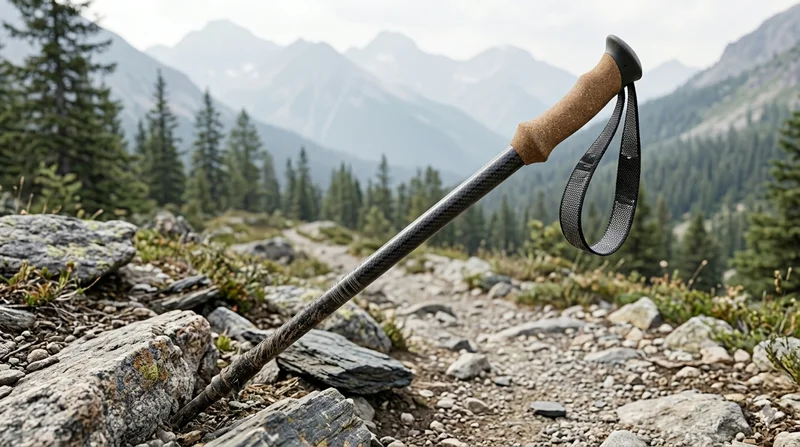
Carbon Fiber Trekking Pole
Lightweight carbon fiber trekking pole manufactured from high-grade carbon fiber tube. Weighs only 160g per pole while providing superior shock absorption and durability for hiking, trail running, and backpacking.

Round Carbon Fiber Tube — 3K Twill
Lightweight and ultra-stiff round tubes ideal for drone frames, robotics, and structural applications.