Carbon fiber plate orthotic technology is one of the most successful material applications in modern medicine. Clinicians and device manufacturers choose a carbon fiber plate orthotic because it combines low weight with high stiffness and excellent energy return, which means a prosthetic foot or an
Introduction
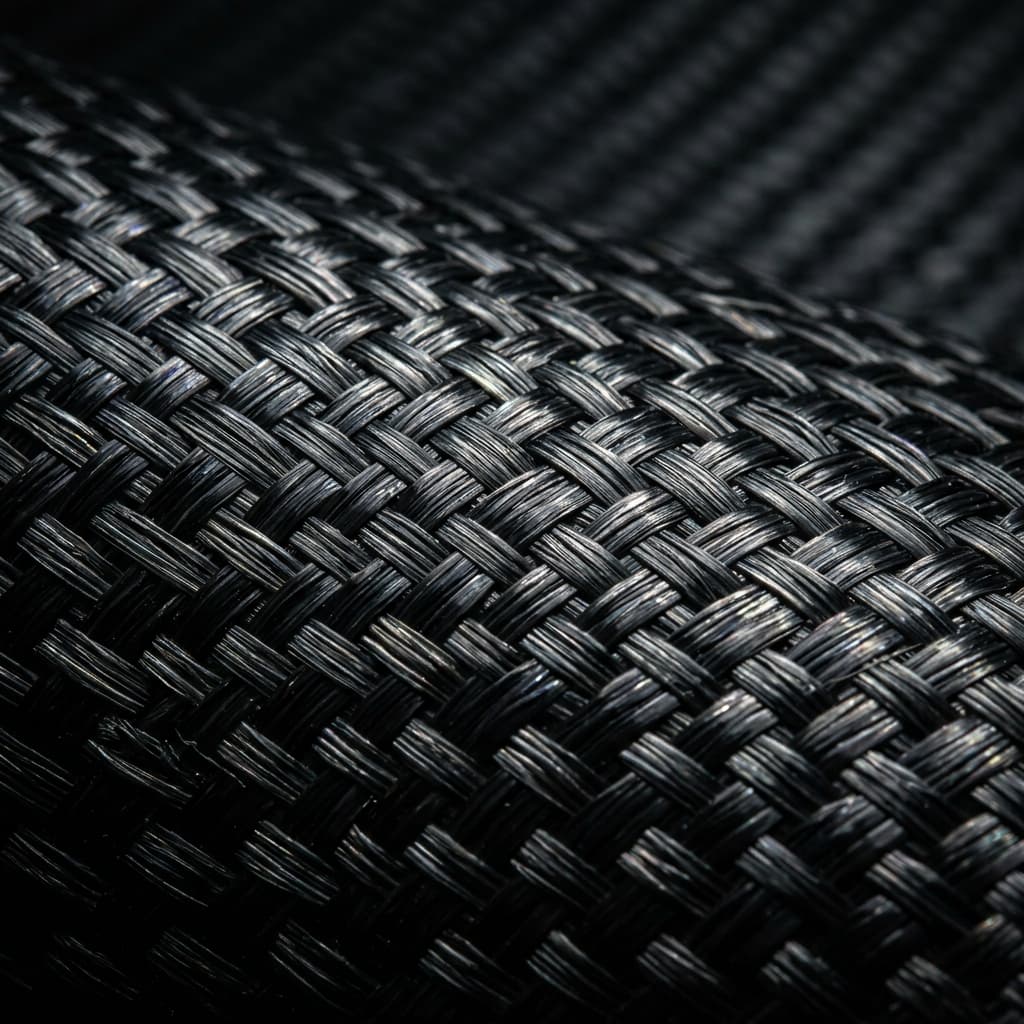
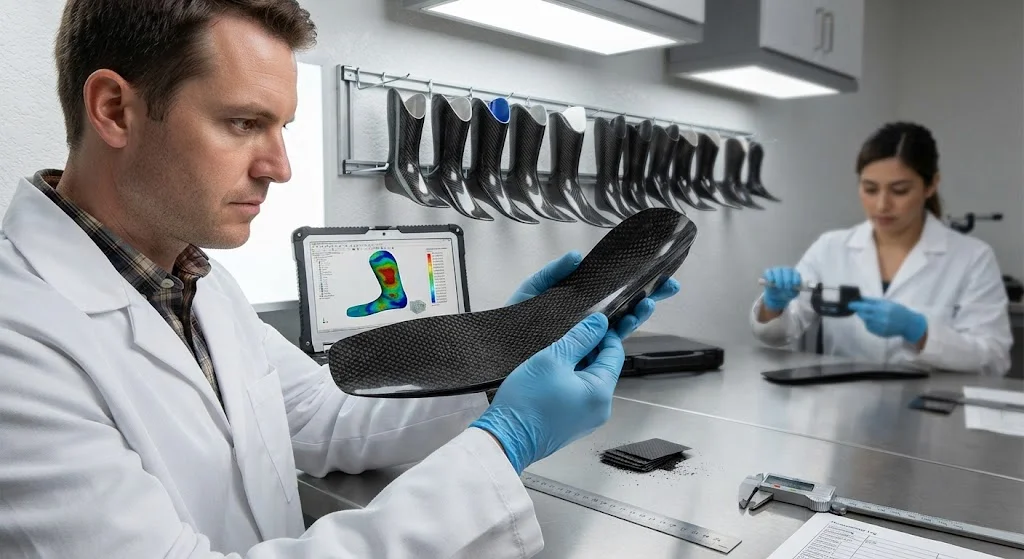
Carbon fiber plate orthotic technology is one of the most successful material applications in modern medicine. Clinicians and device manufacturers choose a carbon fiber plate orthotic because it combines low weight with high stiffness and excellent energy return, which means a prosthetic foot or an ankle-foot orthosis can store mechanical energy during one phase of gait and release it during the next. The result is a walking pattern closer to natural motion, less fatigue for the user, and a device that lasts far longer than polymer-only alternatives. This article explains the engineering behind carbon fiber plate orthotic design, the manufacturing routes used to produce it, the properties that matter in clinical use, and what to look for when sourcing composite medical device plates.
Carbon Fiber Plate Orthotic: What the Material Delivers
An orthotic carbon fiber plate is a thin, laminated sheet made from carbon fiber reinforcement and a medical-grade epoxy or thermoplastic matrix, shaped to support or replace a load-bearing function of the lower limb. The defining property of carbon fiber plate for orthotic applications is the stiffness-to-weight ratio: a plate can be tuned to flex under body weight and rebound with very little energy loss, which is exactly the behavior a prosthetic foot needs. Typical material properties used in clinical orthotics include a tensile modulus of 100-230 GPa depending on fiber grade, a flexural strength of 1,200-1,800 MPa, and a density of about 1.5-1.6 g/cm³, roughly one fifth the weight of the steel it replaces in a structural sense.
| Property | Typical Range | Why It Matters in Orthotics |
|---|---|---|
| Tensile modulus | 100-230 GPa | Determines how much the plate flexes under load and how much energy it returns per step |
| Flexural strength | 1,200-1,800 MPa | Prevents fracture during heel strike and toe-off loading cycles |
| Density | 1.5-1.6 g/cm³ | Keeps the device light enough for daily all-day wear |
| Fatigue life | Millions of cycles | Withstands years of repeated loading without strength degradation |
| Hysteresis loss | 3-8% | Low energy loss per cycle improves walking economy for the user |
The table above explains why composite materials replaced metals and glass fiber in this application class. A steel or titanium component of the same stiffness would weigh several times more, and a glass-fiber plate would need to be much thicker to reach the same stiffness, which makes it bulky inside a shoe or socket. Carbon fiber plate for orthotics solves both problems at once, which is why it now dominates prosthetic feet, AFOs, and a growing range of upper-limb devices.
How Carbon Fiber Plate Orthotic Components Are Manufactured
The manufacture of a CFRP orthotic plate starts with the layup: unidirectional or woven carbon fiber prepreg is cut into shaped plies, stacked at controlled angles to create the required flexural behavior, and cured under heat and pressure. Two routes dominate production. The first is compression molding, where pre-stacked prepreg is pressed between matched metal tooling at 130-160 °C and moderate pressure; this is the standard route for prosthetic feet and AFO shells because it produces consistent, repeatable parts at production volume. The second is autoclave curing, used for thinner, higher-performance plates or when aerospace-grade consolidation is required, with cure pressures of 6-10 bar and longer cycles.
- Compression molding: fast cycle times of 20-40 minutes, ideal for high-volume orthotic components, good surface finish on both faces.
- Autoclave curing: higher consolidation quality and lower void content, used for thin laminates and high-cycle dynamic parts.
- Thermoplastic stamping: a growing route using carbon fiber reinforced thermoplastics such as PA12 or PEEK, offering faster cycles and impact toughness at higher material cost.
Regardless of the route, the layup schedule is the engineering heart of an orthotic carbon fiber plate. A prosthetic foot, for example, often combines a stiff heel section with a progressively flexible toe, achieved by tapering the plate thickness and changing the ply orientation along the length of the device. Manufacturers model this behavior with finite element analysis before tooling is cut, because a plate that is 10% too stiff or too flexible changes the user's gait noticeably.
From Orthotic Plates to Prosthetic Devices
The most visible application of carbon fiber prosthetic plate technology is the prosthetic foot. Modern dynamic prosthetic feet are built around one or more curved carbon fiber plates that act as leaf springs: they compress under body weight during the stance phase and recoil to push the user into the next step. Clinical studies report that energy-storing feet made with carbon fiber plate for orthotic-grade material reduce the metabolic cost of walking by 10-20% compared with solid-ankle conventional feet, a meaningful difference for users who walk all day. The same plate technology appears in ankle-foot orthoses for drop foot, where a thin CFRP orthotic plate is molded to the contour of the shank and foot to hold the ankle in a functional position during swing phase.
Beyond the lower limb, carbon fiber plate for orthotics is used in spinal orthoses, where thin plates provide stiffness in one plane while remaining comfortable against the body, and in upper-limb devices such as wrist-driven splints and prosthetic fingers. What all of these share is the same design logic: the plate must be stiff where the anatomy needs support, flexible where the body needs to move, and light enough that the user forgets it is there. That combination is difficult to achieve in any material other than carbon fiber plate.
Sourcing Composite Medical Device Plates
Sourcing a carbon fiber plate for orthotic or medical device use is different from buying industrial sheet, because the clinical context adds requirements that a general-purpose CFRP sheet does not meet. The most important is traceability: device manufacturers need documented material batches, resin systems with known biocompatibility status, and mechanical test data that supports a regulatory submission. Buyers should ask for the following from a composite medical device plate supplier:
- Material pedigree: fiber grade, resin system, and whether the prepreg carries a manufacturer datasheet with batch traceability.
- Mechanical test reports: flexural modulus and strength, interlaminar shear strength, and fatigue data for the exact laminate configuration supplied.
- Biocompatibility evidence: for skin-contact devices, documentation on the resin and surface treatment; for implantable or long-term contact applications, test data to ISO 10993 where applicable.
- Thickness tolerance and flatness: orthotic plates are thin, typically 1-6 mm, so thickness control and warpage limits must be specified on the drawing.
Prototyping is also part of a practical sourcing strategy. Because the flexural behavior of a carbon fiber plate is highly sensitive to layup, a supplier that can produce trial plates in small quantities, test them, and iterate on the layup is worth far more than one that only sells fixed stock sizes. Most orthotic device programs run two to four prototype iterations before the final plate specification is frozen.
Frequently Asked Questions
What thickness of carbon fiber plate is used for orthotics?
Most orthotic and prosthetic applications use carbon fiber plates between 1 and 6 mm thick. Prosthetic foot keels are typically 3-6 mm with tapered edges, ankle-foot orthosis shells are commonly 2-4 mm, and lightweight splints and spinal orthoses can use plates as thin as 1-2 mm. The correct thickness depends on the stiffness target and the patient's body weight; because the plate is a spring as much as a structure, thickness is tuned by engineering analysis rather than chosen from a catalog.
Can one carbon fiber plate supplier serve both prototypes and production?
Yes, and this is usually the best arrangement for orthotic device manufacturers. A supplier that can produce small prototype batches, iterate on the layup schedule, and then scale to production volumes avoids the cost and delay of transferring a design between vendors. Confirm that the supplier documents each production batch with the same test data used in prototyping, so the regulatory file stays consistent from first article to volume supply.
Is carbon fiber plate safe for skin-contact orthotic devices?
Carbon fiber plate is widely used in skin-contact devices such as AFOs and prosthetic sockets. The plate itself is sealed by the resin system, so the skin contacts the cured matrix rather than raw fiber. Manufacturers should confirm that the resin system is suitable for the intended contact duration and document it accordingly; for devices that contact intact skin, standard epoxy systems used in the orthotics industry have a long clinical history, while any mucosal or implantable application requires a different, fully documented qualification path.
Conclusion
Carbon fiber plate for orthotics delivers a combination that no other material matches: high stiffness, low weight, tunable flexibility, and fatigue resistance measured in millions of cycles. For prosthetic feet, ankle-foot orthoses, and a widening range of medical devices, the carbon fiber plate is both the structural element and the energy-storage spring, and its design freedom is what makes modern dynamic gait possible. The practical task for a device manufacturer is to work with a supplier that understands layup-driven tuning, can prototype quickly, and documents material pedigree and mechanical data for the regulatory file.
YongXian manufactures carbon fiber plate for orthotic and medical device applications with controlled layups, documented mechanical test data, and prototype-to-production support. Browse our carbon fiber plate range or contact our engineering team to discuss the layup, thickness, and test documentation your orthotic program requires.
Part of topic
Related Articles
- Carbon Fiber Tubes for Sale: Spec Sheet Fields That Actually Matter
- Carbon Fiber Sheets Near Me: Local Dealers and Quick Turnaround Procurement
- Carbon Fiber Tubes Near Me: Local Stock Availability and Same-Day Delivery Options
- Carbon Fiber Sheets 6mm: Specifications, Load Ratings and Application Guide
- Carbon Fiber Rod Grips: Ergonomic Handle Design for Industrial and Sport Applications
- Carbon Fiber Propellers for Drones: Efficiency, Durability and Performance Optimization
Interested in Our Products?
Contact our team for competitive pricing and technical specifications.
Get a QuoteRelated Products
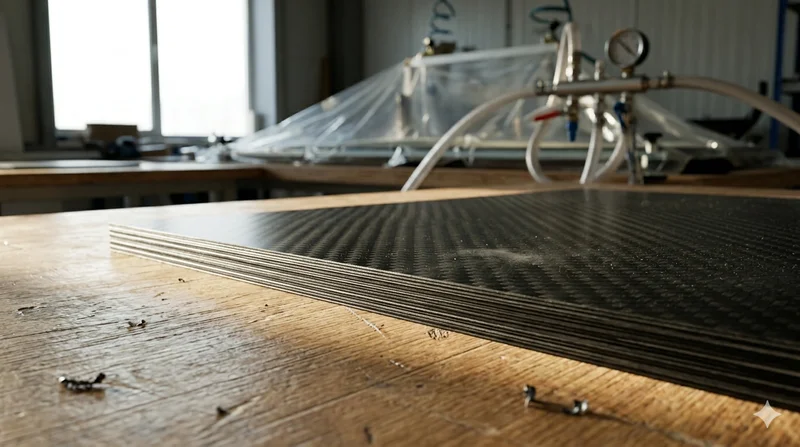
Carbon Fiber Plate — 3K Twill T700 3.0mm
Medium-thickness 3.0mm carbon fiber plate offering significantly higher load capacity while maintaining attractive 3K twill finish. Suitable for structural brackets, reinforcement plates, and load-bearing panels.
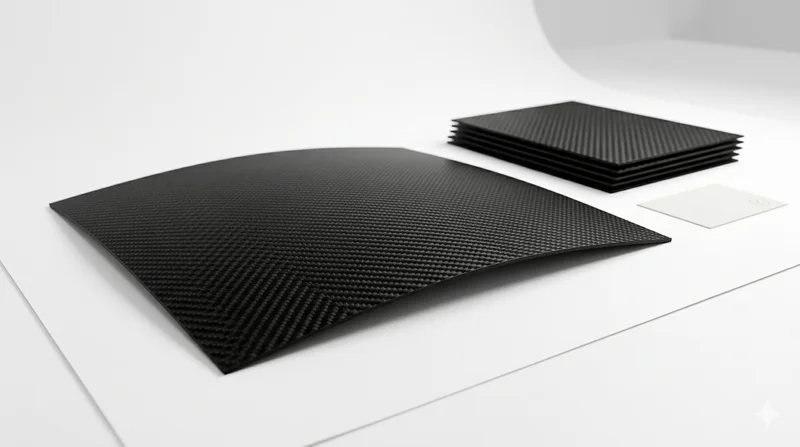
Carbon Fiber Plate — 3K Twill T700 1.5mm
Thin 1.5mm carbon fiber plate with 3K twill weave surface. Lightweight and stiff, commonly used for covers, panels, drone bodies, and applications requiring a premium aesthetic appearance.
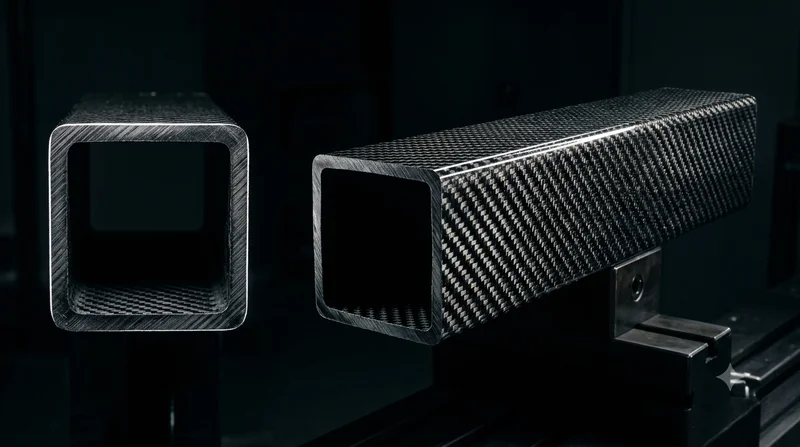
Square Carbon Fiber Tube — 3K Twill T700
Square cross-section carbon fiber tube manufactured with 3K twill weave for torsional strength. Preferred for structural frames, trusses, and support columns where rectangular geometry offers design flexibility.
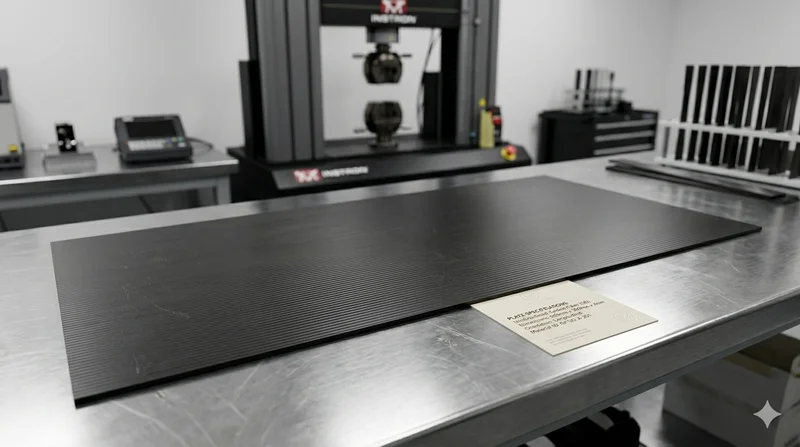
Carbon Fiber Plate — UD Unidirectional T700
Unidirectional carbon fiber plate with all fibers oriented in a single direction for maximum strength along the fiber axis. Essential for structural reinforcements, splints, and applications where load direction is predictable.
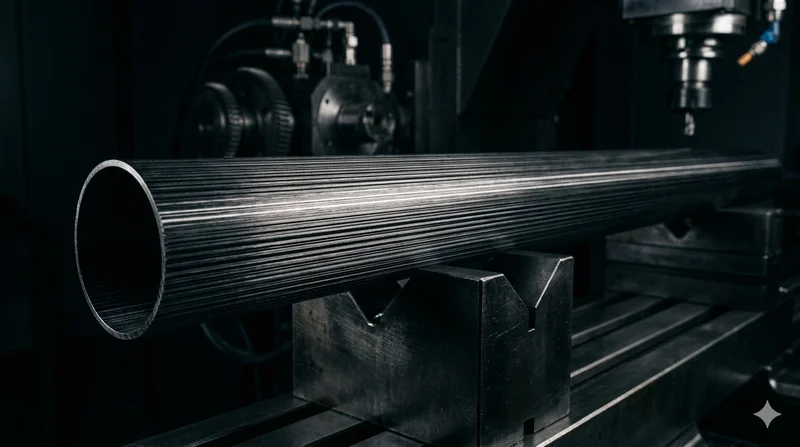
Round Carbon Fiber Tube — UD Unidirectional T700
Unidirectional (UD) round tube with all fibers aligned axially for maximum longitudinal stiffness. Ideal for applications requiring high bending rigidity with minimal weight, such as shafts, struts, and structural reinforcements.