Carbon fiber manufacturing companies operate in two very different businesses. The first tier produces the fiber itself — precursor, carbonization and surface treatment — and is dominated by a small group of global producers. The second tier converts that fiber into tubes, rods, sheets, molded parts
Introduction
Carbon fiber manufacturing companies operate in two very different businesses. The first tier produces the fiber itself — precursor, carbonization and surface treatment — and is dominated by a small group of global producers. The second tier converts that fiber into tubes, rods, sheets, molded parts and wound structures for aerospace, automotive, energy and industrial customers. For a buyer, the distinction matters because the two tiers have different minimum orders, lead times, quality systems and price structures, and choosing the right tier for your project is the first step in sourcing carbon fiber parts.
This guide maps the carbon fiber manufacturing companies landscape, compares the major fiber producers, and provides a practical framework for evaluating suppliers whether you need raw fiber, standard profiles or fully machined components.
The Two Tiers of Carbon Fiber Manufacturing Companies
The carbon fiber supply chain is not a single industry but two linked ones. Understanding the split explains pricing, availability and lead times that otherwise seem inconsistent.
| Tier | What They Make | Typical Customers | Order Size |
|---|---|---|---|
| Upstream fiber producers | PAN precursor, carbon fiber tow, fabric, prepreg | Parts manufacturers, wind blade makers, aerospace primes | Large — tow lots and annual contracts |
| Downstream parts manufacturers | Pultruded profiles, wound tubes, molded parts, machined components | Equipment builders, OEMs, distributors | Small to medium — metres to thousands of parts |
Upstream producers sell in bulk — a single aerospace contract can consume hundreds of tonnes of fiber a year. Downstream manufacturers buy that fiber and sell finished products, which is why a buyer ordering 100 metres of tube is almost always dealing with a downstream company, not with Toray or Hexcel directly.
The World's Leading Carbon Fiber Manufacturing Companies
Global carbon fiber capacity is concentrated in a handful of producers. The table below summarises the major names a buyer will encounter, with their typical product focus.
| Company | Headquarters | Product Focus | Notable Lines |
|---|---|---|---|
| Toray Industries | Japan | Standard and intermediate-modulus tow, prepreg, aerospace supply | T300, T700, T800, T1100; M-series high modulus |
| Teijin | Japan | High-strength tow and aerospace fabrics | Tenax brand, automotive and aviation grades |
| Hexcel | USA | Aerospace tow, fabric, prepreg and honeycomb | HexTow and HexPly product families |
| Mitsubishi Chemical | Japan | Tow and prepreg, automotive and industrial grades | Pyrofil and Grafil brands |
| SGL Carbon | Germany | Industrial tow, textiles, and carbon ceramic | SIGRAFIL for wind and automotive |
| Zhongfu Shenying | China | Large-tow and standard-tow, wind and industrial | SYT series including high-modulus grades |
| Guangwei Composites | China | Tow, fabric and prepreg for industrial and aerospace | GQ series carbon fiber |
Toray is the largest producer by capacity and dominates aerospace-grade fiber, particularly T700 and T800 families that appear in most aircraft programs. Hexcel and Solvay lead in prepreg systems for structural aviation. Chinese producers have expanded rapidly in large-tow and standard-modulus fiber, supplying wind energy and general industry at aggressive pricing.
How Carbon Fiber Manufacturing Companies Are Ranked by Capacity
Industry data from sources such as the CompositesWorld market survey and the Japan Carbon Fiber Manufacturers Association places global installed capacity at roughly 160,000 to 180,000 tonnes per year, with small-diameter tow (1K-24K) serving aerospace and large-tow (48K-60K) serving industrial applications. The capacity split matters commercially because aerospace-grade capacity is tighter and more expensive, while large-tow capacity has grown quickly and keeps industrial prices competitive. When a buyer is told a fiber is "in short supply," the shortage is almost always grade-specific — standard-modulus aerospace tow, not the broader market.
For purchasing purposes, the practical consequence is that fiber grade availability should be confirmed at the design stage. A part specified with T800 may face longer lead times and premium pricing, while the same design in T700 or an equivalent large-tow grade may be available off the shelf at a fraction of the cost.
Capacity announcements also shape pricing: when producers commission new large-tow lines, industrial prices ease, while aerospace-grade supply stays tight because certification gates every new line. Buyers who monitor these shifts can time purchases and negotiate annual contracts with producers holding spare capacity. In practice, industrial buyers rarely face true shortages, while aerospace programs sign multi-year supply agreements long before the fiber is needed.
What Downstream Carbon Fiber Manufacturing Companies Offer
The companies that actually sell components to equipment builders and OEMs typically combine several capabilities under one roof. The practical checklist when evaluating them:
- Process breadth: pultrusion, filament winding, molding and machining under one roof reduces subcontracting and quality risk.
- Secondary operations: CNC cutting, drilling, tapping and surface finishing determine whether parts arrive assembly-ready.
- Material traceability: documented fiber grade and resin system on every quote, with certificates on delivery.
- Engineering support: application engineers who advise on wall thickness, layup angle and fitting design.
- Quality system: ISO 9001 as the baseline, AS9100 for aerospace, with inspection data on first articles.
Downstream suppliers differ widely in what they hold in stock versus what they build to order. Pultruded tubes and rods are commonly stocked in standard sizes, while wound tubes and molded parts are almost always made to order with tooling lead times of four to twelve weeks.
How to Evaluate Carbon Fiber Manufacturing Companies
Whether you are sourcing from an upstream producer or a downstream parts maker, the same five criteria apply:
- Product specification fit: confirm the fiber grade, modulus and resin system match your load case and environment.
- Capacity match: verify the supplier can absorb your volume without stretching lead times.
- Quality evidence: ask for inspection reports, test data and certificates rather than verbal assurances.
- Communication: a supplier in the same time zone or with a responsive export team shortens iteration cycles.
- Reference industries: suppliers serving aerospace or medical apply stricter controls than consumer-grade shops.
For buyers comparing carbon fiber manufacturing companies usa against overseas suppliers, count freight, duty, rework risk and communication cost, not just the quoted price. Many companies keep a domestic partner for prototypes and custom work and an overseas partner for large repeat orders.
Frequently Asked Questions
Which carbon fiber manufacturing companies are the largest?
Toray Industries is the largest carbon fiber manufacturer by installed capacity and revenue, followed by Teijin, Hexcel, Mitsubishi Chemical, SGL Carbon, Zhongfu Shenying and Guangwei Composites. Toray leads in aerospace-grade tow such as T700 and T800, while Chinese producers have grown fast in large-tow and industrial grades. For a specific project, size matters less than fit — a mid-size downstream manufacturer may be the best source for custom tube or rod production.
Should I buy from an upstream fiber producer or a downstream parts manufacturer?
Buy raw fiber, fabric or prepreg from an upstream producer if you manufacture parts yourself and need material in volume. Buy finished components from a downstream manufacturer if you need tubes, rods, profiles or molded parts. Most equipment builders and OEMs fall into the second group, because producing fiber is a capital-intensive chemical business while making parts requires process and machining capabilities.
How long are lead times from carbon fiber manufacturing companies?
Stocked products such as standard pultruded tubes and rods ship in one to three weeks. Made-to-order wound tubes and molded parts take four to twelve weeks for tooling plus one to three weeks for production. Aerospace-grade fiber can carry longer lead times and minimum order quantities of several tonnes, which is why specifying an available grade early in design matters.
Conclusion
Carbon fiber manufacturing companies fall into upstream fiber producers and downstream parts manufacturers, and knowing which tier serves your project is the first sourcing decision. Compare producers on grade availability, capacity and quality evidence, and compare downstream suppliers on process breadth, secondary operations and lead time. Confirm the fiber grade at the design stage to avoid premium pricing, and evaluate total cost — freight, duty and rework risk — rather than unit price alone.
YongXian supplies pultruded and filament-wound carbon fiber products sourced from certified fiber producers, with material certificates, custom tooling and export documentation. View our carbon fiber range or request a quote with your specification and volume.
Related Articles
- Carbon Fiber Plate Amazon: Complete Guide
- Carbon Fiber And PU Case: Complete Guide
- Carbon Fiber Parts For Cars: Complete Guide
- Carbon Fiber Parts Manufacturing: Complete Guide
- Carbon Fiber Sheets for Sale: A Buyer Checklist for Thickness, Weave and Finish
- Carbon Fiber Plate Running Shoes: Manufacturing Process and Material Specifications
Interested in Our Products?
Contact our team for competitive pricing and technical specifications.
Get a QuoteRelated Products

Carbon Fiber Plate — 3K Twill T700 3.0mm
Medium-thickness 3.0mm carbon fiber plate offering significantly higher load capacity while maintaining attractive 3K twill finish. Suitable for structural brackets, reinforcement plates, and load-bearing panels.

Carbon Fiber Plate — 3K Twill T700 1.5mm
Thin 1.5mm carbon fiber plate with 3K twill weave surface. Lightweight and stiff, commonly used for covers, panels, drone bodies, and applications requiring a premium aesthetic appearance.

Square Carbon Fiber Tube — 3K Twill T700
Square cross-section carbon fiber tube manufactured with 3K twill weave for torsional strength. Preferred for structural frames, trusses, and support columns where rectangular geometry offers design flexibility.
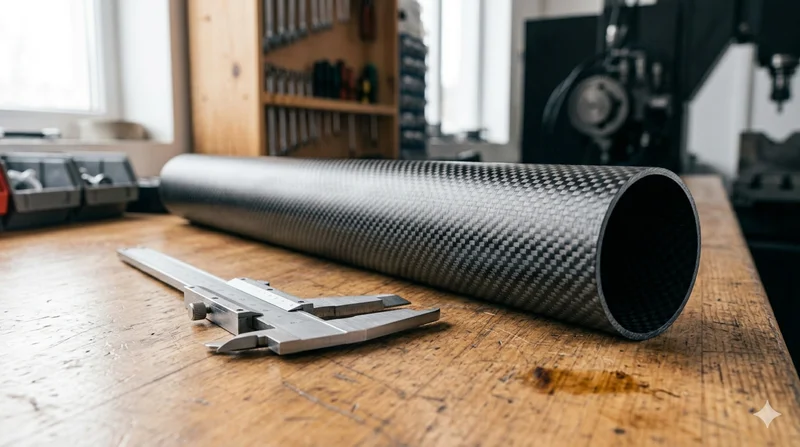
Round Carbon Fiber Tube — 3K Plain Weave T700
Standard round carbon fiber tube manufactured from Toray T700 grade fiber with 3K plain weave. Offers balanced strength and stiffness for general industrial applications including robotics, automation, sports equipment, and aerospace structures.
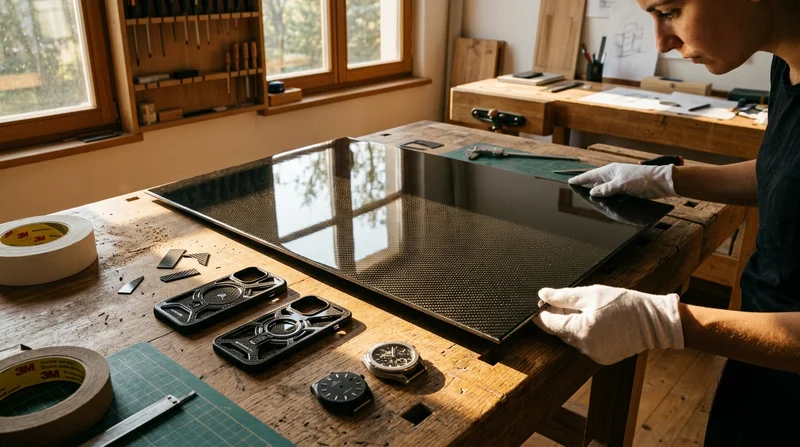
Carbon Fiber Plate — High-Gloss Decorative
High-gloss decorative carbon fiber plate with a mirror-like surface finish. The glossy coating enhances the visible 3K twill weave, creating a premium aesthetic for consumer-facing applications. Lightweight yet stiff, available in thin gauges for easy cutting and forming.