The question of carbon fiber how it's made opens one of the most precisely temperature-controlled transformations in modern materials: a textile-grade plastic fiber is oxidized, burned off most of its mass, and reorganized at the atomic level into a material that outperforms steel at a fraction of t
Introduction
The question of carbon fiber how it's made opens one of the most precisely temperature-controlled transformations in modern materials: a textile-grade plastic fiber is oxidized, burned off most of its mass, and reorganized at the atomic level into a material that outperforms steel at a fraction of the weight. The process that turns polyacrylonitrile (PAN) precursor into carbon fiber involves precise temperature control at every stage — stabilization at 200-300 °C, carbonization at 1,000-1,500 °C, and optional graphitization above 2,000 °C — each stage stripping away non-carbon atoms and aligning the remaining carbon into hexagonal graphene-like planes along the fiber axis.
For engineers and buyers, understanding how carbon fiber is made explains the behavior you see downstream: why high-modulus fibers are more brittle, why surface treatment matters for laminate strength, and why making carbon fiber parts correctly is as much about handling the fiber as about the cure cycle. This article walks the full production route from precursor to finished composite, then shows how to read the numbers on a carbon fiber data sheet with the manufacturing process in mind.
How Carbon Fiber Is Made: Precursor, Stabilization, Carbonization
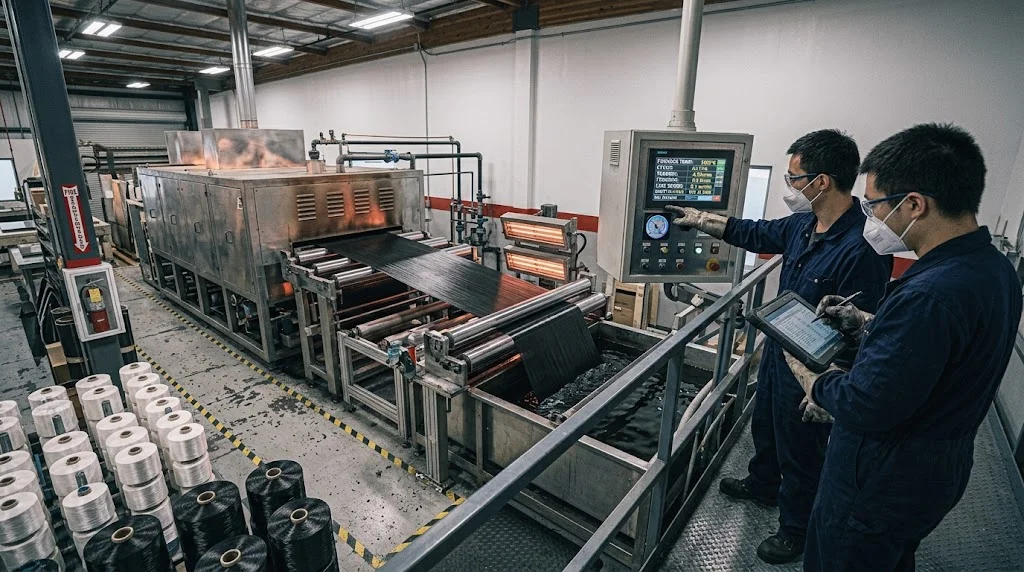
Over 90% of commercial carbon fiber starts as PAN precursor — a spun polymer fiber that looks and handles like white textile yarn. Pitch-based and rayon-based precursors exist for specialty applications (pitch for ultra-high modulus, rayon for ablative uses), but PAN dominates structural grades. The conversion from precursor to carbon fiber happens in five tightly controlled stages:
- Precursor spinning: Acrylonitrile is polymerized, spun into fiber, drawn to align the polymer chains, and washed. Precursor quality sets the ceiling for final fiber strength — a single defect propagates into the finished filament.
- Stabilization (200-300 °C): The fiber is held under tension in air for tens of minutes to hours. Oxygen crosslinks the polymer chains into a ladder structure, preventing melting during the high-temperature stages. The fiber turns from white to brown to black.
- Carbonization (1,000-1,500 °C): In an inert nitrogen atmosphere, non-carbon atoms (hydrogen, nitrogen, oxygen) are driven off as gases. What remains is roughly 90-95% carbon arranged in turbostratic graphene-like planes aligned along the fiber axis.
- Graphitization (2,500-3,000 °C, optional): Higher temperature realigns the planes further, raising tensile modulus from ~230 GPa (standard modulus) toward 400-900 GPa (high and ultra-high modulus), usually at some cost in tensile strength and strain-to-failure.
- Surface treatment and sizing: The fiber is oxidized or electrochemically treated to create surface functional groups for resin bonding, then coated with a thin sizing agent (typically 0.5-1% by weight) compatible with the target resin system — epoxy for most structural work.
Yield is dramatic: roughly 1.8-2.0 kg of PAN precursor yields 1 kg of carbon fiber, and the carbon fiber itself is only about 50% of the eventual composite weight — the rest is matrix resin, core, and fittings. Every gram of waste in making carbon fiber parts therefore compounds the cost of the finished structure.
Making Carbon Fiber Parts: Fabric, Prepreg, and Sheet
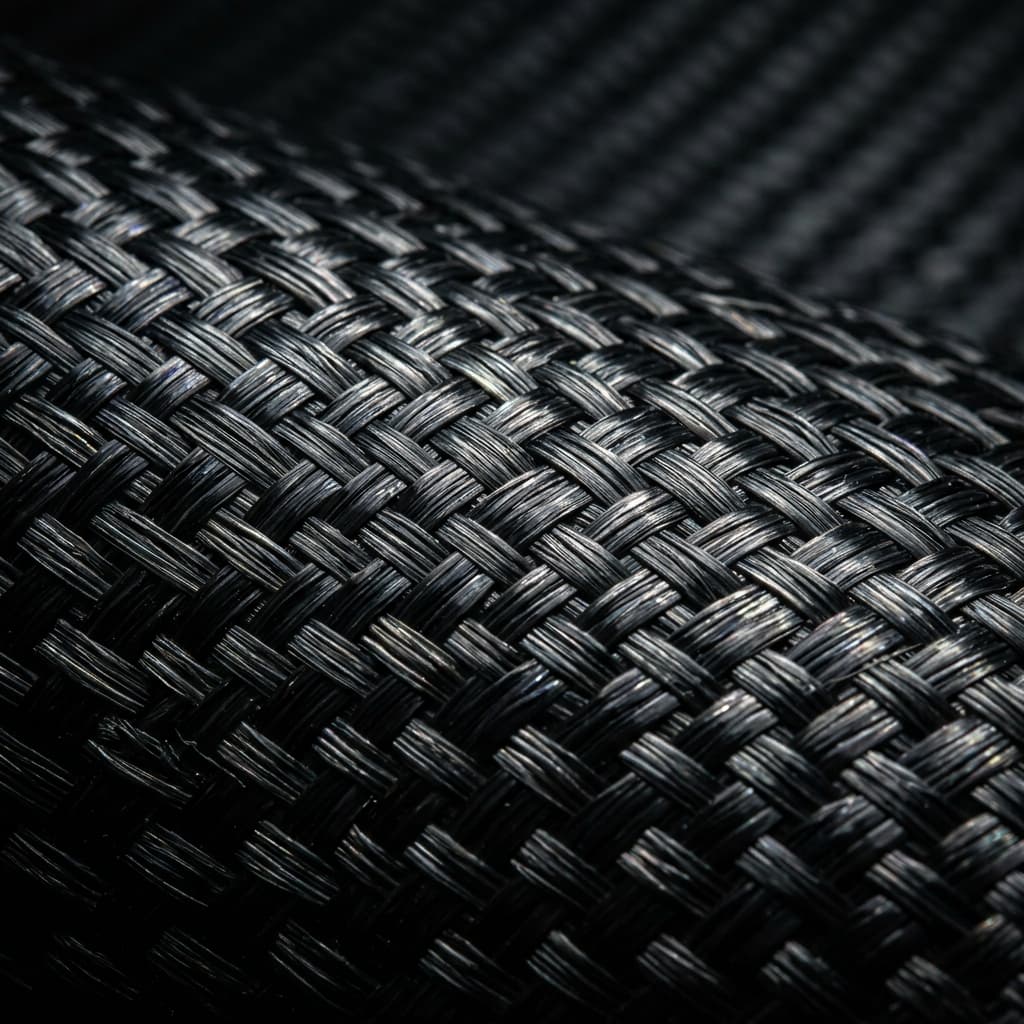
Carbon fiber leaves the fiber plant as tow (bundles of 1,000 to 50,000 filaments) and is then converted into the forms that part makers buy: woven fabric, unidirectional tape, prepreg, and molded sheet. How a fabric is woven changes its drapability and shear stiffness; a plain weave is stable but resists forming double curvature, while twill and harness weaves drape better over complex molds at a small penalty in dimensional stability.
How to make carbon fiber sheet from fabric follows one of three mainstream routes. Wet lay-up infuses dry fabric with resin by hand — the lowest-cost entry point, suitable for non-critical parts. Vacuum bagging adds atmospheric pressure (~0.1 MPa) to consolidate the laminate and remove voids, typically cutting void content from 5-8% down to 2-4%. Prepreg with autoclave cure is the aerospace standard: the fabric arrives pre-impregnated with a controlled resin film, and the autoclave applies 0.3-0.7 MPa pressure at 120-180 °C to reach void contents below 1% and fiber volume fractions of 55-65%.
Resin infusion (RTM, VARTM, SCRIMP) sits between prepreg and wet lay-up: dry fabric in a closed or bagged mold, resin drawn through by vacuum. For volume production of carbon fiber sheet and panels, infusion balances tooling cost against part quality better than either extreme.
Reading a Carbon Fiber Data Sheet
A carbon fiber data sheet distills the manufacturing process into numbers you can compare. The table below maps the key properties to what they mean in design:
| Property | Standard modulus (T300-class) | High modulus (M40J-class) | What it means in design |
|---|---|---|---|
| Tensile strength | 3,500-4,000 MPa | 2,400-2,800 MPa | Failure load; high-modulus fibers often trade strength for stiffness |
| Tensile modulus | 230 GPa | 350-400 GPa | Stiffness per fiber; drives deflection under load |
| Elongation at break | 1.5-1.8% | 0.6-0.9% | Damage tolerance margin; lower is more brittle |
| Density | 1.76-1.80 g/cm³ | 1.79-1.81 g/cm³ | Specific properties = property ÷ density |
| Filament diameter | 7 μm | 5-7 μm | Finer filaments pack tighter but are harder to wet out |
| Linear density (12k tow) | ~800 g/km | ~780 g/km | Converts tow count into areal weight of fabric |
Always read strength and modulus together. A data sheet advertising 400 GPa modulus with 2,500 MPa strength describes a stiff, relatively brittle fiber — correct for satellite structures and golf shafts, wrong for a helicopter floor that must absorb impact energy. For structural parts that see shock or fatigue, standard-modulus fibers in the 3,500-4,000 MPa range give the better toughness margin.
Frequently Asked Questions
Why is carbon fiber expensive if it is mostly carbon?
Cost comes from the process, not the element. PAN precursor is a specialty polymer, stabilization and carbonization consume large amounts of energy and time under tension, and graphitization runs at 2,500-3,000 °C in inert atmosphere. Yield losses during precursor spinning and fiber handling add further cost, and quality inspection (tensile testing per lot, surface defect scanning) is mandatory for structural grades. The result is a material whose price reflects process intensity rather than raw material scarcity.
What happens if carbon fiber is overheated during part curing?
Epoxy matrix systems degrade above their service temperature window — typically above 180-200 °C for standard structural epoxies — losing glass transition temperature and interlaminar strength. The fiber itself survives far higher temperatures, so the damage is to the matrix-fiber bond and the resin's ability to transfer load. Overheated parts show yellowing or charring, and mechanical testing reveals reduced compression and shear strength long before visible damage appears.
How does precursor choice affect final fiber properties?
PAN precursor produces the strength-oriented fibers used in 95% of structural applications. Pitch precursor can reach ultra-high moduli (600-900 GPa) for aerospace and space structures where stiffness dominates, but with lower strain-to-failure. Rayon precursor, largely historical, served ablative applications. Within PAN itself, precursor draw ratio, co-monomer content, and spinning conditions determine whether the final fiber lands in the standard, intermediate, or high-strength class.
Conclusion
How carbon fiber is made — precursor spinning, oxidative stabilization, inert-atmosphere carbonization, optional graphitization, then surface treatment and sizing — directly determines the properties an engineer can design with. Understanding the process explains the modulus-versus-toughness trade on every data sheet, and why making carbon fiber parts well depends on matching fiber form, resin system, and cure route to the load case rather than chasing headline numbers.
YongXian supplies carbon fiber fabrics, prepregs and custom composite components engineered for structural applications. Explore our carbon fiber product range or contact our engineering team to discuss material selection for your next program.
Part of topic
Related Articles
- How to Make Carbon Fiber Plates at Small Batch Scale
- How to Make Carbon Fiber Tubes: Filament Winding vs Roll Wrapping
- Carbon Fiber Plate Manufacturing Process: Ply Stack to Finished Panel
- How to Cut Carbon Fiber Plate: Tools, Feed Rates and Dust Safety
- How to Cut Carbon Fiber Sheets Without Delamination
- Making Carbon Fiber Parts: From Layup to Curing
Interested in Our Products?
Contact our team for competitive pricing and technical specifications.
Get a QuoteRelated Products

Round Carbon Fiber Tube — 3K Plain Weave T700
Standard round carbon fiber tube manufactured from Toray T700 grade fiber with 3K plain weave. Offers balanced strength and stiffness for general industrial applications including robotics, automation, sports equipment, and aerospace structures.

Carbon Fiber Pickleball Paddle
High-performance pickleball paddle with Toray T700 carbon fiber face and polypropylene honeycomb core. Delivers excellent power-to-weight ratio, spin generation, and vibration dampening for competitive play.

Square Carbon Fiber Tube — 3K Twill T700
Square cross-section carbon fiber tube manufactured with 3K twill weave for torsional strength. Preferred for structural frames, trusses, and support columns where rectangular geometry offers design flexibility.
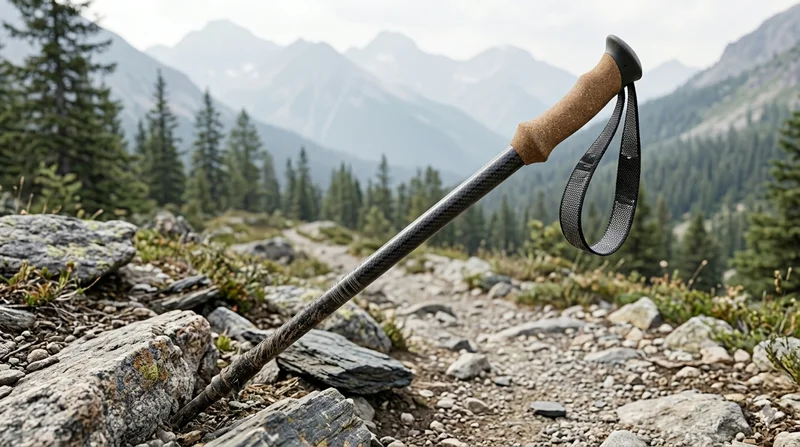
Carbon Fiber Trekking Pole
Lightweight carbon fiber trekking pole manufactured from high-grade carbon fiber tube. Weighs only 160g per pole while providing superior shock absorption and durability for hiking, trail running, and backpacking.

Carbon Fiber Plate — 3K Twill T700 3.0mm
Medium-thickness 3.0mm carbon fiber plate offering significantly higher load capacity while maintaining attractive 3K twill finish. Suitable for structural brackets, reinforcement plates, and load-bearing panels.