Knowing how to cut carbon fiber sheet material without delamination is one of the most practical skills in composite fabrication — and one of the easiest to get wrong. Carbon fiber reinforced polymer (CFRP) sheets behave nothing like metal or wood under a cutting tool: the abrasive carbon fibers dul
Introduction
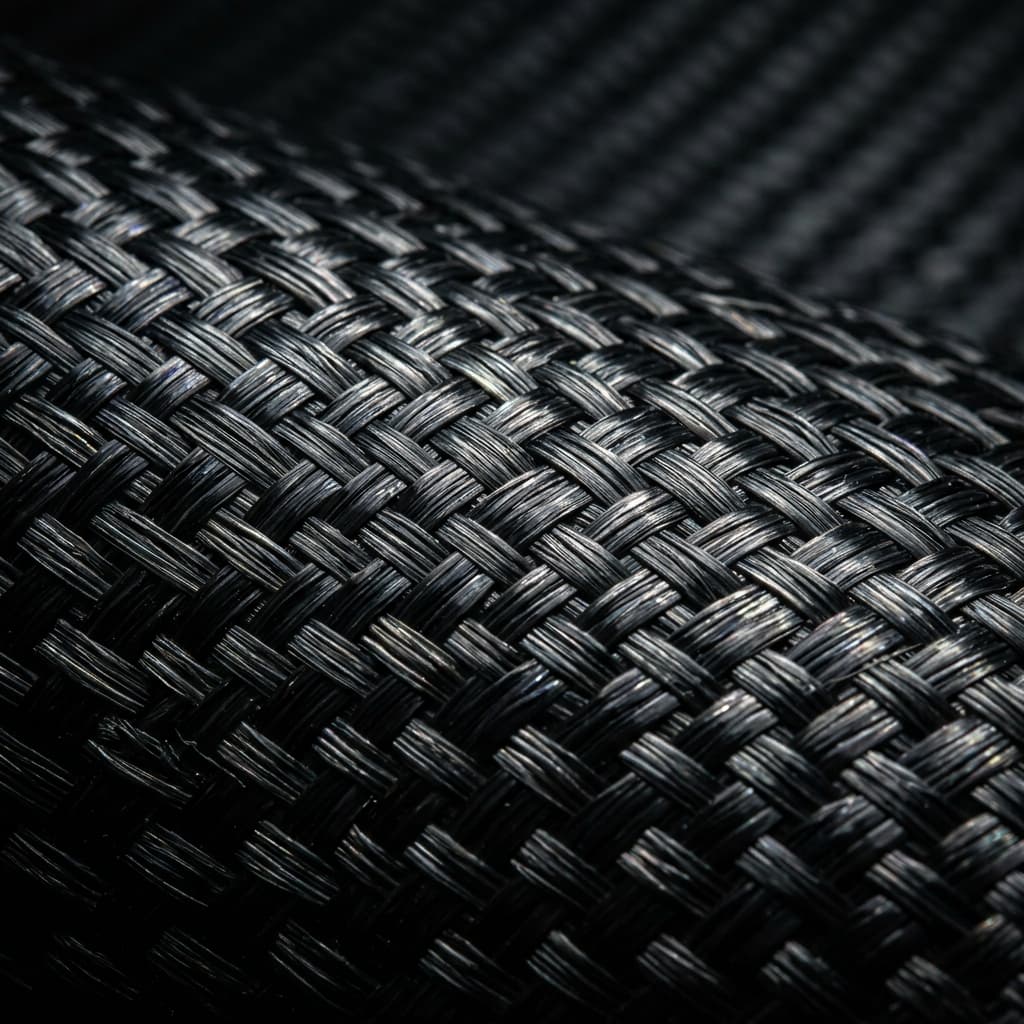
Knowing how to cut carbon fiber sheet material without delamination is one of the most practical skills in composite fabrication — and one of the easiest to get wrong. Carbon fiber reinforced polymer (CFRP) sheets behave nothing like metal or wood under a cutting tool: the abrasive carbon fibers dull blades quickly, the brittle resin matrix chips at exit surfaces, and the layered laminate structure can separate between plies if cutting forces, support, or tool geometry are wrong. A cut that looks clean on the top surface may hide subsurface delamination that only appears during bonding, machining, or service loading — turning a simple trim operation into a scrap event.
This guide explains how to cut carbon fiber sheets without delamination across the four main production methods, the tool and parameter windows that matter for each, and the fixturing and finishing practices that produce clean, bond-ready edges on CFRP plates and panels.
Choosing a Cutting Method for Carbon Fiber Sheet
The right cutting process depends on part geometry, edge quality requirements, thickness, and production volume. The comparison below summarizes the four main methods used for carbon fiber sheet fabrication:
| Method | Best For | Edge Quality | Limitations |
|---|---|---|---|
| CNC router (spindle) | Contour cuts, holes, nesting complex shapes | Good to excellent with sharp compression bits | Dust generation; requires fixturing; tool wear |
| Abrasive waterjet | Thick plates, sharp corners, no heat-affected zone | Excellent taper-free cuts on plates up to 50 mm | Slower than routing; delamination risk without proper support |
| Circular saw (diamond / carbide) | Straight rip cuts, sheet breakdown to blanks | Good on straight cuts; exit-side burr common | Only straight cuts; kickback risk without guided fixtures |
| Laser (CO2 / fiber) | Thin sheets, sealed edges, high-volume trimming | Sealed edge but heat-affected zone; resin burn risk | Not for thick laminates; edge discoloration; fume extraction required |
For most workshop and light-production environments, a CNC router with a compression spiral bit remains the workhorse for cutting carbon fiber sheet — it handles contours, holes, and straight cuts with one tool change, and with correct parameters produces edges that require minimal finishing. Waterjet is the preferred method when cutting thick plates or when the heat and dust of routing are unacceptable.
Tool Selection and Cutting Parameters
Regardless of method, tool condition and parameter control determine whether the edge delaminates. Key recommendations by process:
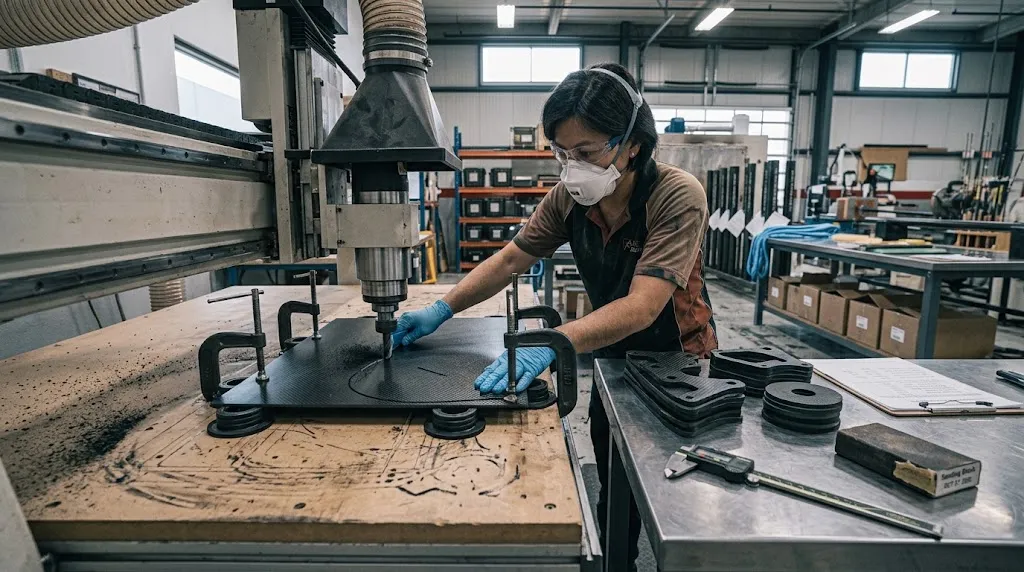
- CNC routing: Use an up-cut spiral bit for through-cuts in thin sheets (under 6 mm) to evacuate dust downward, or a compression spiral bit for thicker laminates — the up-cut lower section pulls fibers down while the down-cut upper section pushes them down, sealing both faces. carbide or diamond-coated tooling lasts 5-10× longer than high-speed steel against abrasive carbon fiber. Feed rates of 3-8 m/min at 18,000-24,000 rpm produce clean cuts on 3-10 mm CFRP; slower feeds increase heat and resin burn, while faster feeds risk fiber pull-out.
- Waterjet: Use 60-80 mesh garnet abrasive at 380-420 MPa pressure for standard laminates. Maintain standoff distance of 1-2 mm. Support the sheet on a sacrificial slat bed or honeycomb to prevent jet reflection that causes exit-side delamination. Cutting speed should be set so the jet exits through support material, not air.
- Circular saw: Use a diamond-tipped or carbide-tipped blade with 60-120 teeth designed for composites. Wet cutting with a mist or flood coolant suppresses dust and reduces heat. Feed rate should be steady — pausing mid-cut causes local heating and resin smearing.
- Laser: CO2 lasers at 1-3 kW can cleanly cut CFRP sheets under 3 mm, but the heat-affected zone can degrade resin properties 0.2-0.5 mm from the cut edge. Always use fume extraction — laser-cutting carbon fiber releases hazardous particulates and toxic gases from resin decomposition.
Cut direction relative to fiber orientation also matters: cutting across the fibers (90°) is more aggressive on tool edges than cutting along them, and multi-ply laminates with alternating orientations force the tool to sever fibers in multiple directions in a single pass — increasing delamination risk on exit plies.
Fixturing and Support to Prevent Delamination
Delamination during cutting is almost always a support problem, not a tool problem. When the laminate is unsupported on the exit side, cutting forces push the lower plies away from the upper plies before the tool exits, separating the layers. Effective support strategies include:
- Sacrificial backing: Place a foam, MDF, or wooden spoil board under the sheet so the tool cuts through the CFRP and into the backing without an air gap. This eliminates exit-side pull-out almost entirely on through-cuts.
- Vacuum table fixturing: For CNC routers, a vacuum hold-down table distributes clamping force across the sheet surface, preventing vibration and local lifting that initiates delamination at cut corners.
- Tape or adhesive film: Applying painter's tape or a thin adhesive film over the cut line on both faces holds surface fibers in place during the cut, reducing fuzzy edges and breakout at entry and exit.
- Step-down cutting for thick laminates: Instead of cutting through 20 mm CFRP in one pass, take multiple shallow passes (3-5 mm each) to reduce cutting forces per pass and keep exit-side forces low.
For waterjet specifically, never let the jet exit into open air under the sheet — the reflected abrasive stream fans out beneath the workpiece and erodes the underside, causing subsurface damage that looks like delamination under inspection.
Finishing Cut Edges for Bonding and Assembly
Even a well-cut edge benefits from finishing before bonding or assembly:
- Deburr with fine abrasive: Use 180-320 grit sandpaper or a deburring tool to remove micro-fibers standing proud of the edge. Avoid aggressive grinding that generates heat and damages the resin matrix.
- Clean before bonding: Wipe edges with isopropyl alcohol to remove cutting dust and oils. Carbon fiber dust is electrically conductive and will compromise bond lines and paint adhesion if not removed.
- Seal exposed edges for outdoor use: Unsealed cut edges allow moisture ingress along fiber paths. For marine or outdoor structural applications, seal edges with a thin epoxy wipe or edge-banding before final assembly.
- Inspect for subsurface damage: Tap-test or ultrasonic inspection of critical edges can reveal delamination that surface inspection misses — especially after waterjet or aggressive sawing.
Following these practices produces carbon fiber sheet edges that are clean, dimensionally accurate, and ready for structural bonding — whether the blanks are headed into a sandwich panel, a robot chassis, or a custom enclosure.
Frequently Asked Questions
What is the best tool for cutting carbon fiber sheet in a small workshop?
A CNC router with a diamond-coated compression spiral bit and a vacuum or clamp hold-down table is the most versatile setup for small workshops. It handles contours, holes, and straight cuts with minimal dust exposure compared to handheld saws. If a CNC router is not available, a circular saw with a diamond blade, a straight-edge guide, and a sacrificial backing board produces acceptable straight cuts on sheets up to 10 mm thick, provided you wear a respirator and collect dust externally.
Why does my carbon fiber sheet delaminate at the exit side of the cut?
Exit-side delamination almost always results from inadequate support beneath the laminate. When the cutting tool or jet exits the material with an air gap below, the remaining plies flex away from the cut and separate. Fix this with a sacrificial backing board, step-down cutting passes, or tape reinforcement on the exit face. On waterjet cuts, ensure the jet exits through a slat bed or support material rather than open air.
Can I cut carbon fiber sheet with a regular wood saw blade?
Not recommended. Standard wood or metal saw blades dull rapidly against abrasive carbon fibers and tend to chip the brittle resin matrix, producing fuzzy edges and higher delamination risk. If you must use a general-purpose blade temporarily, use a fine-tooth carbide blade, cut at moderate speed with a backing board, and inspect the edge carefully — but invest in a diamond or composite-specific blade for production work.
Conclusion
Cutting carbon fiber sheet without delamination comes down to matching the cutting method to the job, using sharp composite-rated tooling, controlling feed and speed to manage heat and fiber pull-out, and — most critically — supporting the laminate on the exit side so cutting forces cannot separate the plies. CNC routing with a compression bit and sacrificial backing covers the widest range of workshop tasks; waterjet is the premium choice for thick plates and tight-tolerance contours. With correct parameters and finishing, cut edges on CFRP plates are clean, dimensionally stable, and ready for structural bonding.
YongXian supplies carbon fiber sheets and plates suitable for CNC routing, waterjet cutting, and fabrication into structural assemblies. Explore our carbon fiber sheet for sale or contact our technical team for material recommendations matched to your cutting process.
Part of topic
Related Articles
- How to Cut Carbon Fiber Plate: Tools, Feed Rates and Dust Safety
- Making Carbon Fiber Parts: From Layup to Curing
- Filament Wound Carbon Fiber Tube: Custom Diameter and Wall Thickness Options
- Carbon Fiber Data Sheet: How to Read Tensile, Modulus and Strain Values
- Pultruded Carbon Fiber Rod: Structural Data Every Designer Should Check
- High Performance Carbon Fiber: IM and HM Grades for Demanding Loads
Interested in Our Products?
Contact our team for competitive pricing and technical specifications.
Get a QuoteRelated Products

Round Carbon Fiber Tube — 3K Plain Weave T700
Standard round carbon fiber tube manufactured from Toray T700 grade fiber with 3K plain weave. Offers balanced strength and stiffness for general industrial applications including robotics, automation, sports equipment, and aerospace structures.

Square Carbon Fiber Tube — 3K Twill T700
Square cross-section carbon fiber tube manufactured with 3K twill weave for torsional strength. Preferred for structural frames, trusses, and support columns where rectangular geometry offers design flexibility.

Carbon Fiber Pickleball Paddle
High-performance pickleball paddle with Toray T700 carbon fiber face and polypropylene honeycomb core. Delivers excellent power-to-weight ratio, spin generation, and vibration dampening for competitive play.
Carbon Fiber Trekking Pole
Lightweight carbon fiber trekking pole manufactured from high-grade carbon fiber tube. Weighs only 160g per pole while providing superior shock absorption and durability for hiking, trail running, and backpacking.
Carbon Fiber Plate — 3K Twill T700 3.0mm
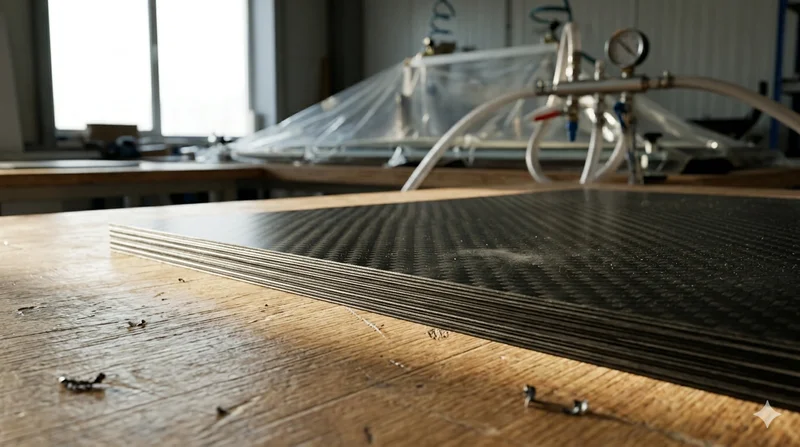
Medium-thickness 3.0mm carbon fiber plate offering significantly higher load capacity while maintaining attractive 3K twill finish. Suitable for structural brackets, reinforcement plates, and load-bearing panels.