Making carbon fiber parts is a chain of decisions rather than a single technique: the mold sets geometry and surface, the layup method sets fiber volume and void content, and the cure cycle locks both in place. Get one stage wrong and the part still looks finished while its strength, porosity or dim
Introduction
Making carbon fiber parts is a chain of decisions rather than a single technique: the mold sets geometry and surface, the layup method sets fiber volume and void content, and the cure cycle locks both in place. Get one stage wrong and the part still looks finished while its strength, porosity or dimensional stability quietly fails the application. This guide walks the full production path used by industrial shops — mold preparation, material selection, layup, bagging, curing, demolding, trimming and inspection — and compares the four mainstream processes so buyers and engineers know what to specify and what each method actually costs.
Mold Preparation: Where Part Quality Begins
Every high-quality carbon fiber part starts at the mold. Production molds are typically CNC-machined aluminum or composite tools surfaced with a Class A finish, then sealed with release agent or replaced by consumable female tools for low-volume work. Three preparation steps determine whether demolding succeeds:
- Surface conditioning: Polish to the required finish, apply four to six coats of release agent with cure time between coats, and inspect for pinholes under raking light. A single missed spot welds the part to the tool.
- Mandrel and core fitting: For tubes and closed profiles, the mandrel diameter is cut undersize by the laminate thickness plus a grinding allowance, since cured wall thickness grows predictably with ply count.
- Trim fixtures: Locate reference surfaces before layup begins; trimming a cured part without datums forces manual fitting and breaks dimensional repeatability.
For one-off prototypes, 3D-printed or foam-cored molds are acceptable up to cure temperatures of roughly 80 degrees C. Beyond that, aluminum tools prevent thermal distortion and survive hundreds of cycles.
Layup Methods for Making Carbon Fiber Parts: Wet Layup, Prepreg, Infusion and RTM
The layup method decides fiber volume fraction, void content and mechanical consistency — the three numbers that separate a structural part from a cosmetic one:
| Method | Fiber Volume | Void Content | Typical Use | Tooling Cost |
|---|---|---|---|---|
| Hand wet layup | 40-50% | 2-5% | Boat hulls, large panels, prototypes | Lowest |
| Vacuum bagging (wet) | 45-55% | 1-3% | Structural panels, moderate volumes | Low |
| Prepreg autoclave | 55-65% | <1% | Aerospace, motorsport, critical structures | High |
| Vacuum infusion | 48-58% | 1-2% | Large parts, yacht components, wind blades | Medium |
| RTM / light-RTM | 50-60% | <2% | Duplicate parts, covers, structural brackets | Medium-high |
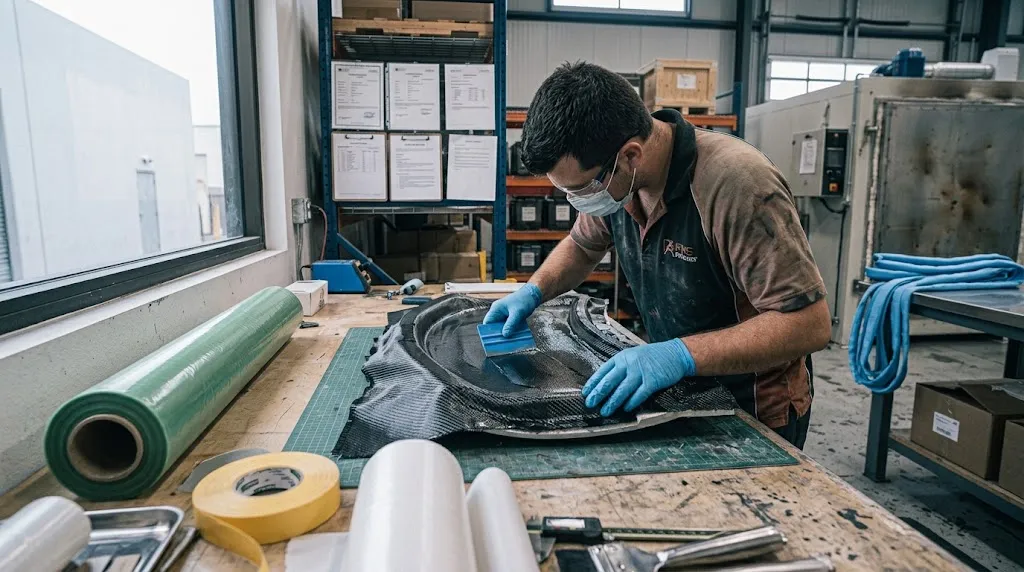
Hand wet layup remains the entry point for how to make carbon fiber parts in a workshop: cut fabric, wet it with mixed epoxy, consolidate with a squeegee, and cure at room temperature or in a low oven. The process is flexible and tooling is cheap, but fiber volume caps out near 50 percent and void content rarely drops below 2 percent, so stiffness and compression strength lag behind bagged or autoclave cures. Vacuum bagging adds one atmosphere of consolidation and typically lifts fiber volume by 5 to 10 points for minimal cost — the single highest-value upgrade for structural work.
Prepreg shifts material handling into a controlled cold chain: the fabric arrives pre-impregnated with calibrated resin, plies are cut on a plotter, laid into the mold, vacuum-bagged and cured under heat and pressure. Fiber volumes of 55 to 65 percent with void content under 1 percent are routine, which is why aerospace and Formula-class components almost exclusively use prepreg. The tradeoffs are material cost, freezer storage, and a finite out-time before the resin advances.
Curing: Temperature, Pressure and Cycle Design
Curing crosslinks the resin matrix and fixes the mechanical properties of the finished part. The three cure regimes cover nearly all production work:
- Room-temperature cure: 24 to 48 hours at ambient for wet-layup epoxies. Simple, but properties develop slowly and exotherm management limits thickness above about 15 mm.
- Oven cure: 60 to 120 degrees C post-cure improves glass transition temperature by 20 to 40 degrees C. Parts stay under vacuum bag pressure; ovens cost a fraction of autoclaves and handle most industrial geometries.
- Autoclave cure: 120 or 180 degrees C at 6 to 7 bar. Pressure suppresses voids while heat accelerates crosslinking, delivering the highest fiber volume and the tightest dimensional control.
Ramp rate matters as much as peak temperature. A typical structural cycle ramps at 2 to 3 degrees C per minute, holds at peak for 60 to 120 minutes, then cools below 60 degrees C before demolding. Thick sections above 20 mm need staged holds to let exotherm pass without overshooting, or the core degrades and the laminate discolors.
Demolding, Trimming and Finishing
A cured part still needs controlled separation from the tool and precise edges. Demolding begins once the part is below 40 degrees C; forcing a hot part distorts thin flanges. Wedges and compressed air release the skin before any lever load. Trimming uses diamond-coated tooling on a CNC router or a waterjet for abrasive carbon: dry routers need dust extraction because carbon dust is electrically conductive and hazardous to lungs and electronics alike. Edge finishing steps — sanding to 400 grit, sealing with thin epoxy, then clear coat if cosmetic — protect laminate edges from moisture ingress and delamination under handling.
Quality inspection closes the loop. Dimensional checks against the CAD datum scheme, tap testing for delaminations, and ultrasonic C-scan for critical structures catch defects that a visual pass misses. Weighing the part against the theoretical laminate mass is a fast shop-floor proxy for resin-rich or resin-lean zones: deviations above 3 percent usually indicate a layup or infusion problem worth investigating.
When to Work With a Custom Carbon Fiber Parts Manufacturer
In-house layup suits one-offs and learning projects. Above roughly 20 identical parts, or any part with certification requirements, a custom carbon fiber parts manufacturer returns better economics. Tooling amortization drops unit cost sharply, process controls pin void content below 1 percent, and documented cure cycles satisfy quality systems that a bench process cannot. When evaluating a manufacturer, ask for the fiber grade and format (prepreg, dry carbon for infusion), the cure method, achievable tolerances on critical dimensions, and a first-article inspection report before committing to a production lot.
Frequently Asked Questions
What fiber should a beginner use for making carbon fiber parts?
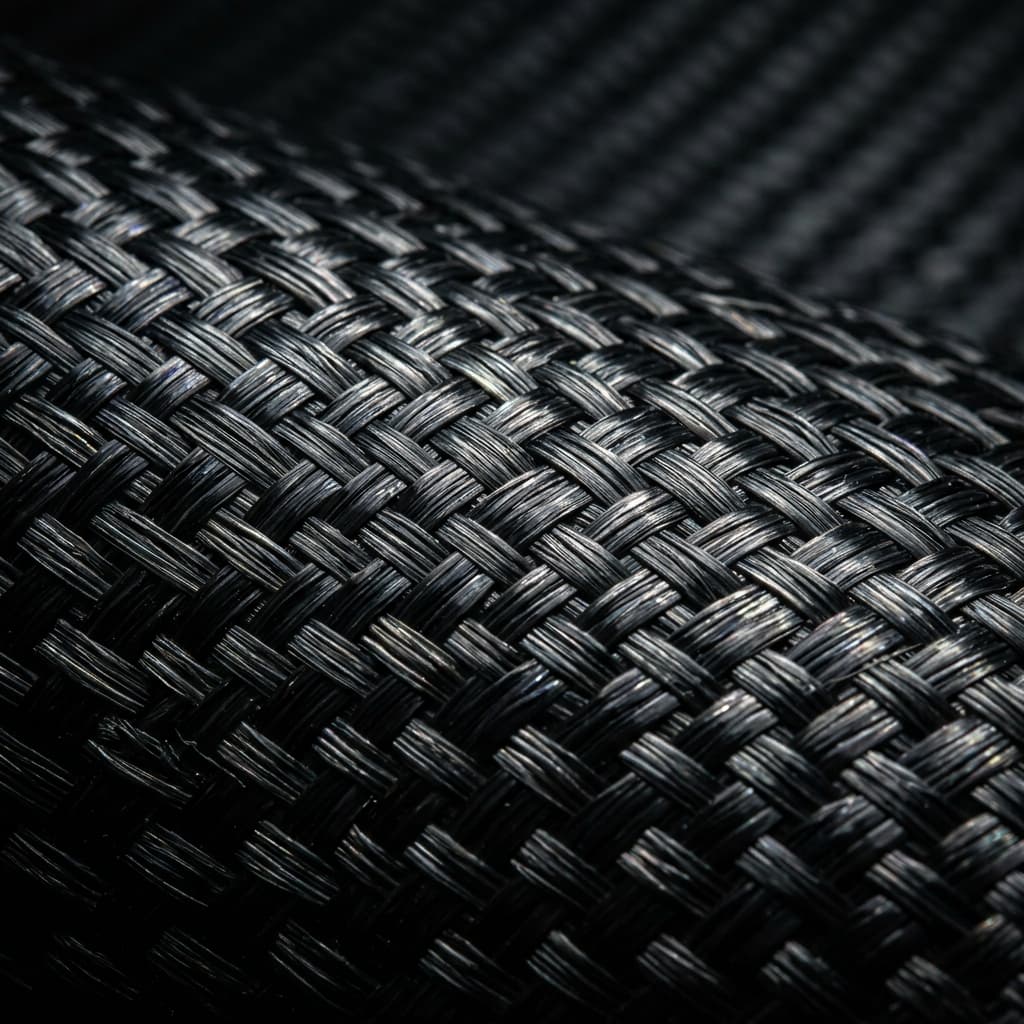
Start with 200 gsm plain-weave or twill carbon fabric in 3K tow and a slow-curing laminating epoxy (30 to 40 minute pot life). Plain weave is easier to drape over simple curves; twill looks better on compound curves and drapes more freely. Avoid chopped strand mat for structural work — continuous fabric carries load far more predictably.
Why is my part soft or flexible after curing?
Softness after cure almost always traces to one of three causes: insufficient fiber volume from a resin-rich layup, incomplete cure (the resin never reached its specified temperature or hold time), or a fabric orientation that carries no load in the direction you are bending. Verify the cure cycle with a logged thermocouple run, and check whether the dominant bending axis has 0 degree plies. Post-curing at the resin manufacturer's recommended temperature recovers most lost stiffness when under-cure is the cause.
Can carbon fiber parts be repaired after delamination?
Yes, within limits. Small delaminations accessible from one side can be injected with low-viscosity epoxy under vacuum, then clamped flat and re-cured. Large or multi-layer delaminations in primary structures require scarifying back to sound laminate and adding replacement plies — a repair that restores function but rarely full original strength. Cosmetic parts are usually easier to replace than to repair invisibly.
How thick can a part be before the cure exotherm becomes a problem?
With standard laminating epoxy, sections above 10 to 15 mm risk exotherm overshoot during a single continuous cure; above 20 mm the core can scorch while the surface looks perfect. Use staged cures with intermediate holds, select a low-exotherm resin formulated for thick sections, or split the part into bonded sublaminates. Prepreg with controlled resin content and autoclave pressure tolerates greater thickness, but thick aerospace stacks still cure in stages.
Conclusion
Making carbon fiber parts well comes down to controlling four variables: a sound mold, a layup method matched to the structural requirement, a cure cycle validated with temperature logging, and disciplined trimming and inspection. Vacuum bagging upgrades wet layup at minimal cost; prepreg and autoclave cures justify their expense when void content and dimensional stability are non-negotiable. For production volumes or certified structures, a custom carbon fiber parts manufacturer brings documented process control that bench methods cannot match — evaluate partners on inspection reports and cure records, not sample photos.
YongXian produces custom carbon fiber plates, tubes and profiles to specification. Explore our carbon fiber product range or contact our engineering team to discuss layup, cure and tolerance requirements for your parts.
Part of topic
Related Articles
- How to Cut Carbon Fiber Plate: Tools, Feed Rates and Dust Safety
- How to Cut Carbon Fiber Sheets Without Delamination
- Filament Wound Carbon Fiber Tube: Custom Diameter and Wall Thickness Options
- Carbon Fiber Data Sheet: How to Read Tensile, Modulus and Strain Values
- Pultruded Carbon Fiber Rod: Structural Data Every Designer Should Check
- High Performance Carbon Fiber: IM and HM Grades for Demanding Loads
Interested in Our Products?
Contact our team for competitive pricing and technical specifications.
Get a QuoteRelated Products

Round Carbon Fiber Tube — 3K Plain Weave T700
Standard round carbon fiber tube manufactured from Toray T700 grade fiber with 3K plain weave. Offers balanced strength and stiffness for general industrial applications including robotics, automation, sports equipment, and aerospace structures.

Square Carbon Fiber Tube — 3K Twill T700
Square cross-section carbon fiber tube manufactured with 3K twill weave for torsional strength. Preferred for structural frames, trusses, and support columns where rectangular geometry offers design flexibility.

Carbon Fiber Pickleball Paddle
High-performance pickleball paddle with Toray T700 carbon fiber face and polypropylene honeycomb core. Delivers excellent power-to-weight ratio, spin generation, and vibration dampening for competitive play.

Carbon Fiber Trekking Pole
Lightweight carbon fiber trekking pole manufactured from high-grade carbon fiber tube. Weighs only 160g per pole while providing superior shock absorption and durability for hiking, trail running, and backpacking.

Carbon Fiber Plate — 3K Twill T700 3.0mm
Medium-thickness 3.0mm carbon fiber plate offering significantly higher load capacity while maintaining attractive 3K twill finish. Suitable for structural brackets, reinforcement plates, and load-bearing panels.