Carbon fiber yarn cut to size supplies twisted yarn in fixed lengths rather than on a cone, which is what structural stitching, lacing, preform placement and hand lay-up cells actually consume. The cut itself is simple; holding the twist and sealing the ends is not. This guide explains the cut lengt
Introduction
Carbon fiber yarn cut to size supplies twisted yarn in fixed lengths rather than on a cone, which is what structural stitching, lacing, preform placement and hand lay-up cells actually consume. The cut itself is simple; holding the twist and sealing the ends is not. This guide explains the cut lengths sold by application, the end treatments that stop fraying, how twist behaves after a cut, and what MOQ, pricing and lead time look like when you buy carbon fiber yarn cut to length from a carbon fiber yarn cut to size factory in China.
Yarn is tow that has been twisted, so it behaves differently from flat bundle at every step. Cut a twisted yarn with a plain shear and the twist runs back from the end, the bundle opens into a brush, and the piece becomes unusable for a needle or a lace path. The difference between a good and a bad cut lot is usually five to fifteen millimetres of run-back and a sealing method that suits your handling.
What carbon fiber yarn cut to size covers
Cut yarn is a service, not a standard product, because length and end finish are set by the cell that consumes it. The table below shows the ranges that cover most orders.
| Application | Typical cut length | End treatment | Length tolerance |
|---|---|---|---|
| Structural stitching of preforms | 300-1500 mm | Heat sealed or waxed | plus or minus 3 mm |
| Lacing and tying | 200-800 mm | Knotted or taped | plus or minus 5 mm |
| Preform placement by hand | 50-300 mm | Taped or resin dipped | plus or minus 2 mm |
| Braider or weaver sample creel | 500-2000 mm | Sealed, on a carrier card | plus or minus 5 mm |
| Prototype and sample kits | 100-1000 mm | Sealed bundle | plus or minus 2 mm |
The same 3K or 6K yarn can be supplied at any of those lengths, but the price per kilogram moves with the end treatment and the packing labour, not with the fiber. A quotation that ignores end sealing is quoting a different product from the one your operators need.
End treatment decides whether the cut holds
Four end treatments cover production, and each has a different cost and a different failure mode.
- Heat sealing: a hot blade or a focused heat pulse fuses the sizing and traps the twist; the standard choice for stitching yarn, with a sealed zone of 2-4 mm.
- Wax dip or resin dip: binds the end and stiffens it for threading, useful where a needle must pass quickly and repeatedly.
- Taping: a small tape collar holds the twist without heat; cheap and clean, but the tape must be removed before the yarn goes into a laminate.
- Knotting: suitable for lacing and tying, where a knot is part of the function; not suitable for any process that needs a straight end.
Heat sealing is not free of risk. Too much heat chars the sizing, and a charred end will not bond to the resin later, so a sealed tip that sits inside the laminate becomes a weak point. Ask for the seal zone length and the sealing temperature, and check that the sealed length stays outside the structural stitch if the yarn is used for reinforcement.
Run-back is the number to agree on. After cutting, the twist relaxes over a short distance from the end, and that distance depends on twist level, yarn count and sealing method. A specification of 5 mm maximum run-back is realistic for a well-sealed 3K yarn at 60 turns per metre; 15 mm or more signals a blunt blade or a cold seal.
Carbon Fiber Yarn Cut To Size in China: what to specify
China supplies most of the world's twisted carbon yarn, and the range from a twisting mill with a sealing line to a trader with a pair of shears is wide. Put these points in the enquiry so replies can be compared.
- Yarn grade and count: 3K, 6K or 12K, with the tensile grade named, since the count sets bundle thickness and the grade sets strength.
- Twist level and direction: turns per metre and S or Z direction; a change of direction alters how the yarn lies in a stitched seam.
- Cut length and tolerance: nominal length, allowed spread and the measurement method you will use on receipt.
- End treatment: sealed, waxed, taped or knotted, with the seal zone length and the maximum run-back stated separately.
- Packing: bundle count per bag, carrier card or tray, and whether the pieces must stay straight or may be looped.
Also state the handling after cutting. If the pieces go into an automated stitching head, a taped end may jam the guide; if they are hand-fed, a waxed end saves seconds per piece and pays for itself quickly.
MOQ, pricing and lead time when you buy carbon fiber yarn
Cut yarn carries more labour than cone yarn, so the commercial terms look different from a tow order. Use the table below as a first filter.
| Order type | MOQ | Indicative lead time |
|---|---|---|
| Stock yarn, standard cut, sealed end | 5-50 kg | 1-2 weeks |
| Custom length or custom twist | 100-300 kg | 3-5 weeks |
| Waxed or resin-dipped ends | 50-200 kg | 2-4 weeks |
| Qualification trial | 2-10 kg | 1-2 weeks plus testing |
Price follows yarn grade first, end treatment second, cut length third and volume last. Short pieces below 100 mm carry a premium because handling dominates: each piece must be cut, sealed and counted. A length tightened from plus or minus 5 mm to plus or minus 2 mm adds roughly 10 to 20 percent, since the cutting head must run slower and more pieces are rejected.
Packaging is where cut yarn differs most from cone yarn. Pieces shipped loose in a bag arrive tangled, with frayed ends and a layer of broken filaments. Specify counted bundles, a carrier card or a compartment tray, and a sealed bag with desiccant so the sizing does not pick up moisture in transit.
Quality checks before the first shipment
Run these checks on the trial lot before you release production volume.
- Length check: measure at least 50 pieces against the drawing and record the spread at both ends of the lot.
- Run-back test: untwist from the cut end and measure how far the twist releases; compare with the agreed maximum.
- Seal integrity: inspect the sealed zone for charring and pull a sample to confirm the end does not open.
- Fray count: count loose filaments at the end of ten pieces; a sudden rise points to blade wear.
- Handling trial: run 20 pieces through the actual needle, guide or lace path at production speed.
Keep the run-back record and the handling trial result with the lot certificate. If a later batch starts jamming a stitching head, those two records separate a cutting problem from a yarn supply problem within minutes.
Frequently Asked Questions
Can cut yarn be joined back into a continuous length?
Not reliably for structural use. A knot or a splice interrupts the load path and creates a stress concentration. If a continuous length is needed, buy cone yarn and feed it directly rather than splicing cut pieces.
Does heat sealing weaken the yarn?
The seal affects only the last few millimetres, and that zone should stay outside the structural stitch. The risk is a charred sizing that will not bond to resin, so specify the seal zone and keep it out of the laminate where strength matters.
What run-back should I accept?
For a 3K yarn at 60 turns per metre with a good seal, 5 mm maximum is realistic. Above 10 mm the end opens too far for a needle, and the cause is usually a blunt blade or a sealing temperature set too low.
Conclusion
Carbon fiber yarn cut to size is defined by length, tolerance, end treatment, run-back and packing, and those five points decide whether the pieces work in a stitching cell or end up as waste. Fix them in writing first, then compare price per kilogram and lead time.
For stitched preform and lacing programmes, review the carbon fiber product range and send your cut length, twist and end treatment through the quotation page; a trial bundle that runs through your own needle tells you more than any sample photo.
Part of topic
Related Articles
- Carbon Fiber Rod Testing Service: Methods, Standards and Cost | YongXian
- Carbon Fiber Plate Inspection Service: Methods, Standards and Cost
- Carbon Fiber Sheet Quality Inspection: Methods, Standards and Cost
- Carbon Fiber Sheet Thickness Guide: Standard Sizes and Selection | YongXian
- Carbon Fiber Tube Cutting Service Near Me: Process, Tolerance and Cost | YongXian
- Carbon Fiber Sheet Cutting Service Near Me: Process, Tolerance and Cost | YongXian
Interested in Our Products?
Contact our team for competitive pricing and technical specifications.
Get a QuoteRelated Products
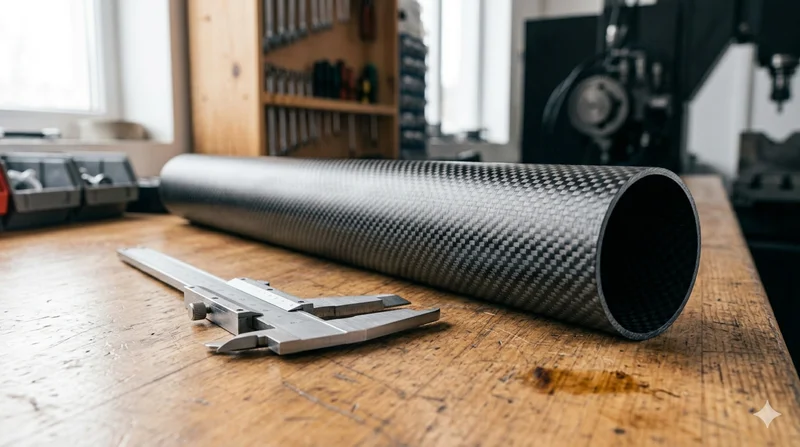
Round Carbon Fiber Tube — 3K Plain Weave T700
Standard round carbon fiber tube manufactured from Toray T700 grade fiber with 3K plain weave. Offers balanced strength and stiffness for general industrial applications including robotics, automation, sports equipment, and aerospace structures.
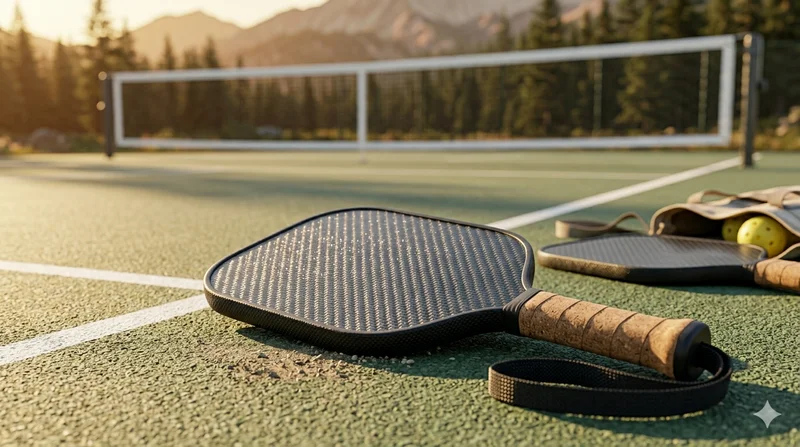
Carbon Fiber Pickleball Paddle
High-performance pickleball paddle with Toray T700 carbon fiber face and polypropylene honeycomb core. Delivers excellent power-to-weight ratio, spin generation, and vibration dampening for competitive play.
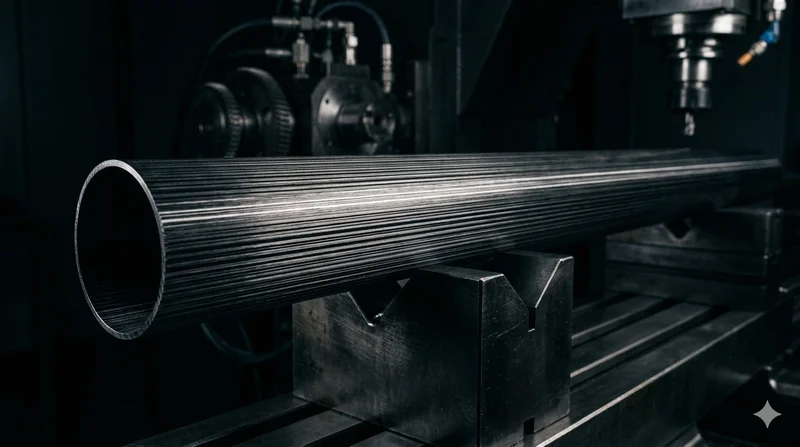
Round Carbon Fiber Tube — UD Unidirectional T700
Unidirectional (UD) round tube with all fibers aligned axially for maximum longitudinal stiffness. Ideal for applications requiring high bending rigidity with minimal weight, such as shafts, struts, and structural reinforcements.
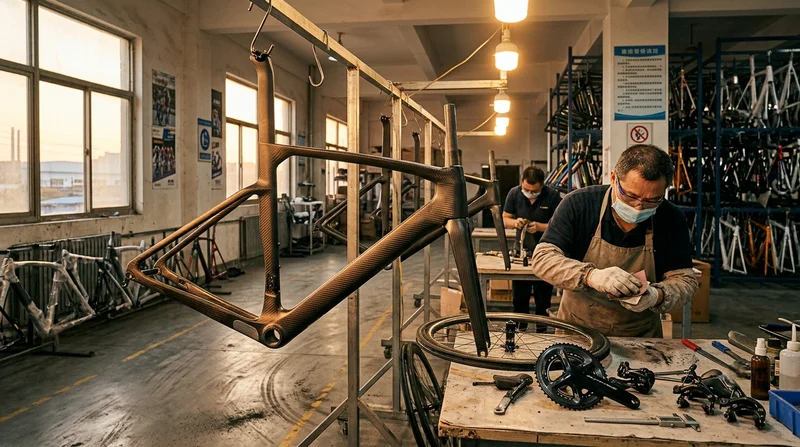
Custom Carbon Fiber Bicycle Frame
Full-custom carbon fiber bicycle frame manufactured to your geometry specifications. We produce road, gravel, mountain, and track frames using high-modulus carbon fiber layups optimized for each riding discipline. Monocoque construction with internal cable routing, available with disc or rim brake mounts.
Carbon Fiber Plate — 3K Twill T700 3.0mm
Medium-thickness 3.0mm carbon fiber plate offering significantly higher load capacity while maintaining attractive 3K twill finish. Suitable for structural brackets, reinforcement plates, and load-bearing panels.