Carbon fiber sheet quality inspection is where a good drawing meets real manufacturing. Two sheets can share the same fiber, resin, and nominal thickness, yet perform very differently if one hides voids, dry spots, or poor cure. For buyers, inspection is not paperwork; it is the control point that s
Introduction
Carbon fiber sheet quality inspection is where a good drawing meets real manufacturing. Two sheets can share the same fiber, resin, and nominal thickness, yet perform very differently if one hides voids, dry spots, or poor cure. For buyers, inspection is not paperwork; it is the control point that separates a usable composite sheet from an expensive reject. This guide covers the inspection methods that matter, the standards behind them, and the cost impact you should plan for when sourcing carbon fiber sheet material.
The goal is not to inspect everything at maximum depth. The goal is to match inspection intensity to risk. A cosmetic panel, a CNC-machined fixture plate, and a structural load-bearing sheet should not share the same inspection plan or the same inspection budget.
What Carbon Fiber Sheet Quality Inspection Should Cover
A solid inspection plan starts at receiving and ends with traceable records. It should catch surface defects, dimensional drift, and hidden internal flaws before the sheet enters cutting or bonding. For most industrial buyers, the baseline includes four layers: visual inspection, dimensional checks, non-destructive testing for critical parts, and periodic destructive validation for process control.
| Inspection Layer | What It Detects | Typical Tools | When to Use |
|---|---|---|---|
| Visual and surface | Scratches, pits, dry weave, resin rich areas, fiber wash | Light booth, magnifier, gloss meter | Every sheet, incoming and outgoing |
| Dimensional | Thickness variation, flatness, length, width, squareness | Caliper, micrometer, flat table, CMM | Every batch, higher sampling for tight tolerance |
| Non-destructive (NDT) | Voids, delamination, inclusions, impact damage | Ultrasonic C-scan, thermography, tap test | Structural or safety-critical sheets |
| Destructive validation | Fiber volume, void content, cure, mechanical strength | Ignition loss, microscopy, tensile/flex tests | First article, process change, periodic audits |
The mistake many buyers make is relying only on a visual pass. A sheet can look perfect and still carry internal delamination from a pressure drop during cure. Visual inspection is necessary, but it is never sufficient for structural use.
Methods and Standards for Carbon Fiber Sheet Inspection
Inspection methods should be tied to recognized standards so buyer and supplier speak the same language. Standards do not make a sheet good, but they make acceptance criteria measurable and disputes resolvable.
- Visual acceptance criteria: Many composite shops define cosmetic classes internally, but they should still reference agreed defect limits for scratches, pinholes, and weave distortion.
- Ultrasonic testing: Ultrasonic C-scan is the common NDT method for detecting voids and delamination in carbon fiber sheet material. It is effective for flat panels and provides a map, not just a pass/fail opinion.
- Void content and fiber volume: ASTM D2734 is widely used for void content calculation, while ASTM D3171 or D2584 are used for constituent content depending on the matrix and reinforcement.
- Mechanical verification: Tensile, flexural, and compression tests (for example ASTM D3039, D790, D6641 families where applicable) confirm that the sheet delivers the properties promised in the datasheet.
- Dimensional and flatness control: Thickness tolerance should be measured at a defined grid, not at one convenient corner. Flatness matters for CNC vacuum holding and bonding.
For critical applications, require a first article inspection report that links test coupons to the actual production batch. A generic datasheet is not batch evidence. The report should state method, sample size, acceptance limit, and measured result.
Inspection Cost: What Buyers Should Budget
Inspection cost depends on depth, not only on sheet size. A quick incoming check is cheap; full NDT mapping and destructive coupons cost real money because they consume machine time, skilled labor, and material. The right question is not "how cheap can inspection be?" but "what failure cost am I avoiding?"
| Inspection Scope | Typical Cost Impact | Lead Time Impact | Recommended For |
|---|---|---|---|
| Visual + basic dimensions | 0.5%-2% of sheet cost | Minimal | Cosmetic or low-load panels |
| Visual + dimensions + sampling NDT | 2%-6% of sheet cost | 1-2 days | General industrial structural parts |
| 100% NDT C-scan | 5%-12% of sheet cost | 2-5 days | Safety-critical or high-value sheets |
| NDT + destructive coupons | 8%-18% of sheet cost | 3-7 days | First article, qualification, process changes |
Inspection gets cheaper when it is planned. If you specify the acceptance criteria in the RFQ, the supplier can build inspection into the production flow. If you ask for C-scan after the sheets are packed, you pay for unpacking, queue time, and rush handling.
Buyer Checklist for Carbon Fiber Sheet Quality Inspection
Use this checklist when qualifying a supplier or releasing a batch. It keeps the discussion concrete and prevents "quality" from becoming a vague promise.
- Define the critical-to-quality features: thickness, flatness, surface class, void limit, and mechanical property targets.
- Set sampling rules: 100% visual, defined dimensional sampling, and NDT frequency based on risk.
- Require traceability: batch number, cure cycle record, material certificates, and inspection report linked to shipment.
- Agree on rejection handling: rework allowed or not, concession process, and who pays freight for returns.
- Audit the process, not only the sheet: a stable layup, cure, and trimming process reduces inspection burden over time.
For buyers sourcing carbon fiber sheet scrap or second-grade material, the same logic applies but the acceptance threshold changes. Be explicit about what defects are allowed and where the sheet will be cut, otherwise "cheap" material becomes expensive waste.
Frequently Asked Questions
What is the most common defect found in carbon fiber sheet quality inspection?
Surface scratches and thickness variation are the most common findings in general incoming inspection. For structural sheets, internal voids and local delamination are the defects that matter most because they reduce strength without obvious visual signs.
Is 100% ultrasonic inspection necessary for every carbon fiber sheet?
No. Full C-scan is justified for safety-critical, high-load, or high-value parts. For many industrial applications, 100% visual plus dimensional checks and risk-based NDT sampling provides a better cost-to-risk balance.
Which standards should I reference in a carbon fiber sheet inspection plan?
Common references include ASTM D2734 for void content, ASTM D3171 or D2584 for constituent content, and mechanical test standards such as ASTM D3039 or D790 when property verification is required. Your drawing and purchase specification should define which tests apply to which batch level.
Conclusion
Carbon fiber sheet quality inspection works best when it is risk-based, standard-backed, and agreed before production starts. Inspect every sheet visually, measure dimensions with discipline, use NDT where hidden defects matter, and validate the process with destructive tests at the right intervals. If you need sheets supplied with a clear inspection plan and batch documentation, review our carbon fiber sheet products and contact our team to discuss your acceptance criteria.
Part of topic
Related Articles
- Carbon Fiber Rod Testing Service: Methods, Standards and Cost | YongXian
- Carbon Fiber Plate Inspection Service: Methods, Standards and Cost
- Carbon Fiber Sheet Thickness Guide: Standard Sizes and Selection | YongXian
- Carbon Fiber Tube Cutting Service Near Me: Process, Tolerance and Cost | YongXian
- Carbon Fiber Sheet Cutting Service Near Me: Process, Tolerance and Cost | YongXian
- Carbon Fiber Sheet Laser Cutting: Process, Tolerance and Cost | YongXian
Interested in Our Products?
Contact our team for competitive pricing and technical specifications.
Get a QuoteRelated Products

Round Carbon Fiber Tube — 3K Plain Weave T700
Standard round carbon fiber tube manufactured from Toray T700 grade fiber with 3K plain weave. Offers balanced strength and stiffness for general industrial applications including robotics, automation, sports equipment, and aerospace structures.

Carbon Fiber Pickleball Paddle
High-performance pickleball paddle with Toray T700 carbon fiber face and polypropylene honeycomb core. Delivers excellent power-to-weight ratio, spin generation, and vibration dampening for competitive play.
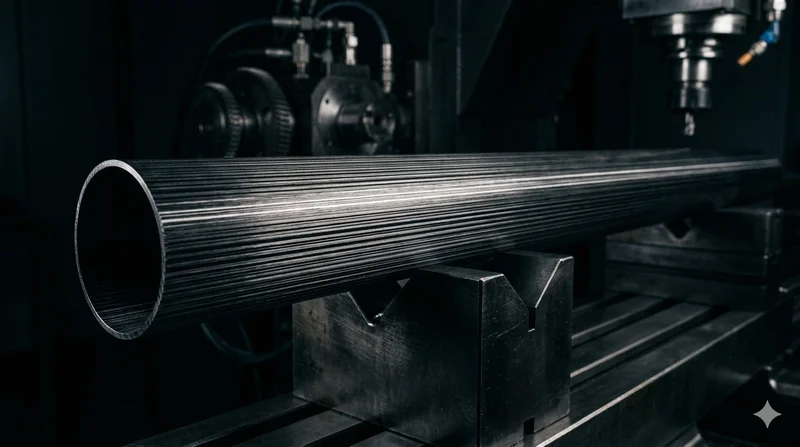
Round Carbon Fiber Tube — UD Unidirectional T700
Unidirectional (UD) round tube with all fibers aligned axially for maximum longitudinal stiffness. Ideal for applications requiring high bending rigidity with minimal weight, such as shafts, struts, and structural reinforcements.
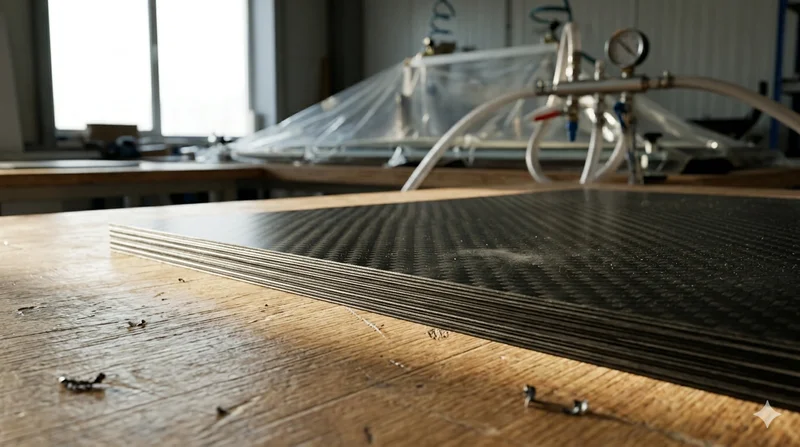
Carbon Fiber Plate — 3K Twill T700 3.0mm
Medium-thickness 3.0mm carbon fiber plate offering significantly higher load capacity while maintaining attractive 3K twill finish. Suitable for structural brackets, reinforcement plates, and load-bearing panels.

Round Carbon Fiber Tube — 3K Twill
Lightweight and ultra-stiff round tubes ideal for drone frames, robotics, and structural applications.