Carbon fiber sheet thickness guide questions arrive at every design review: which stock thickness carries the load, when a thin skin is enough, and where a thicker plate stops adding value. Thickness drives stiffness more sharply than any other single dimension, because bending resistance grows with
Introduction
Carbon fiber sheet thickness guide questions arrive at every design review: which stock thickness carries the load, when a thin skin is enough, and where a thicker plate stops adding value. Thickness drives stiffness more sharply than any other single dimension, because bending resistance grows with the cube of thickness while mass grows only linearly. Choosing wrong means either a floppy part or wasted material cost on every unit you build.
This guide walks the stocked thickness range, shows how carbon fiber sheet material behaves as sections get thicker, and gives selection rules you can apply to carbon fiber sheet uses from jigs and covers to structural brackets and vehicle panels.
Carbon Fiber Sheet Thickness Guide: Standard Stock Range
Most suppliers hold a predictable ladder of thicknesses rather than continuous stock. Thin films and prepreg-backed laminates start near 0.5 mm, structural plates concentrate between 1 mm and 5 mm, and heavy sections run 6 mm to 20 mm as campaign or cut-to-order products. Availability matters as much as capability: a thickness nobody stocks means tooling lead time and a minimum order you may not need.
| Thickness | Typical stock | Primary role | Notes |
|---|---|---|---|
| 0.5 to 1 mm | Deep | Skins, covers, cosmetic panels | Flexible alone; usually bonded to a core |
| 1.5 to 3 mm | Deep | Brackets, drone plates, fixtures | Best balance of weight and stiffness for light loads |
| 4 to 5 mm | Medium | Machine bases, robot plates, pedals | Common upper bound for CNC-machined details |
| 6 mm carbon fiber sheets | Medium | Structural floors, jigs, test fixtures | Stiffness jump versus 4 mm is roughly 3.4 times |
| 8 to 20 mm | Campaign | Heavy tooling, molds, load plates | Often pressed to order; confirm tolerance class |
Carbon fiber sheet uses cluster around the middle of this ladder. If your part is a cosmetic cover, stay thin and add a core. If it is a load path, calculate first and stock second - the table above is a starting map, not a substitute for a quick beam or plate check.
How Thickness Changes Stiffness in Carbon Fiber Sheet Material
For bending, stiffness scales with the cube of thickness. A 6 mm plate is about 3.4 times stiffer in bending than a 4 mm plate of the same width and material, and about 8 times stiffer than a 3 mm plate, while mass rises only in direct proportion. That asymmetry is why this thickness guide pushes designers to add thickness only after fibre orientation and support span have been optimized. Axial stiffness and through-thickness shear behave differently, so a thicker sheet does not make a better bonding surface or a better thermal path by itself.
Practical consequences show up fast in the shop. Thin sheets drum and vibrate under point loads; thick sheets hold flatness across wider spans but punish fixturing and edge machining. Sandwich panels reverse the trade: a 1 mm skin over a 5 mm core can beat a solid 6 mm plate on stiffness at lower mass, at the cost of moisture and impact sensitivity at the edges.
- Short spans under 150 mm: 2 mm to 3 mm solid plate is usually sufficient for brackets and covers.
- Medium spans 150 to 400 mm: move to 4 mm or 5 mm, or step up to a core if mass is critical.
- Wide fixtures and jig plates: 6 mm and above keeps flatness under clamping load.
- Repeated fastener pull-out: prefer thickness plus a bonded metal insert rather than drilling deep into thin laminate.
Thickness Selection Rules for Real Carbon Fiber Sheet Uses
Start from load case, not from a favourite number. Define the worst-case bending moment, the allowable deflection, and the fastener pattern, then work backward to the minimum thickness that clears both stress and stiffness. Confirm that thickness against the stocked ladder so procurement is not forced into a custom press run for a part that a stock size could carry. Tolerance class is the next gate: general plate often ships at plus or minus 0.1 mm, while tooling grades hold tighter and cost more.
Edge conditions deserve the same attention as mid-span numbers. Machined edges on thick plate expose more laminate layers to moisture and delamination risk, so seal them. On thin plate, avoid sharp inside corners in CNC pockets; leave radius that preserves fibre continuity. When two thicknesses both pass the calculation, choose the stocked one with the shorter lead time and the deeper historical batch record - repeatability beats a marginal theoretical gain. Record the chosen thickness, tolerance class, and fibre orientation on the drawing so purchasing and inspection read the same spec.
For teams that order carbon fiber sheets 6mm and thinner on a regular schedule, keep a short material log: batch number, measured thickness at four corners, and flatness after machining. That log turns a subjective supplier argument into data and makes the next reorder faster because the accepted window is already documented.
Frequently Asked Questions
What thickness of carbon fiber sheet should I buy first?
For prototypes and light fixtures, start at 3 mm: it machines cleanly, resists handling damage, and covers a wide range of bracket and cover work. Move to 5 mm or 6 mm once spans exceed roughly 400 mm or fastener loads dominate. Order one sample sheet of the next thickness up as well, so fit checks do not stall waiting on a second shipment.
Are 6 mm carbon fiber sheets stiff enough for machine bases?
Often yes for compact benches and rotary fixtures, provided the support points are close and loads stay below typical workshop reaction forces. For longer spans or heavy vises, use 8 mm to 12 mm plate or a sandwich construction, and verify flatness after final machining because residual stress can relax slightly when large pockets are cut.
How does thickness tolerance affect assembly?
General stock at plus or minus 0.1 mm is fine for bonding and most bolted joints with clearance. Precision locating pins and ground mating faces need a tighter class or post-machining on critical faces. Always specify the tolerance class on the purchase order rather than assuming mill generic, because mixed batches are common on fast-moving sizes.
Conclusion
A useful carbon fiber sheet thickness guide ends at the order desk: map the load to a stocked thickness, check stiffness with the cube rule before mass, and lock the tolerance class in writing. Thin skins for covers, 2 mm to 3 mm for brackets, 4 mm to 5 mm for general structure, and 6 mm carbon fiber sheets for wide fixtures cover most carbon fiber sheet uses without custom presses. To review current plate sizes and stock thicknesses, browse the carbon fiber products catalogue or contact the technical sales team with your span, load and fastener layout for a written thickness recommendation.
Part of topic
Related Articles
- Carbon Fiber Rod Testing Service: Methods, Standards and Cost | YongXian
- Carbon Fiber Plate Inspection Service: Methods, Standards and Cost
- Carbon Fiber Sheet Quality Inspection: Methods, Standards and Cost
- Carbon Fiber Tube Cutting Service Near Me: Process, Tolerance and Cost | YongXian
- Carbon Fiber Sheet Cutting Service Near Me: Process, Tolerance and Cost | YongXian
- Carbon Fiber Sheet Laser Cutting: Process, Tolerance and Cost | YongXian
Interested in Our Products?
Contact our team for competitive pricing and technical specifications.
Get a QuoteRelated Products

Round Carbon Fiber Tube — 3K Plain Weave T700
Standard round carbon fiber tube manufactured from Toray T700 grade fiber with 3K plain weave. Offers balanced strength and stiffness for general industrial applications including robotics, automation, sports equipment, and aerospace structures.

Carbon Fiber Pickleball Paddle
High-performance pickleball paddle with Toray T700 carbon fiber face and polypropylene honeycomb core. Delivers excellent power-to-weight ratio, spin generation, and vibration dampening for competitive play.
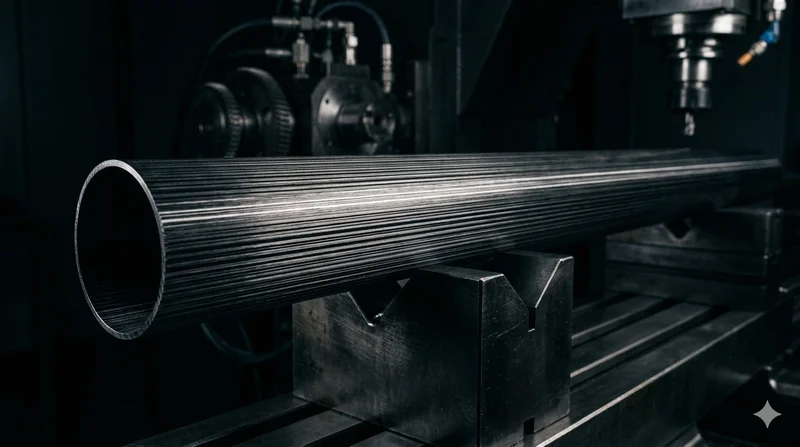
Round Carbon Fiber Tube — UD Unidirectional T700
Unidirectional (UD) round tube with all fibers aligned axially for maximum longitudinal stiffness. Ideal for applications requiring high bending rigidity with minimal weight, such as shafts, struts, and structural reinforcements.
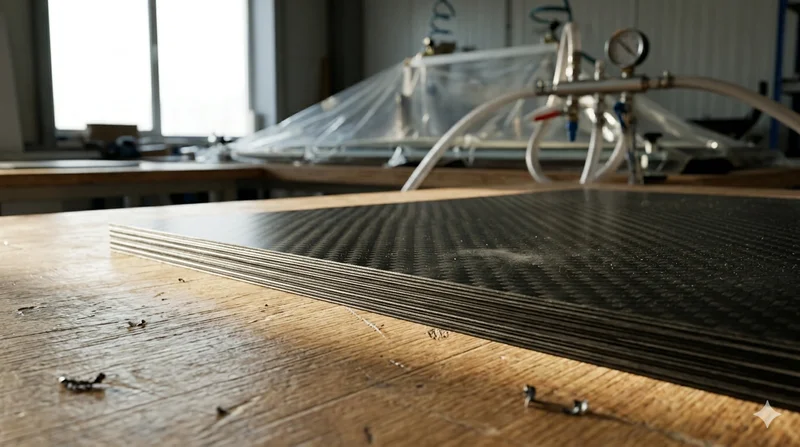
Carbon Fiber Plate — 3K Twill T700 3.0mm
Medium-thickness 3.0mm carbon fiber plate offering significantly higher load capacity while maintaining attractive 3K twill finish. Suitable for structural brackets, reinforcement plates, and load-bearing panels.

Round Carbon Fiber Tube — 3K Twill
Lightweight and ultra-stiff round tubes ideal for drone frames, robotics, and structural applications.