Carbon fiber tube machining is the set of operations that turns a cured tube into a part that bolts onto something. A pultruded or roll-wrapped tube arrives round, straight and dimensionally stable, but it almost never arrives with the holes, slots, flats, threads and end cuts that a real assembly n
Introduction
Carbon fiber tube machining is the set of operations that turns a cured tube into a part that bolts onto something. A pultruded or roll-wrapped tube arrives round, straight and dimensionally stable, but it almost never arrives with the holes, slots, flats, threads and end cuts that a real assembly needs. Everything after cure, from sawing to length through turning a journal, milling a slot, drilling a bolt circle and grinding a mating face, sits under tube machining, each with its own tolerance, tooling and failure mode.
Buyers get surprised because carbon fiber does not behave like aluminium at the spindle. It is abrasive, anisotropic, and it fails by delamination rather than by bending. A machinist who treats a CFRP tube like a 6061 extrusion delivers a part that measures inside tolerance and still splits at the first torque cycle. This guide covers the specifications that decide a quotation and the tolerance each process really holds.
What carbon fiber tube machining covers
Seven parameters define a machined tube order. When two quotations differ by more than twenty percent, the gap is almost always in one of these lines rather than in the hourly rate.
| Parameter | Typical range | What it controls |
|---|---|---|
| Outside diameter | 6 mm to 120 mm, 0.1 mm bands | Bond gap, clamp fit, bearing seat |
| Wall thickness | 1 mm to 6 mm | Bending stiffness and crush resistance |
| Length | 50 mm to 3000 mm | Span, cut loss, freight class |
| Hole pattern | 2 to 24 holes, 0.05 mm position | Bolt circle match with the mating part |
| Slots and flats | Up to 40 percent of diameter removed | Clamp faces, cable exits, keyways |
| End finish | Square, chamfered, threaded insert, bonded sleeve | Joint strength and fatigue life |
| Surface | As-cured, sanded, matte or gloss clear coat | UV protection and visual grade |
The wall thickness line is the one buyers underestimate. A tube machined down to a 0.8 mm wall for weight loses stiffness roughly with the cube of the wall, so a ten percent wall reduction costs about twenty-seven percent of bending stiffness. A machined pocket also has to be modelled before the tube is bought, because the ply schedule that suits full wall is usually wrong at the pocket floor.
Machining processes and the tolerance each one holds
Five processes cover almost every tube order. The table lists what each one is asked to do and the tolerance a competent shop holds in production, not on a sample.
| Process | Typical job | Realistic tolerance | Main risk |
|---|---|---|---|
| Abrasive saw or waterjet | Cut to length, rough blank | Plus or minus 0.5 mm length | Fraying and edge chipping |
| CNC turning | Journals, steps, grooves, chamfers | Plus or minus 0.05 mm diameter | Fiber pull-out on interrupted cuts |
| CNC milling | Slots, flats, windows, end profiles | Plus or minus 0.1 mm profile | Delamination at tool exit |
| Drilling | Bolt circles, cross holes, rivet rows | Plus or minus 0.05 mm position | Splintering on the exit side |
| Grinding and lapping | Mating faces, bearing seats | Plus or minus 0.02 mm | Resin burn and heat damage |
Two rules separate a stable process from a lucky one. Diamond-coated tooling is not optional, because carbide wears fast enough on carbon that hole diameter drifts within a few hundred parts. Every hole also needs a backing plate or internal mandrel, since the top plies are supported by the laminate and the bottom plies by nothing but air.
Tolerances and edge quality in carbon fiber tube machining
Carbon fiber tube machining tolerances are written on the diameter and ignored on the features that actually cause rejects. A tube can be perfectly round and still fail because a slot has a frayed edge, a chamfer is uneven around the circumference, or a cross hole has a splinter crown on the inside wall.
- Diameter: specify a measured range with a gauge point, not a nominal. A 30 mm tube commonly measures 29.9 to 30.1 mm, so state which side of nominal is acceptable.
- Roundness: 0.05 mm is achievable on a pultruded tube, and asking for 0.02 mm moves the part to a grinding operation with a corresponding price step.
- Hole quality: define the exit-side condition in words. A burr-free exit and a splinter-free exit are different requirements and different costs.
- Edge finish: a machined edge exposes fiber ends, so specify a sealed edge or accept moisture wicking unless the resin is a high-temperature epoxy.
- Straightness: 1 mm per metre is a normal commercial figure; 0.3 mm per metre requires a straightened or ground tube.
Put a first article inspection sheet in the purchase order. One measured tube with the seven parameters recorded prevents the argument that arrives with the second shipment.
Buy carbon fiber tube: MOQ, price and lead time
Buy carbon fiber tube and the quotation splits into tube, machining and tooling. The tube is priced per metre by diameter and wall, machining per feature or per hour, and tooling is free above a volume threshold or charged once as fixture and program cost.
- MOQ: 50 to 100 pieces for a standard tube with standard holes, 200 to 500 pieces when a custom extrusion die or a dedicated fixture is involved.
- Tube cost: a 25 mm by 2 mm pultruded tube typically lands between 6 and 14 US dollars per metre depending on fiber grade and resin.
- Machining cost: simple cut and drill runs 1 to 3 dollars per part; a turned journal with a slot and a bolt circle runs 6 to 15 dollars per part.
- Tooling: 150 to 600 dollars for a drilling fixture and program, waived above roughly 500 pieces on repeat orders.
- Lead time: 15 to 20 working days for a first run including first article, 10 to 12 working days for a repeat order from existing tooling.
Freight can turn a good quote into a bad one. A 3 metre tube ships as oversize freight, and cutting it in half at the factory halves the volumetric charge. Ask for a nesting proposal with the quote; a supplier who offers one has shipped tubes before.
Choosing a carbon fiber tube machining factory
Carbon fiber tube machining factory selection comes down to four questions, none about the price list. Ask what the shop does when a hole splinters, ask for a first article sheet from a previous order, ask which diamond tool supplier it uses, and ask how it measures roundness.
Carbon dust is conductive and abrasive. A shop that machines CFRP on the same benches as aluminium will eventually short a control board or embed swarf in a laminate. A serious supplier machines composites in a separate cell, uses mist suppression and bags the swarf.
Carbon fiber tube machining China: what changes when you source there
Carbon fiber tube machining China sourcing changes the cost structure and the communication load together. The tube is often cheaper because pultrusion lines are local, machining hours are lower and fixture building is fast. What rises is the cost of a specification error, because an ambiguous drawing is interpreted in the way that is easiest to manufacture.
The fix is procedural. Send a drawing with a tolerance block, a cosmetic standard, a marked datum and a first article requirement. Ask for photographs of the first piece next to a ruler before the run continues, then approve it in writing. Suppliers used to European and North American buyers expect exactly this and price it in; the ones who resist are telling you how the repeat order will go.
Frequently Asked Questions
Can a carbon fiber tube be machined after curing without losing strength?
Yes, within limits. Cutting, drilling and milling remove material and create stress concentrations, so the design has to account for the hole or slot before the layup is fixed. A hole that removes five percent of the cross section in a compression member is usually acceptable; a slot that removes thirty percent of the wall on the tension side of a bending member needs analysis, not a rule of thumb.
What is a realistic MOQ for a machined tube?
Fifty to one hundred pieces for a stock tube with a standard hole pattern, because the shop can program from a generic fixture. Custom diameters, non-standard wall thickness or a dedicated drilling fixture push the economic minimum to two hundred to five hundred pieces. Below that, expect either a setup charge or a per-part price that carries the setup anyway.
How do I stop delamination when drilling CFRP tube?
Support the exit side, use a diamond-coated or brad-point drill, run a low feed with high spindle speed, and peck the hole rather than driving through in one pass. A backing plate or an internal mandrel is the single biggest improvement, because unsupported exit is where the last plies peel instead of cut.
Conclusion
Carbon fiber tube machining is a specification problem more than a machining problem. Define the diameter band, the wall, the hole positions and the exit-side condition, add a first article sheet to the order, and the process becomes predictable. To compare tube formats, browse the carbon fiber tube product range, or send your drawing and annual volume to the technical team for a process route, a tolerance sheet and a landed price.
Part of topic
Related Articles
- Carbon Fiber Rod Testing Service: Methods, Standards and Cost | YongXian
- Carbon Fiber Plate Inspection Service: Methods, Standards and Cost
- Carbon Fiber Sheet Quality Inspection: Methods, Standards and Cost
- Carbon Fiber Sheet Thickness Guide: Standard Sizes and Selection | YongXian
- Carbon Fiber Tube Cutting Service Near Me: Process, Tolerance and Cost | YongXian
- Carbon Fiber Sheet Cutting Service Near Me: Process, Tolerance and Cost | YongXian
Interested in Our Products?
Contact our team for competitive pricing and technical specifications.
Get a QuoteRelated Products
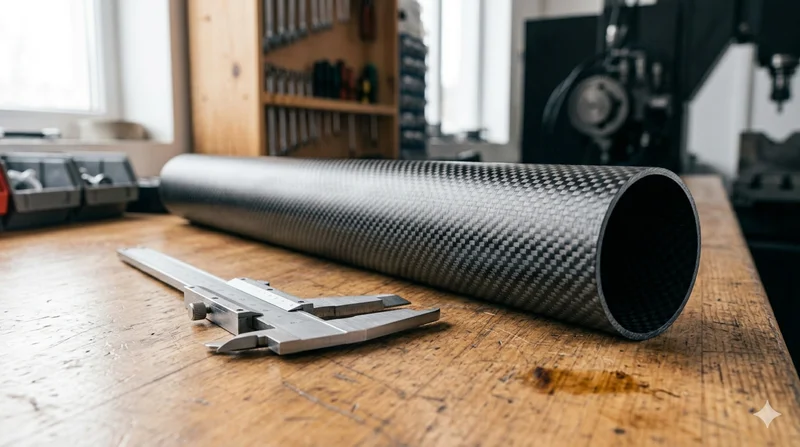
Round Carbon Fiber Tube — 3K Plain Weave T700
Standard round carbon fiber tube manufactured from Toray T700 grade fiber with 3K plain weave. Offers balanced strength and stiffness for general industrial applications including robotics, automation, sports equipment, and aerospace structures.
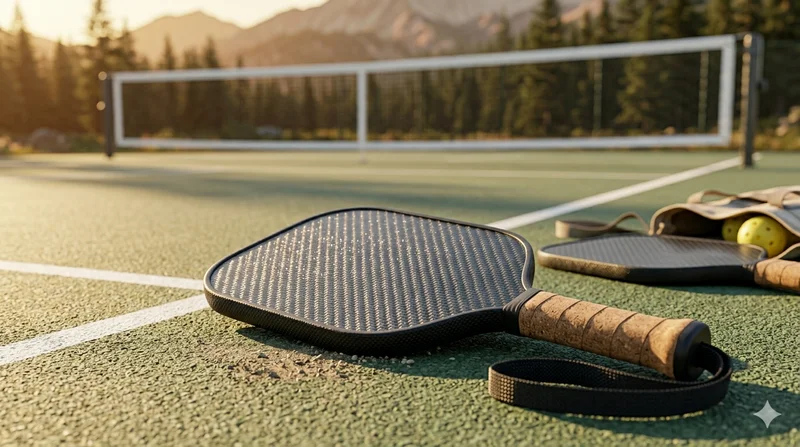
Carbon Fiber Pickleball Paddle
High-performance pickleball paddle with Toray T700 carbon fiber face and polypropylene honeycomb core. Delivers excellent power-to-weight ratio, spin generation, and vibration dampening for competitive play.
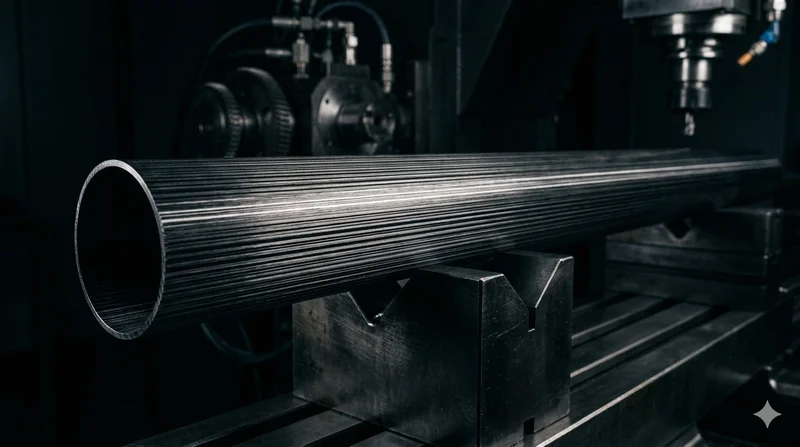
Round Carbon Fiber Tube — UD Unidirectional T700
Unidirectional (UD) round tube with all fibers aligned axially for maximum longitudinal stiffness. Ideal for applications requiring high bending rigidity with minimal weight, such as shafts, struts, and structural reinforcements.

Custom Carbon Fiber Bicycle Frame
Full-custom carbon fiber bicycle frame manufactured to your geometry specifications. We produce road, gravel, mountain, and track frames using high-modulus carbon fiber layups optimized for each riding discipline. Monocoque construction with internal cable routing, available with disc or rim brake mounts.
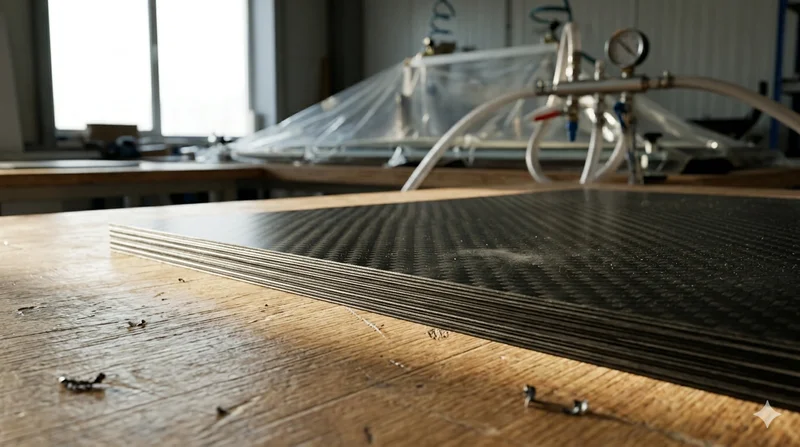
Carbon Fiber Plate — 3K Twill T700 3.0mm
Medium-thickness 3.0mm carbon fiber plate offering significantly higher load capacity while maintaining attractive 3K twill finish. Suitable for structural brackets, reinforcement plates, and load-bearing panels.