Carbon fiber tube for robot arm links is usually chosen for one number: the mass that sits at the far end of a moving joint. A tube three times lighter than the aluminium extrusion it replaces cuts the torque the shoulder motor must supply, shrinks the counterweight, and lets a smaller gearbox hold
Introduction
Carbon fiber tube for robot arm links is usually chosen for one number: the mass that sits at the far end of a moving joint. A tube three times lighter than the aluminium extrusion it replaces cuts the torque the shoulder motor must supply, shrinks the counterweight, and lets a smaller gearbox hold the same payload. Everything else in the design follows from that first decision, including the joint geometry and the tolerances you have to hold.
The trade is real, though. Carbon does not yield before it fails, it does not conduct heat away from a motor, and it cannot be welded. A link that saves 1.2 kilograms but needs a bonded insert, a clamped collar and a torsional stiffness check is still a good trade, but only if the drawing anticipates all three.
Why carbon fiber tube for robot arm links win on inertia
Inertia scales with mass times radius squared, so removing mass from the far end of a link pays twice: the link itself accelerates more easily and the joints upstream carry less. On a six-axis arm with a 900 millimetre reach, replacing a 2.4 kilogram aluminium tube with a 0.9 kilogram carbon tube typically removes 40 to 55 percent of the link's rotating inertia once fittings are counted, which usually allows either a faster cycle or a larger payload at the same motor.
| Property | Carbon tube | Aluminium tube |
|---|---|---|
| Density | 1.5 to 1.6 grams per cubic centimetre | 2.7 grams per cubic centimetre |
| Specific stiffness | Three to four times aluminium | Reference |
| Failure mode | Brittle, no yield warning | Ductile, bends before break |
| Damping | Higher, settles faster | Lower, rings longer |
| Joining | Bonded or clamped only | Welded, bolted, tapped |
The damping point is underrated. A carbon link rings down faster after a stop, which shows up as shorter settling time and less residual vibration at the tool centre point, and that is often worth more than the payload gain on a pick-and-place cell.
Wall thickness, diameter and the sizing trade
Bending stiffness of a tube grows with the cube of diameter and only linearly with wall thickness, so a larger diameter with a thinner wall almost always beats a smaller diameter with a thick wall. The constraint is local: a wall too thin crushes under a clamp collar or ovalises when a bolt is torqued.
- Diameter: 40 to 80 millimetres for a 600 to 900 millimetre link; go larger if the payload is over 5 kilograms.
- Wall: 1.5 to 3 millimetres for roll-wrapped tube; below 1.2 millimetres a clamped joint needs a doubler or a crush sleeve.
- Layup: 0 degree plies for bending, plus or minus 45 degree plies for torsion; an all-zero pultruded tube is stiff in bending and weak in twist.
- Straightness: 1 millimetre per metre is a workable specification for arm links; 0.5 millimetres per metre is available at a price.
Ask for the layup, not just the dimensions. Two tubes at the same outside diameter and wall can differ by 30 percent in torsional stiffness depending on the ply angles, and the difference only shows up when the wrist reverses direction under load.
Joint interfaces: bonding, clamping and end fittings
Almost every field failure on a carbon arm link happens at the joint, not in the tube wall. Three interface types cover most designs, and each has a drawing consequence.
Bonded inserts are the lightest option: an aluminium or titanium plug, knurled or grit-blasted, bonded with a toughened epoxy into a tube end prepared to a controlled bond gap. They need a bond length of at least one and a half diameters, a surface preparation note on the drawing, and a pull-out test on the first article. Clamped collars are removable and serviceable, but they concentrate stress at the slit, so the tube needs local reinforcement or a metal sleeve. Bolted flanges are simplest to assemble and heaviest, and they usually lose the inertia argument that justified carbon in the first place.
Whichever you choose, specify the interface load case on the drawing: torque reversal, axial pull, bending moment and the number of cycles. A supplier who knows the moment will size the bond length and the ply schedule; one who only sees a tube dimension will deliver a tube that fails at the collar.
Carbon fiber tube for robot arm pricing, MOQ and lead time
Custom arm tubes are a small-quantity, high-specification order, and pricing reflects that rather than the raw material.
- MOQ: 10 to 50 pieces for a roll-wrapped tube to a new layup; 1 to 5 pieces for a prototype cut from a standard tube.
- Unit price: 60 to 180 US dollars for a 70 millimetre diameter, 2 millimetre wall, 800 millimetre long tube with two bonded inserts at 50 pieces.
- Tooling: a mandrel and a layup programme, typically 800 to 2500 US dollars, sometimes waived above 100 pieces.
- Lead time: 20 to 30 working days for a new layup with first article, 10 to 15 working days for repeat orders.
Prototype quantities are worth paying for. A single link built to the production layup, tested to the real payload and cycle count, costs less than discovering a torsional problem after fifty links are bonded.
Quality checks that matter before assembly
Four checks catch most of what goes wrong. Dimensional: outside diameter, wall thickness at four points, length and hole pattern position, all recorded on a first-article report. Stiffness: a three-point bend or a torsion test on one sample per batch, compared against the design value rather than a generic specification. Bond integrity: a pull-out test to destruction on a witness coupon from the same batch and the same bond process. Balance: for links above 700 millimetres, a static balance check because a heavy insert on one side will show up as wrist oscillation.
Ask for the report with the shipment, not on request afterwards. A supplier who measures per batch will have the numbers ready; one who measures only when asked is measuring for you, not for the process.
Sourcing from China: prototype link to production
Chinese composite shops are strong on roll-wrapped tube and bonding, and the practical route is to prototype from a standard tube, prove the joint design, then move to a custom layup once the interface loads are known. That sequence avoids paying for a mandrel before you know whether the collar or the bond is the weak point.
Send the drawing with the load case, the required natural frequency if you have one, and the interface details; a tube quoted without those three is quoted to a guess. Ask for the first article to include the bonded assembly, not just the bare tube, because the joint is where the specification actually lives.
FAQ
Can a carbon tube replace an aluminium link one for one?
Dimensionally yes, mechanically only after checking the joints. The tube will be lighter and stiffer, but the collar, insert and bolt pattern were designed for a material that yields and conducts heat. Re-check clamp pressure, bond length and motor heat path before dropping the part in.
Does a lighter link really increase payload?
It reduces the torque the joint must produce, so either the payload rises at the same motor or the cycle gets faster at the same payload. The gain depends on where the mass sat: a kilogram removed near the wrist is worth far more than a kilogram removed near the shoulder.
How do I specify torsional stiffness?
Give the allowable twist at the rated torque, for example 0.5 degrees at 40 newton metres over an 800 millimetre link, and let the supplier choose the layup. Specifying ply angles yourself usually produces a tube that meets the angles and misses the stiffness.
Conclusion
A carbon fiber tube for robot arm links is a system decision: tube, joint and tolerance move together, and the inertia gain only survives if the interface is designed for it. Fix the load case first, prototype the joint before the layup, and inspect the bonded assembly rather than the bare tube. To see standard tube sizes and wall options, browse the carbon fiber tube range, or send the link drawing and payload to the technical team for a layup recommendation and quotation.
Part of topic
Related Articles
- Carbon Fiber Sheet for Furniture: Design, Specs and Sourcing | YongXian
- Carbon Fiber Plate for Medical Device: Design, Specs and Sourcing | YongXian
- Carbon Fiber Sheet for Sporting Goods: Design, Specs and Sourcing | YongXian
- Carbon Fiber Sheet for Automotive Parts: Design, Specs and Sourcing | YongXian
- Carbon Fiber Rod for Fishing Rod Blank: Design, Specs and Sourcing | YongXian
- Carbon Fiber Plate for Robotics: Design, Specs and Sourcing | YongXian
Interested in Our Products?
Contact our team for competitive pricing and technical specifications.
Get a QuoteRelated Products
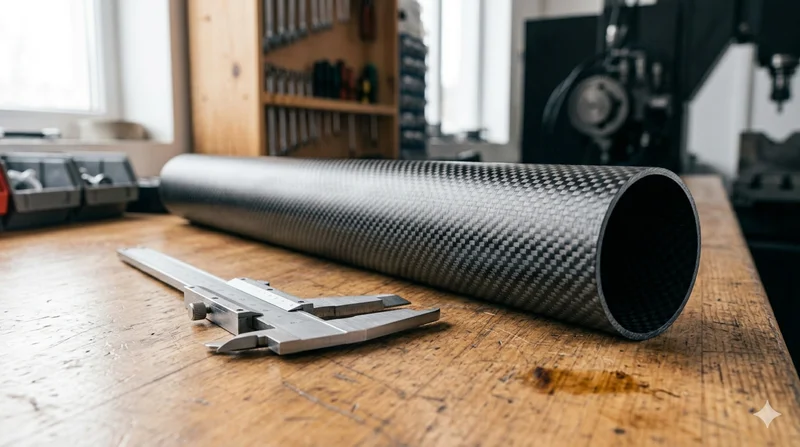
Round Carbon Fiber Tube — 3K Plain Weave T700
Standard round carbon fiber tube manufactured from Toray T700 grade fiber with 3K plain weave. Offers balanced strength and stiffness for general industrial applications including robotics, automation, sports equipment, and aerospace structures.
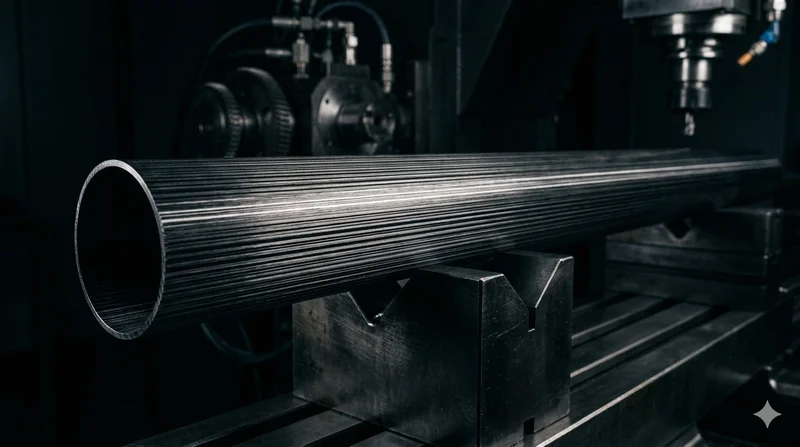
Round Carbon Fiber Tube — UD Unidirectional T700
Unidirectional (UD) round tube with all fibers aligned axially for maximum longitudinal stiffness. Ideal for applications requiring high bending rigidity with minimal weight, such as shafts, struts, and structural reinforcements.
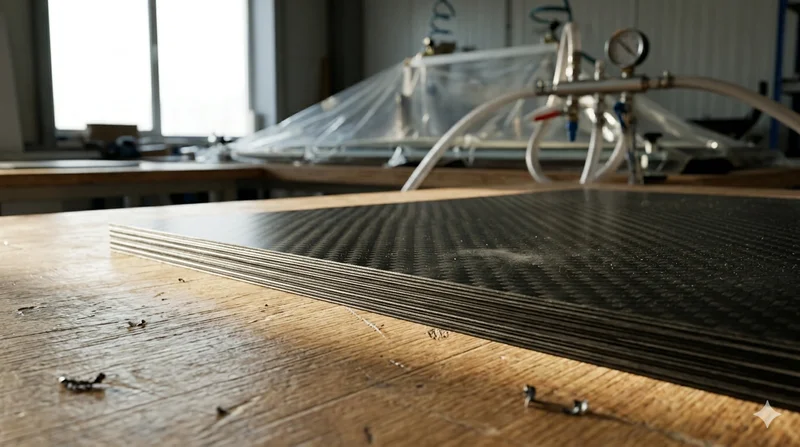
Carbon Fiber Plate — 3K Twill T700 3.0mm
Medium-thickness 3.0mm carbon fiber plate offering significantly higher load capacity while maintaining attractive 3K twill finish. Suitable for structural brackets, reinforcement plates, and load-bearing panels.
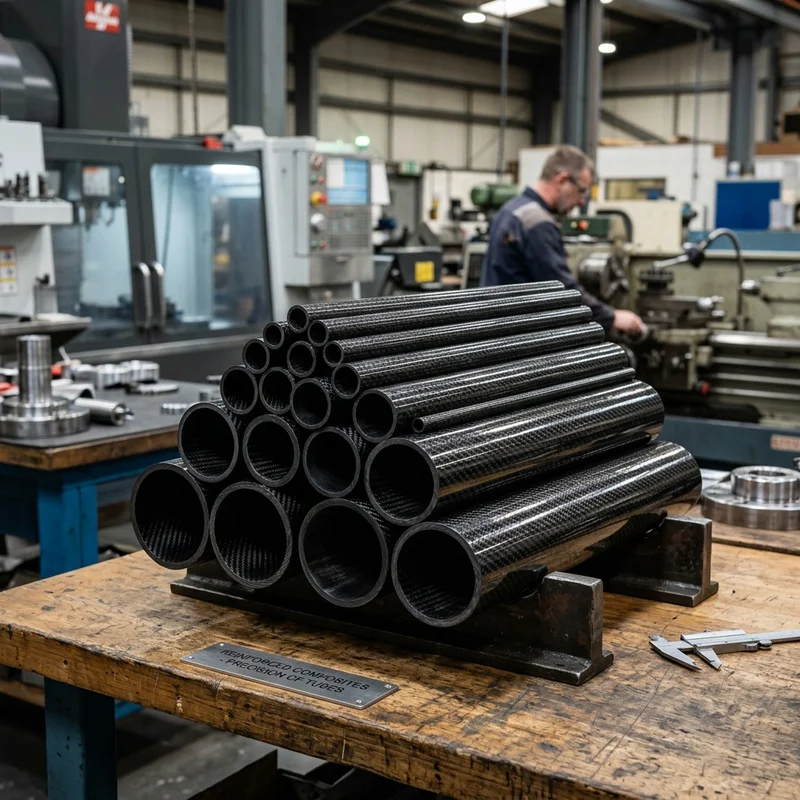
Round Carbon Fiber Tube — 3K Twill
Lightweight and ultra-stiff round tubes ideal for drone frames, robotics, and structural applications.
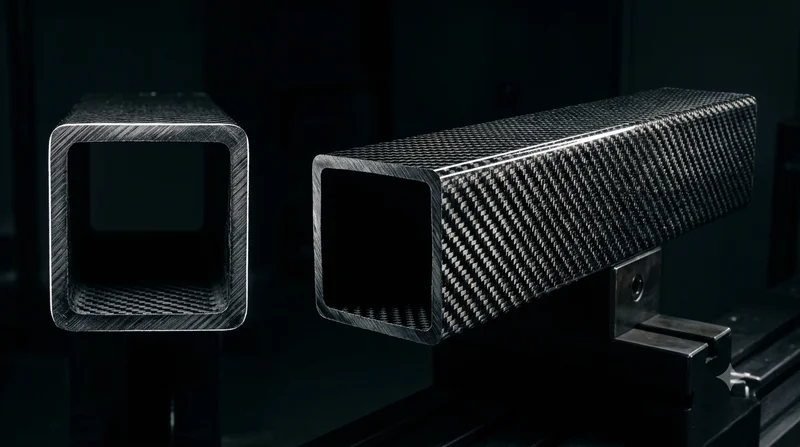
Square Carbon Fiber Tube — 3K Twill T700
Square cross-section carbon fiber tube manufactured with 3K twill weave for torsional strength. Preferred for structural frames, trusses, and support columns where rectangular geometry offers design flexibility.