Carbon fiber tow cut to size turns a continuous bundle into short, uniform lengths for compounding, moulding compounds, preforms and nonwoven mat, and the cut quality decides how much of the tow's strength survives into your part. This guide covers the cut lengths sold by grade, the blade and tolera
Introduction
Carbon fiber tow cut to size turns a continuous bundle into short, uniform lengths for compounding, moulding compounds, preforms and nonwoven mat, and the cut quality decides how much of the tow's strength survives into your part. This guide covers the cut lengths sold by grade, the blade and tolerance choices behind them, sizing and binder requirements, fines control, and what MOQ, pricing and lead time look like when you buy carbon fiber tow cut to length from a carbon fiber tow cut to size factory in China.
Cutting sounds like a low-risk operation: feed a tow, chop it, bag it. In practice a poor cut shows up three steps later, as a compound that will not feed, a preform with weak interlocks, or a moulding with visible fiber bundles that never dispersed. The difference is rarely the fiber itself. It is cut length distribution, blade condition, sizing compatibility and how well the cutter controls dust and static.
What carbon fiber tow cut to size means in practice
Tow arrives as an untwisted bundle of 1K to 48K filaments held together by a sizing film. Cutting it to length changes the material's form, not its grade, but the target length is set by the downstream process rather than by preference.
| Downstream process | Typical cut length | Length tolerance | Notes |
|---|---|---|---|
| Milled fiber and fine compound | 0.5-3 mm | plus or minus 0.3 mm | High fines risk, needs dust extraction |
| SMC and BMC moulding compound | 6-12 mm | plus or minus 0.5 mm | Length sets flow and strength |
| Spray-up and preform binder | 12-25 mm | plus or minus 0.8 mm | Binder compatibility matters most |
| Nonwoven mat and felt | 25-50 mm | plus or minus 1.0 mm | Length controls mat openness |
| Staple for spinning or needling | 50-100 mm | plus or minus 1.5 mm | Twist or crimp may be added later |
The same 12K tow can be sold at any of those lengths, and price per kilogram moves with the operation, not with the fiber. A cutting house that quotes one price for all lengths is either repacking stock or hiding a tolerance problem, because blade wear and sorting cost rise sharply as the target length falls.
Cut length and blade choice decide quality
Three cutting methods cover most production, and each leaves a different edge and a different fines level.
- Rotary cutter with carbide blades: the workhorse for 3-50 mm lengths; clean shear on most sizing systems, but blades dull and start crushing filaments after a few tonnes.
- Guillotine: good for longer staple and thicker tow, with a slightly rougher end that matters only if the cut end is visible in the final part.
- Ultrasonic or heated blade: used where a sealed end is needed to stop fraying, mainly for textile and braiding feeds.
- Laser: avoid for structural use; the heat-affected zone chars sizing and drops single-filament strength at the cut end.
Ask for the cut length distribution, not just the nominal length. A lot sold as 12 mm with a wide spread from 8 to 18 mm will feed differently from a tight lot at 11.5 to 12.5 mm, even though both average 12 mm. For SMC and BMC, a spread wider than plus or minus 1 mm usually shows up as inconsistent charge flow and strength scatter between mouldings.
Blade condition is the hidden variable. A dull rotary blade crushes rather than shears, producing split bundles, broken filaments and a jump in fines. A serious cutting house logs blade changes against tonnage and will tell you the interval; a repacker cannot, because the material was cut somewhere else.
Carbon Fiber Tow Cut To Size in China: what to put in the RFQ
China supplies a large share of chopped and milled carbon fiber, and the range from a dedicated cutting line to a trading desk is wide. Put these points in the request for quotation so replies become comparable.
- Tow grade and filament count: T300, T700 or an equivalent grade, at 12K or 24K; the grade sets strength and the count sets bundle thickness.
- Sizing system: state the resin you will use, because an epoxy-compatible size may not wet out in a vinyl ester or a thermoplastic compound.
- Cut length and tolerance: give the nominal length, the allowed spread and the test method you will use to check it.
- Fines limit: ask for the percentage below a stated screen size, typically under 1 percent for moulding compounds.
- Moisture and packaging: specify a maximum moisture content and foil bags with desiccant, since chopped tow picks up water quickly.
Also state whether you need a binder or a coupling agent applied after cutting. Some preform lines want a powder binder at a defined percentage, and adding it after the cut changes both the price and the lead time.
MOQ, pricing and lead time when you buy carbon fiber tow
Commercial terms are simpler than for pultruded profiles, but the spread between suppliers is still wide. Use the table below as a first filter.
| Order type | MOQ | Indicative lead time |
|---|---|---|
| Stock grade, standard cut length | 20-100 kg | 1-2 weeks |
| Custom length or custom sizing | 200-500 kg | 3-5 weeks |
| Binder added after cutting | 300-500 kg | 4-6 weeks |
| Qualification trial | 5-20 kg | 1-2 weeks plus testing |
Price follows fiber grade first, cut length second, tolerance third and volume last. Short lengths below 3 mm carry a premium because throughput falls and fines handling becomes the bottleneck. A tolerance tightened from plus or minus 1.0 mm to plus or minus 0.3 mm usually adds 10 to 25 percent, since the line must run slower and more material is rejected at the screen.
Freight is modest because the material is light, but packaging is not optional. Chopped tow in a plain sack arrives with moisture, dust and a compressed block that will not feed. Specify a sealed foil bag inside a carton, with the net weight and cut length printed on the label.
Quality checks before the first shipment
Run these checks on the trial lot before you release production volume.
- Length distribution: measure at least 200 pieces with a caliper or an image analyser and plot the spread, not the mean.
- Fines content: sieve a sample at the agreed screen size and weigh the pass-through fraction.
- Moisture: dry a sample and record the loss; anything above the agreed limit points to a packaging failure.
- Bundle integrity: inspect for split bundles and broken filaments under a low-power loupe.
- Wet-out trial: mix a small batch in your own resin and check for dry spots and undispersed bundles.
Keep the length distribution and the fines result with the lot certificate. If a later moulding shows strength scatter, those two records tell you quickly whether the cut changed or the resin batch did.
Frequently Asked Questions
Does cutting tow reduce its strength?
The fiber itself keeps its modulus, but the cut end loses the load path and a dull blade can damage filaments near the edge. With a sharp blade and a clean shear, strength loss in the usable length stays small; with a crushing cut, fines and broken filaments rise and the compound performs below the datasheet.
Can one tow size cover several cut lengths?
Yes. The same 12K tow can be cut at 6 mm for moulding compound or 25 mm for preform, but the two lots need different screening and packaging. Order them as separate specifications rather than one line with a range.
What is a realistic cut length tolerance?
Plus or minus 0.5 mm is routine between 6 and 25 mm. Below 3 mm, expect plus or minus 0.3 mm at best, and plan for a higher fines percentage because the same blade removes a larger share of the bundle.
Conclusion
Carbon fiber tow cut to size is a specification, not a commodity: cut length distribution, tolerance, sizing compatibility, fines limit and packaging all decide whether the material runs in your process. Fix those five points first, then compare price per kilogram and lead time.
For chopped and milled tow programmes, review the carbon fiber product range and send your cut length and resin system through the quotation page; a trial lot with a measured length distribution answers more than a catalogue page.
Part of topic
Related Articles
- Carbon Fiber Rod Testing Service: Methods, Standards and Cost | YongXian
- Carbon Fiber Plate Inspection Service: Methods, Standards and Cost
- Carbon Fiber Sheet Quality Inspection: Methods, Standards and Cost
- Carbon Fiber Sheet Thickness Guide: Standard Sizes and Selection | YongXian
- Carbon Fiber Tube Cutting Service Near Me: Process, Tolerance and Cost | YongXian
- Carbon Fiber Sheet Cutting Service Near Me: Process, Tolerance and Cost | YongXian
Interested in Our Products?
Contact our team for competitive pricing and technical specifications.
Get a QuoteRelated Products
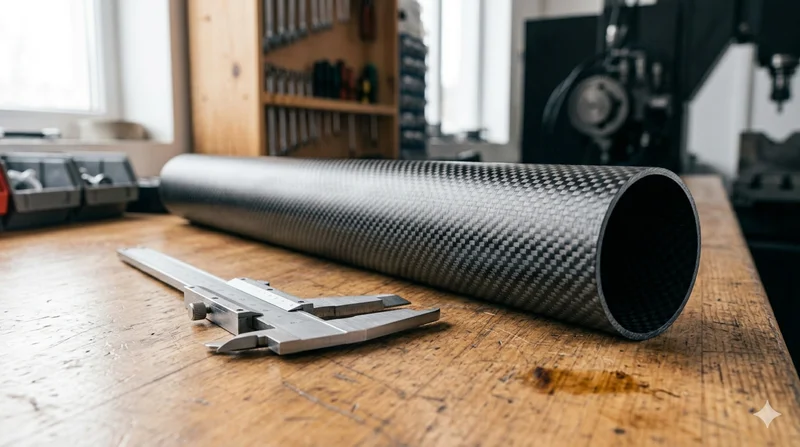
Round Carbon Fiber Tube — 3K Plain Weave T700
Standard round carbon fiber tube manufactured from Toray T700 grade fiber with 3K plain weave. Offers balanced strength and stiffness for general industrial applications including robotics, automation, sports equipment, and aerospace structures.
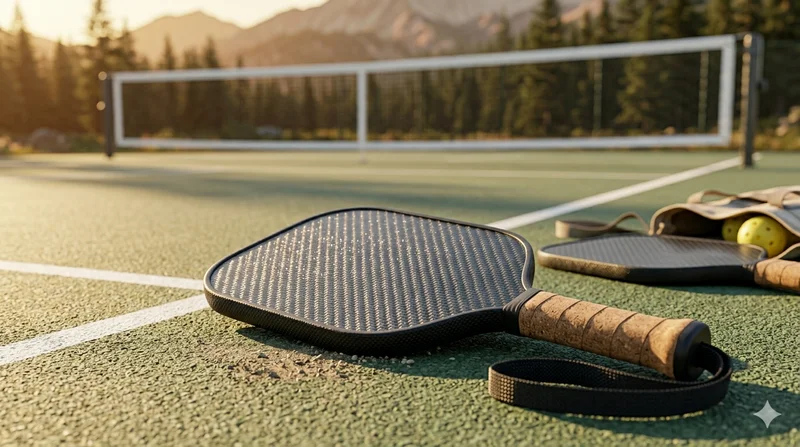
Carbon Fiber Pickleball Paddle
High-performance pickleball paddle with Toray T700 carbon fiber face and polypropylene honeycomb core. Delivers excellent power-to-weight ratio, spin generation, and vibration dampening for competitive play.
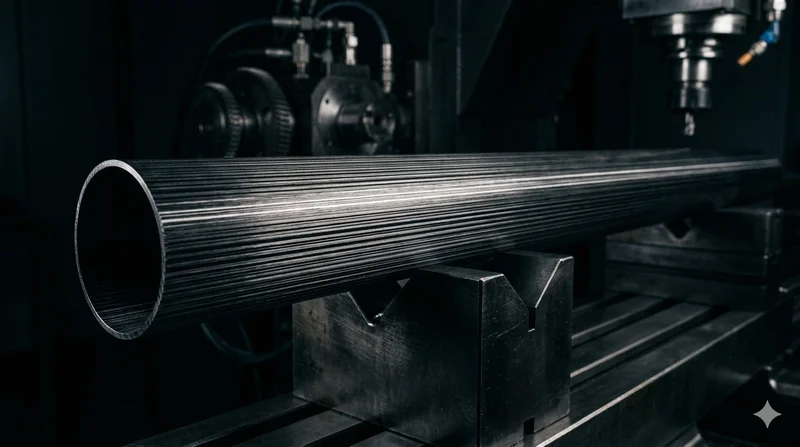
Round Carbon Fiber Tube — UD Unidirectional T700
Unidirectional (UD) round tube with all fibers aligned axially for maximum longitudinal stiffness. Ideal for applications requiring high bending rigidity with minimal weight, such as shafts, struts, and structural reinforcements.
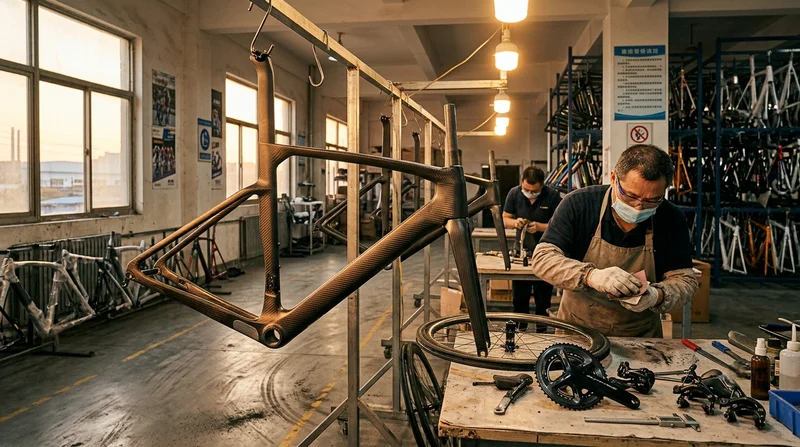
Custom Carbon Fiber Bicycle Frame
Full-custom carbon fiber bicycle frame manufactured to your geometry specifications. We produce road, gravel, mountain, and track frames using high-modulus carbon fiber layups optimized for each riding discipline. Monocoque construction with internal cable routing, available with disc or rim brake mounts.
Carbon Fiber Plate — 3K Twill T700 3.0mm
Medium-thickness 3.0mm carbon fiber plate offering significantly higher load capacity while maintaining attractive 3K twill finish. Suitable for structural brackets, reinforcement plates, and load-bearing panels.