Carbon fiber plate CNC cutting is the default route from a flat sheet to a finished part in drones, robotics, motorsport and electronics, yet most tolerance disputes start here. The machine is only one variable: bit geometry, feed rate, vacuum hold-down, extraction and how the nesting plan treats ed
Introduction
Carbon fiber plate CNC cutting is the default route from a flat sheet to a finished part in drones, robotics, motorsport and electronics, yet most tolerance disputes start here. The machine is only one variable: bit geometry, feed rate, vacuum hold-down, extraction and how the nesting plan treats edge distance all decide whether a part comes off the bed inside plus or minus 0.1 mm or gets scrapped on the first article.
This guide explains how carbon fiber plate cutting runs in production, compares CNC router, laser and waterjet with real numbers for tolerance, edge quality and cost, and shows how to specify custom carbon fiber cutting so quotes are comparable.
Carbon Fiber Plate CNC Cutting: Process Overview
A typical CNC cutting cell for carbon plate runs five steps in order: nest the parts on a sheet layout, secure the sheet on a vacuum table or fixture, cut with a diamond-coated or up-sweep bit at controlled spindle speed, extract dust at the source, then deburr and inspect edges. Spindle speed usually sits between 18000 and 24000 rpm with feed rates of 6 to 12 metres per minute, adjusted for thickness: thin 1 mm plate wants slower feed to avoid chipping, while 6 mm plate runs faster with a stiffer bit.
| Process | Typical tolerance | Edge quality | Relative cost per part |
|---|---|---|---|
| CNC router | Plus or minus 0.1 mm | Clean, slight fuzz on bottom ply | 1.0 (baseline) |
| Laser (CO2) | Plus or minus 0.2 mm | Caustic edge, heat-affected zone | 1.3 to 1.8 |
| Waterjet | Plus or minus 0.15 mm | Smooth, no heat, some erosion | 1.5 to 2.2 |
| Waterjet with abrasive | Plus or minus 0.1 mm | Best edge on thick plate | 2.0 to 3.0 |
The router stays the industrial default: it cuts dry, leaves a bondable edge with light sanding, and keeps cost per part lowest at volume. Laser looks attractive until you measure the heat-affected zone: resin on the cut line carbonises, and strength there drops enough that structural plates reject it. Waterjet earns its premium on thick plate where a router bit would deflect.
How to Cut Carbon Fiber Plate: Router, Laser and Waterjet Compared
Choosing how to cut carbon fiber plate depends on three questions: how thick is the plate, is the edge structural or cosmetic, and how tight is the tolerance. Thin cosmetic plates favor the router with a compression bit that pushes fibers down at the top surface and up at the bottom, preventing the fuzzy delamination a straight-flute bit leaves. Structural plates with holes close to the edge need lower feed speeds and a sharp bit renewed on a schedule, not when parts start failing.
- Router: best cost and edge for plates under 8 mm; requires dust extraction rated for carbon fines and bits replaced every 8 to 12 running hours.
- Laser: only for non-structural or cosmetic parts; never for load-bearing plates where the heat-affected zone would sit inside the stress path.
- Waterjet: choice for 10 mm and thicker plate, sandwich panels and parts with tight internal radii a bit cannot reach.
- Combined route: waterjet for outer profile, router for precision holes, which keeps hole tolerance tight without paying waterjet rates on every feature.
Dust extraction deserves its own paragraph because carbon dust is a health hazard and an equipment killer: an uncontrolled cell puts conductive fines into drives and filters. Specify extraction at the spindle head with a sealed shroud, and ask how the supplier disposes of the dust, because that answer shows whether the cell runs to production standards.
Tolerance Classes in Carbon Fiber Plate CNC Cutting
Tolerance on carbon plate is not one number. A quotation that says plus or minus 0.1 mm without saying where is incomplete: overall profile, hole position, hole diameter, flatness and edge squareness each carry their own class, and they are budgeted differently on the machine.
| Feature | Standard class | Precision class | Measurement method |
|---|---|---|---|
| Outer profile | Plus or minus 0.2 mm | Plus or minus 0.1 mm | CMM or optical |
| Hole diameter | Plus or minus 0.1 mm | Plus or minus 0.05 mm | Pin gauge |
| Hole position | Plus or minus 0.15 mm | Plus or minus 0.08 mm | CMM |
| Flatness | 0.3 mm over 300 mm | 0.15 mm over 300 mm | Granite table, feeler |
| Edge squareness | 0.2 mm | 0.1 mm | Square and dial indicator |
Precision class costs 25 to 40 percent more because it means slower feeds, sharper bits, in-process probing and a first article measured before the batch runs. For drone plates and robot brackets that stack multiple parts, precision class is usually cheaper than rework; for cosmetic face panels standard class is enough. Write the class into the drawing rather than trusting a shop default.
Custom Carbon Fiber Cutting: Nesting, Lead Time and Cost
Custom carbon fiber cutting is priced from sheet utilization, machine time and setup. A nesting plan that squeezes 12 parts from a 500 by 400 mm sheet instead of 9 drops material cost by a quarter, so a supplier who shows the nest drawing before production understands cost. Minimum edge distance of 5 mm between parts and 8 mm from sheet border protects against breakout, and it is the first thing an aggressive nest violates.
- Sheet utilization target: 70 percent or better on repeat parts; below 60 percent the nest should be revised before cutting.
- Setup charge: expect a one-off fixture or program fee of USD 80 to 300 for new geometry, waived on volume repeats.
- Lead time: 7 to 10 days for standard class on stock plate, 12 to 18 days for precision class or non-stock thickness.
- Tooling wear clause: state who pays for bit change when abrasive plate eats a tool mid-batch, because it changes the unit price more often than buyers expect.
Ask for the same nest drawing at quotation stage and at delivery. If the delivered layout matches the quote, material assumptions were honest; if the shop silently repacked parts, the next quote will repeat the fiction.
Carbon Fiber Plate Cutting Costs and Tool Wear
Cost per part breaks into material, machine time, tooling and inspection. Material dominates on large plates: a 3 mm T700 sheet can carry 60 percent of the part cost, so nesting efficiency moves the total more than a negotiable machine rate. Tool wear is the quiet line item: diamond bits run 8 to 12 hours before edge quality slips, and pushing a bit to 20 hours saves pennies while losing tolerance you paid for.
Inspection belongs in the price too. A dimensional report per lot, edge check under magnification for delamination, and a first article signed off before the batch runs separate a production cell from a job shop cutting composite on a wood router. When you compare quotes, normalise all four lines - material grade, machine hours, tooling policy and inspection package - before comparing the headline number, because two quotes two percent apart can differ by thirty percent once hidden lines are visible.
Frequently Asked Questions
Is CNC router cutting accurate enough for structural carbon fiber plates?
Yes, within a defined tolerance class. A well-tuned router holds plus or minus 0.1 mm on profile and hole position on plates up to 8 mm, provided feeds are controlled, bits are sharp and the sheet is flat on a vacuum table. Structural plates should still come with a first article report, because tolerance depends on process control rather than the machine label.
Why does laser cutting weaken carbon fiber plate edges?
The laser burns resin along the cut line, leaving a heat-affected zone where the matrix is carbonised and fiber-matrix bond is degraded. That zone can extend 0.2 to 0.5 mm into the part, and if it sits in a load path the plate fails below its rated strength. Laser is fine for gaskets, covers and cosmetic parts; structural plates should be routed or waterjet cut.
How should I specify custom carbon fiber cutting on a drawing?
Give the tolerance class per feature (profile, hole diameter, position, flatness, squareness), fiber grade and thickness, cosmetic side if one face is visible, minimum edge distance for holes, deburr requirement, and the inspection documents you expect with the batch. With those items on the drawing, quotes become comparable and the first article has an objective bar to pass.
Conclusion
Carbon fiber plate CNC cutting rewards process discipline more than machine brand: nest with edge distance intact, cut with sharp tooling at controlled feeds, extract dust at the source, and measure each feature against a tolerance class written on the drawing. Choose router for standard structural work, waterjet for thick plate and tight radii, and reserve laser for non-structural parts. To review cutting capabilities and tolerance data, browse the carbon fiber products catalogue or contact the technical sales team with your plate drawing, fiber grade and target class, and you will receive a written cutting specification with nesting plan and inspection package.
Part of topic
Related Articles
- Carbon Fiber Rod Testing Service: Methods, Standards and Cost | YongXian
- Carbon Fiber Plate Inspection Service: Methods, Standards and Cost
- Carbon Fiber Sheet Quality Inspection: Methods, Standards and Cost
- Carbon Fiber Sheet Thickness Guide: Standard Sizes and Selection | YongXian
- Carbon Fiber Tube Cutting Service Near Me: Process, Tolerance and Cost | YongXian
- Carbon Fiber Sheet Cutting Service Near Me: Process, Tolerance and Cost | YongXian
Interested in Our Products?
Contact our team for competitive pricing and technical specifications.
Get a QuoteRelated Products
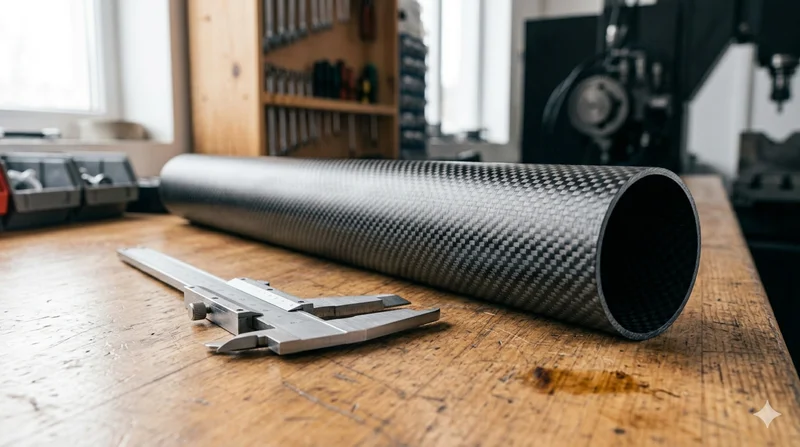
Round Carbon Fiber Tube — 3K Plain Weave T700
Standard round carbon fiber tube manufactured from Toray T700 grade fiber with 3K plain weave. Offers balanced strength and stiffness for general industrial applications including robotics, automation, sports equipment, and aerospace structures.
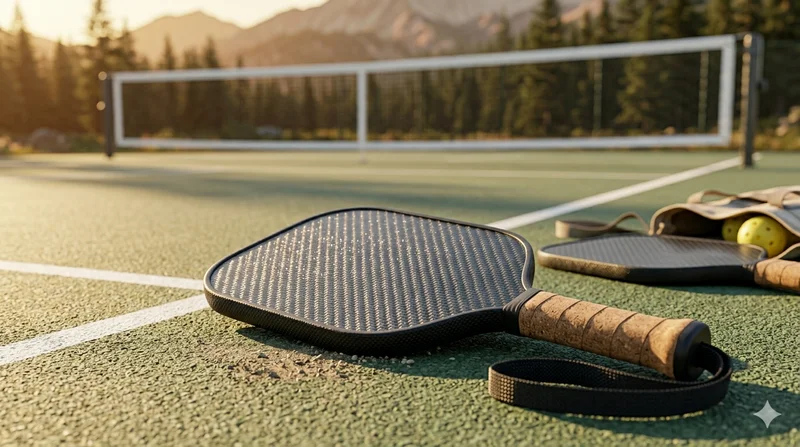
Carbon Fiber Pickleball Paddle
High-performance pickleball paddle with Toray T700 carbon fiber face and polypropylene honeycomb core. Delivers excellent power-to-weight ratio, spin generation, and vibration dampening for competitive play.
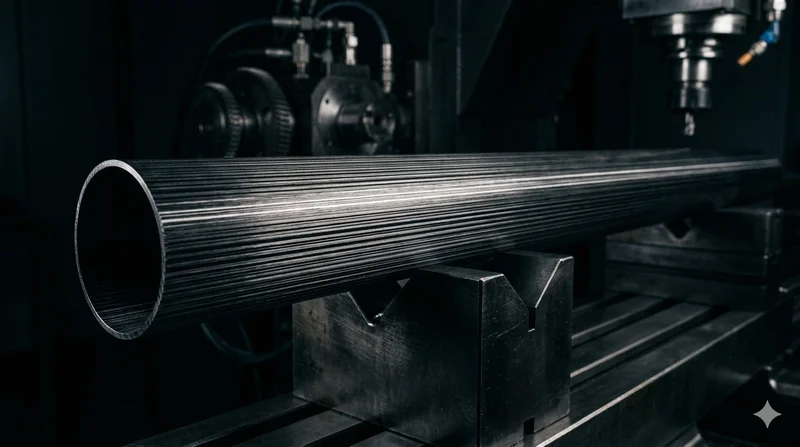
Round Carbon Fiber Tube — UD Unidirectional T700
Unidirectional (UD) round tube with all fibers aligned axially for maximum longitudinal stiffness. Ideal for applications requiring high bending rigidity with minimal weight, such as shafts, struts, and structural reinforcements.
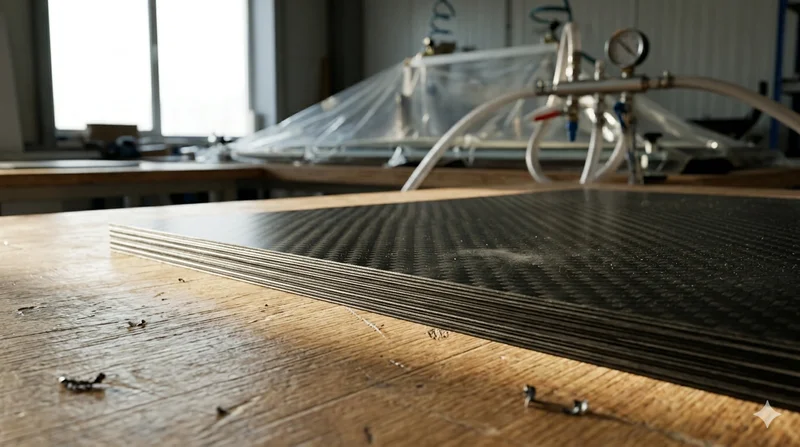
Carbon Fiber Plate — 3K Twill T700 3.0mm
Medium-thickness 3.0mm carbon fiber plate offering significantly higher load capacity while maintaining attractive 3K twill finish. Suitable for structural brackets, reinforcement plates, and load-bearing panels.
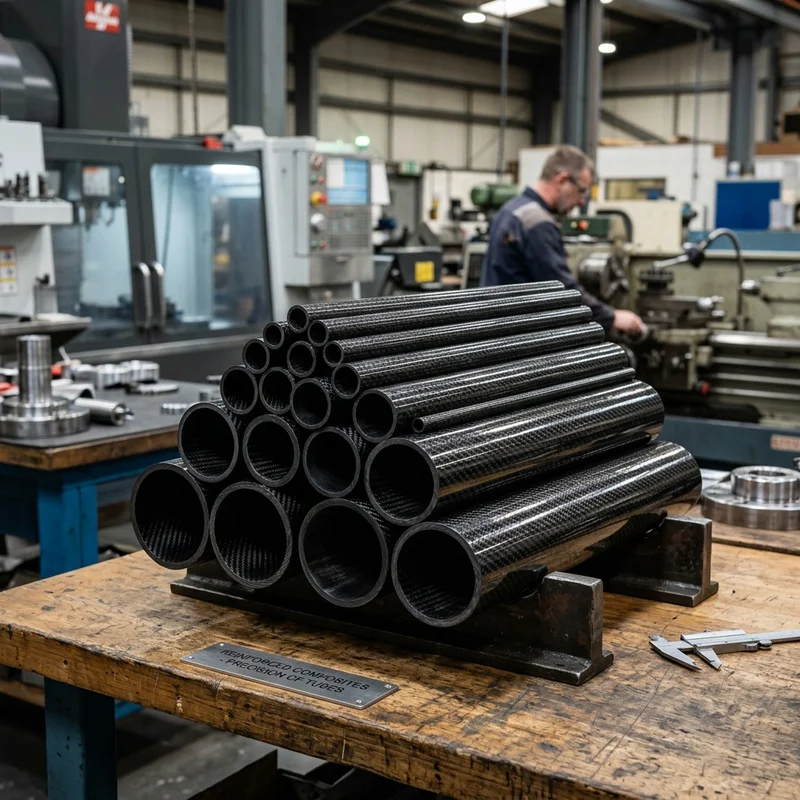
Round Carbon Fiber Tube — 3K Twill
Lightweight and ultra-stiff round tubes ideal for drone frames, robotics, and structural applications.