Carbon fiber nonwoven mat cut to size turns a master roll into the exact pieces your mold or line consumes, so operators stop trimming by hand and start laying material that already fits. The conversion sounds trivial until the first batch arrives with frayed edges, binder smeared across the cut lin
Introduction
Carbon fiber nonwoven mat cut to size turns a master roll into the exact pieces your mold or line consumes, so operators stop trimming by hand and start laying material that already fits. The conversion sounds trivial until the first batch arrives with frayed edges, binder smeared across the cut line or blanks that measure two millimeters wide of the drawing. This guide covers the formats a converter can deliver, which cutting method suits which mat, the tolerances worth writing into a purchase order, and the commercial terms behind carbon fiber nonwoven mat cut to size orders placed with a Chinese converter.
A nonwoven mat is not a woven fabric. Short chopped filaments or needled fibers are held by powder binder, emulsion binder or mechanical entanglement, which means the material has almost no tensile strength across the cut and releases loose fiber the moment a dull blade touches it. That single property explains why cutting method, blade condition and dust extraction decide whether the delivered blanks are usable, long before price enters the conversation.
What carbon fiber nonwoven mat cut to size covers
Cut-to-size is a conversion service, not a product family, so the quotation depends on three inputs: mat specification, finished geometry and packaging. The mat itself is usually 80 to 600 gsm per layer with chopped fiber lengths of 12, 25 or 50 millimeters, or a needled felt built from longer fiber. Master rolls run 600, 1000 or 1270 millimeters wide, and the converter nests your shapes inside that width.
| Delivered format | Typical size range | Usual cutting method | Normal tolerance |
|---|---|---|---|
| Rectangular sheets | 300 x 300 mm to 1250 x 2500 mm | Guillotine or CNC knife | Plus or minus 3 mm |
| Die-cut blanks and preforms | 50 x 50 mm to 900 x 1200 mm | Steel rule die or clicker press | Plus or minus 1.5 mm |
| Discs and rings | 20 mm to 600 mm diameter | Rotary die or CNC knife | Plus or minus 1 mm |
| Kiss-cut roll segments | Roll width up to 1270 mm | Rotary die on liner | Plus or minus 2 mm across web |
| Multi-layer kits | Ply stacks per drawing | Die cutting plus collation | Per layer, plus or minus 2 mm |
Nesting efficiency typically lands between 70 and 85 percent, and the scrap you pay for is the gap between shapes, not a hidden markup. A converter who asks for your DXF file, your annual area and your press platen size before quoting is working the problem properly; one who quotes a single square-meter rate is guessing.
Cutting methods for carbon fiber nonwoven mat
Five methods dominate production, and the right one follows from mat weight, geometry and edge requirement rather than from machine availability.
- Guillotine: cheapest for rectangles and roll slitting, but it compresses the edge and sheds fiber, so plan on edge trim and local extraction.
- Steel rule die: the workhorse for repeat blanks; tooling costs roughly 300 to 800 US dollars and pays back above a few thousand pieces.
- CNC knife: best for prototypes and short runs because there is no tooling, and nesting changes cost nothing but programming time.
- Ultrasonic cutting: seals the edge as it separates the mat, which stops fraying and binder dust on needled felt and heavy 400 to 600 gsm grades.
- Waterjet: cleanest edge on thick multi-layer stacks, but the mat must be supported and dried afterwards, so it suits kits rather than volume blanks.
Laser cutting is the method to question. The beam burns the binder and chars the edge, leaving a crust that blocks resin wet-out and produces fumes the operator should not breathe. It can work on a thin conductive veil where the cut is hidden, but for structural mat it trades a clean drawing for a contaminated laminate.
Tolerances, edges and dust control
Tolerance is only half the specification; edge condition decides whether the blank lies flat in the mold. A die-cut edge shears fibers and leaves a small amount of loose filament, which is acceptable when the edge sits inside a flange or gets trimmed after cure. An ultrasonic edge is welded and stays clean, which matters when the mat edge becomes a visible surface or sits against a vacuum bag seal.
| Edge condition | What it means in production | Where it is acceptable |
|---|---|---|
| Sheared, slight fray | Loose filament at the perimeter | Inside flanges, trimmed after cure |
| Welded by ultrasonic | Binder fused, no loose fiber | Visible edges, bag sealing zones |
| Crushed by dull die | Dense band that resists resin | Nowhere; reject the lot |
| Contaminated by handling | Oil or dust on the surface | Nowhere; clean before layup |
Dust control is not optional. Chopped mat releases respirable fiber during cutting, so the converter should run local extraction at the blade, HEPA filtration on the booth and a documented cleaning cycle between grades. Ask for the extraction arrangement in writing; a workshop that cuts carbon mat without it is also the workshop that ships conductive dust into your clean layup area.
MOQ, pricing and lead time for carbon fiber nonwoven mat cut to size
Commercial terms track tooling and setup more than material. The table below is a realistic starting point for offers to buy carbon fiber nonwoven mat in converted form.
| Order type | MOQ | Tooling | Indicative lead time |
|---|---|---|---|
| Stock sheets cut from standard roll | 200-500 m2 | None | 1-2 weeks |
| Die-cut blanks, new shape | 500-2000 pieces | 300-800 USD | 3-4 weeks |
| Kiss-cut roll segments | 300-800 m2 | 200-500 USD | 2-3 weeks |
| Multi-layer kits per drawing | 100-300 kits | Die plus programming | 3-5 weeks |
| Qualification lot | 50-100 m2 | CNC only, no die | 1-2 weeks |
Price per square meter falls with nesting efficiency, annual area and mat grade, and rises with ultrasonic edges, interleaf paper and individual bagging. Cutting labor is a small share of the total; the fiber grade and binder system still dominate cost. That is why a converter quoting a suspiciously low cut price is usually quoting a lighter mat or a wider tolerance, so compare gram weight and edge condition side by side before comparing rates.
Quality checks before the first shipment
- Dimensional audit: measure ten pieces from the first, middle and last bundle against the drawing, not one sample from the top.
- Areal weight check: weigh a 100 x 100 mm coupon from each roll consumed and confirm it sits inside the agreed plus or minus 5 percent.
- Edge inspection: look for crushed bands, singed edges or binder smear under a low-power loupe on at least five blanks per bundle.
- Lay-flat test: place a blank on the mold or a surface plate and check for curl introduced by roll memory or a dull die.
- Traceability: lot number, mat grade, binder code and cut date must match the shipping documents and the certificate.
ISO 9001 paperwork proves the process is documented; it does not prove your blanks were cut on the approved die at the approved weight. Keep the first-article pieces with the inspection record and repeat the dimensional audit on every new lot.
Frequently Asked Questions
Can carbon fiber nonwoven mat be laser cut?
Only in narrow cases. Laser cutting chars the binder and leaves a carbonized rim that blocks resin wet-out, and it produces fumes that require extraction. Use ultrasonic, die or waterjet cutting for structural mat, and reserve laser for thin veils where the cut edge is hidden and the laminate is non-critical.
Does cutting change the areal weight or binder content of the mat?
Cutting does not change the nominal weight, but it can change the effective weight at the edge because fibers are sheared and some binder is lost as dust. That is why incoming inspection weighs coupons from the body of the blank rather than the perimeter, and why the agreed tolerance should be verified on the delivered pieces, not only on the master roll.
What files does a converter need for cut-to-size mat?
A DXF or DWG outline with dimensions and tolerances, the mat specification including areal weight, fiber length and binder type, the annual area or piece count, the press or mold constraints, and packaging instructions. If the part has a preferred fiber direction, mark it on the drawing, because nonwoven mat is closer to isotropic but needled felt still shows a machine direction.
Conclusion
Carbon fiber nonwoven mat cut to size is worth the conversion premium when your line runs repeat shapes, when hand trimming wastes more material than the tooling costs, or when edge quality affects bag sealing and surface finish. Fix the mat grade, drawing tolerance, edge condition and dust controls in the purchase order, then approve a qualification lot on your own mold before committing annual volume. To compare mat grades and converted formats side by side, browse the current carbon fiber products catalog or contact the technical sales team with your drawing, annual area and resin system, and you will receive a written specification and cut plan rather than a bare price.
Part of topic
Related Articles
- Carbon Fiber Rod Testing Service: Methods, Standards and Cost | YongXian
- Carbon Fiber Plate Inspection Service: Methods, Standards and Cost
- Carbon Fiber Sheet Quality Inspection: Methods, Standards and Cost
- Carbon Fiber Sheet Thickness Guide: Standard Sizes and Selection | YongXian
- Carbon Fiber Tube Cutting Service Near Me: Process, Tolerance and Cost | YongXian
- Carbon Fiber Sheet Cutting Service Near Me: Process, Tolerance and Cost | YongXian
Interested in Our Products?
Contact our team for competitive pricing and technical specifications.
Get a QuoteRelated Products
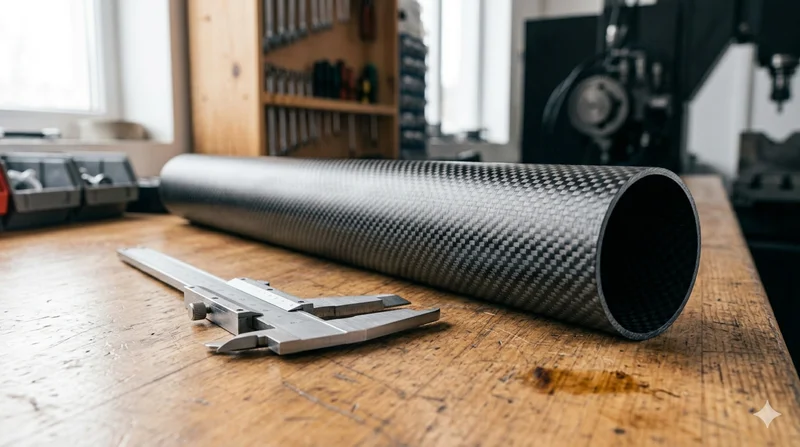
Round Carbon Fiber Tube — 3K Plain Weave T700
Standard round carbon fiber tube manufactured from Toray T700 grade fiber with 3K plain weave. Offers balanced strength and stiffness for general industrial applications including robotics, automation, sports equipment, and aerospace structures.
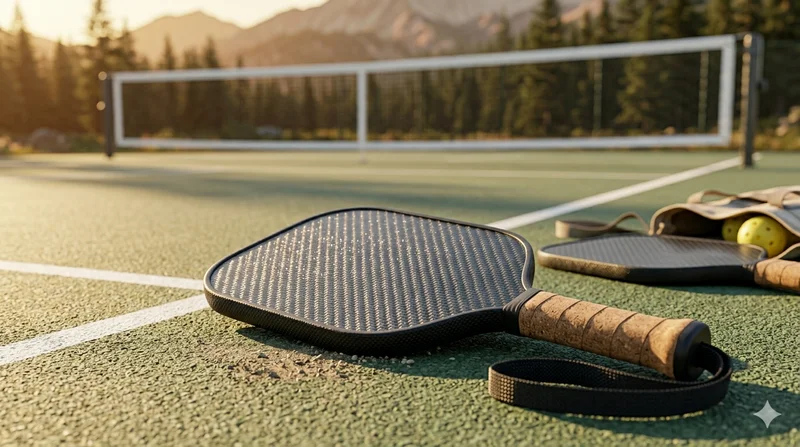
Carbon Fiber Pickleball Paddle
High-performance pickleball paddle with Toray T700 carbon fiber face and polypropylene honeycomb core. Delivers excellent power-to-weight ratio, spin generation, and vibration dampening for competitive play.
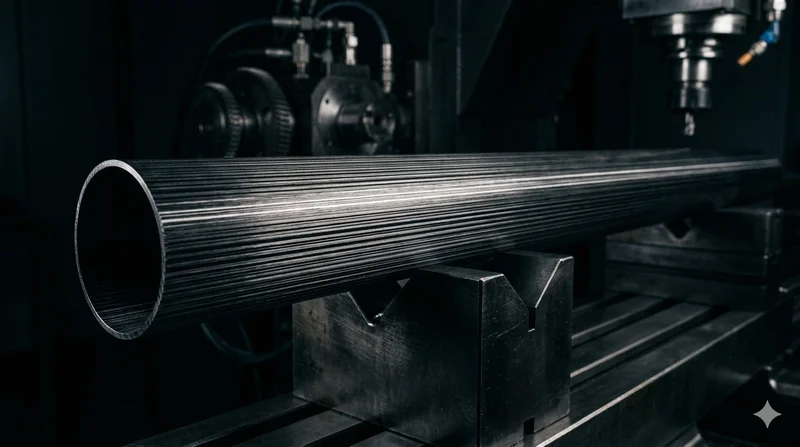
Round Carbon Fiber Tube — UD Unidirectional T700
Unidirectional (UD) round tube with all fibers aligned axially for maximum longitudinal stiffness. Ideal for applications requiring high bending rigidity with minimal weight, such as shafts, struts, and structural reinforcements.

Custom Carbon Fiber Bicycle Frame
Full-custom carbon fiber bicycle frame manufactured to your geometry specifications. We produce road, gravel, mountain, and track frames using high-modulus carbon fiber layups optimized for each riding discipline. Monocoque construction with internal cable routing, available with disc or rim brake mounts.
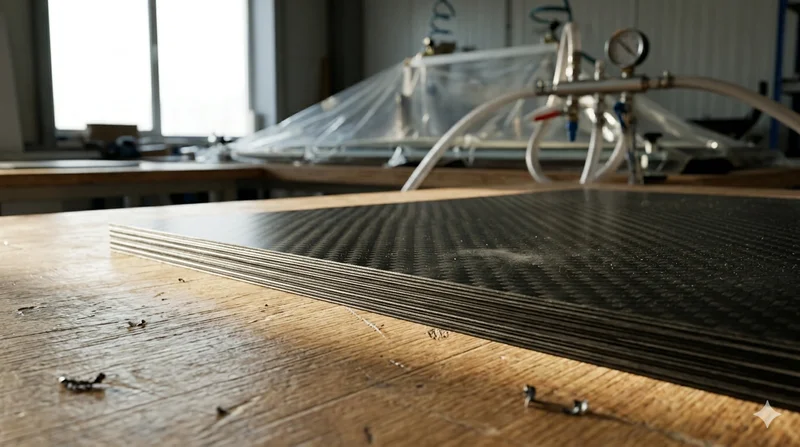
Carbon Fiber Plate — 3K Twill T700 3.0mm
Medium-thickness 3.0mm carbon fiber plate offering significantly higher load capacity while maintaining attractive 3K twill finish. Suitable for structural brackets, reinforcement plates, and load-bearing panels.