Carbon fiber honeycomb panel cut to size is a service, not just a product: you send a drawing with dimensions, hole positions and edge requirements, and the factory returns flat sandwich sheets whose skins, core and bonding are already fixed, trimmed to your outline. This guide explains what a carbo
Introduction
Carbon fiber honeycomb panel cut to size is a service, not just a product: you send a drawing with dimensions, hole positions and edge requirements, and the factory returns flat sandwich sheets whose skins, core and bonding are already fixed, trimmed to your outline. This guide explains what a carbon fiber honeycomb panel cut to size quote actually covers — core type, skin grade, tolerance class and edge treatment — with real commercial numbers, then walks through MOQ, pricing and lead time so you can compare a carbon fiber honeycomb panel cut to size factory in China against any other source on the same basis.
Honeycomb panels earn their reputation from the stiffness-to-weight ratio: a thin carbon skin over an aluminum or aramid core bends far less than a solid laminate of the same weight. But every cutting operation exposes the core, and an unsealed cut edge wicks moisture and crushes under clamp pressure. If you buy carbon fiber honeycomb panel cut to size without specifying skin grade, core density and edge sealing, the panels arrive looking right and fail at the first assembly.
What a carbon fiber honeycomb panel cut to size quote covers
A complete quotation is a bundle of six decisions. Miss one and the panel will not drop into your assembly.
| Parameter | Typical range | Why it matters |
|---|---|---|
| Core material | Aluminum, aramid (Nomex), PP, PMI foam | Weight, compressive strength, service temperature |
| Core density | 27–128 kg/m³ | Flatwise compression and panel mass |
| Skin grade | 3K twill, UD carbon prepreg, glass hybrid | Flexural stiffness and surface finish |
| Panel thickness | 5–30 mm standard, up to 50 mm custom | Section stiffness and fitting envelope |
| Thickness tolerance | ±0.3 mm to ±1.0 mm | Flush fits and gasket sealing |
| Cutting method | CNC router, waterjet, die cut | Edge quality, kerf and hole accuracy |
Core density deserves special attention. A 10 mm aluminum core at 32 kg/m³ behaves very differently from the same thickness at 83 kg/m³: the denser core resists point loads from bolts and standoffs but adds mass to every panel. Ask for the core specification by density and alloy temper, not just the material name.
Choosing a carbon fiber honeycomb panel cut to size factory: cutting method and edge treatment
The cut is where a carbon fiber honeycomb panel cut to size factory proves its process control.
- CNC routing: the workhorse for outlines, bolt holes and cutouts in flat panels; clean at moderate speed with a compression bit, but heat can smear resin if the feed is too slow.
- Waterjet cutting: no heat-affected zone and excellent for thick or hybrid cores, though the open cell structure can trap water — panels must be dried and sealed immediately after cutting.
- Die cutting: cheapest per piece at high volume, but tooling cost rules it out below a few thousand parts.
- Edge sealing: resin, tape or closure strips close the exposed core cells; specify which one you need, because an unsealed edge in a humid enclosure will absorb water and delaminate.
- Deburring and facing: skin burrs interfere with bonding and gasket seating; request a defined edge break instead of leaving it to the operator.
A competent factory asks about your assembly method — bonded, bolted or clamped — before quoting, because each one stresses the cut edge differently.
MOQ, pricing and lead time to buy carbon fiber honeycomb panel
Commercial terms vary more than technical ones. Use this as a sanity check when you compare offers for carbon fiber honeycomb panel cut to size.
| Order type | MOQ | Indicative lead time |
|---|---|---|
| Standard size from stock panel | 10–30 pieces | 1–2 weeks |
| Custom outline, one core type | 30–100 pieces | 3–4 weeks |
| Custom core density or thickness | 50–200 pieces | 4–6 weeks |
| New layup qualification | Pilot batch + test coupons | 6–8 weeks plus testing |
Price follows core material first, skin grade second and quantity third. Aramid core typically costs 20–40% more than aluminum at the same density because the film and honeycomb dipping process are more expensive, and a full carbon skin over foam can double the material cost of a glass-hybrid panel. Freight is a flat-panel problem: large thin sheets flex in transit, so suppliers pack them flat with stiffeners or on edge frames.
When you buy carbon fiber honeycomb panel cut to size in mixed sizes from one master sheet, nesting efficiency matters. A good nest plan recovers 70–85% of the sheet; a poor one leaves you paying for scrap you never see.
Quality checks before the first shipment
Run these checks on the trial lot before releasing production volume.
- Dimensional audit: measure length, width, thickness and hole positions against the drawing on at least three panels per batch, including the thinnest tolerance corner.
- Core crush inspection: look at the cut edge under light for crushed cells — crush at the router bit depth means feed and speed need correction.
- Flatness check: place the panel on a surface plate; oil-canning or twist usually comes from curing stress, not from your drawing.
- Seal continuity: run a fingernail along the sealed edge; any open cell is a moisture path.
- Label traceability: batch number, core density and layup code on the packing list must match each bundle.
ISO 9001 certification tells you the process is documented; it does not prove the panels you received match the panels you approved. Keep the lot certificate with your incoming-inspection record and re-check it after any supplier change.
Frequently Asked Questions
Can carbon fiber honeycomb panels be cut to size after full curing?
Yes, that is the normal route: panels are cured as large sheets, then trimmed with CNC routing or waterjet. What matters is how the exposed core is treated after cutting — sealing with resin, tape or closure strips keeps moisture out, and cutting parameters must limit cell crushing so the edge retains its compressive strength for bolting.
What tolerance should I specify for a carbon fiber honeycomb panel cut to size order?
For general structures ±0.5 mm on outline dimensions and ±0.5 mm on thickness is a realistic mid-class request; flush cosmetic assemblies may need ±0.3 mm, while internal brackets can live with ±1.0 mm. Tighter tolerance costs more because it demands slower cutting, more measurement and often a second finishing pass on the edges.
How should cut honeycomb panels be stored and handled?
Store flat on a clean surface or on edge frames, never propped on a single point that can dent the skin, and keep them in a dry indoor area away from direct sunlight. Handle panels by the edges with gloves: fingerprints on the bonding surface contaminate adhesive joints, and dropping a panel on a corner collapses core cells that no sealing will restore.
Conclusion
A carbon fiber honeycomb panel cut to size supplier is judged on six things: core specification discipline, skin grade control, thickness tolerance, cut-edge quality, sealing method and traceable lot data. Pin those down in your RFQ, run a qualification lot on your own assembly, and demand dimensional reports per batch before committing annual volume. If you are ready to compare specifications side by side, browse the current honeycomb and sandwich panel catalog or contact the technical sales team with your drawing, core choice and annual piece count — you will get a written spec sheet back, not just a price.
Part of topic
Related Articles
- Carbon Fiber Rod Testing Service: Methods, Standards and Cost | YongXian
- Carbon Fiber Plate Inspection Service: Methods, Standards and Cost
- Carbon Fiber Sheet Quality Inspection: Methods, Standards and Cost
- Carbon Fiber Sheet Thickness Guide: Standard Sizes and Selection | YongXian
- Carbon Fiber Tube Cutting Service Near Me: Process, Tolerance and Cost | YongXian
- Carbon Fiber Sheet Cutting Service Near Me: Process, Tolerance and Cost | YongXian
Interested in Our Products?
Contact our team for competitive pricing and technical specifications.
Get a QuoteRelated Products
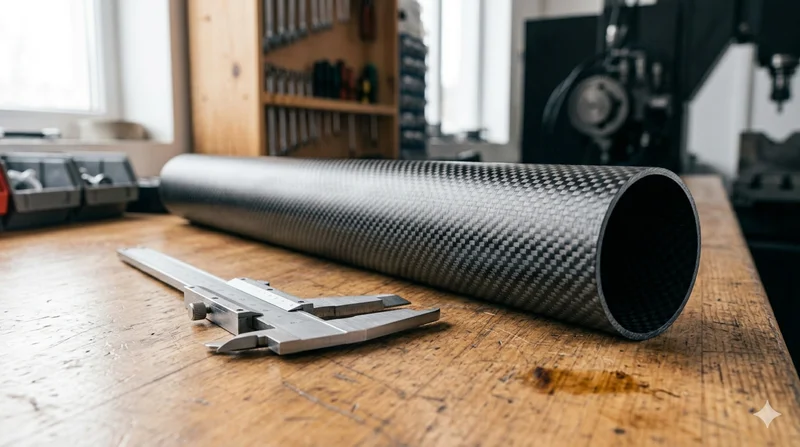
Round Carbon Fiber Tube — 3K Plain Weave T700
Standard round carbon fiber tube manufactured from Toray T700 grade fiber with 3K plain weave. Offers balanced strength and stiffness for general industrial applications including robotics, automation, sports equipment, and aerospace structures.
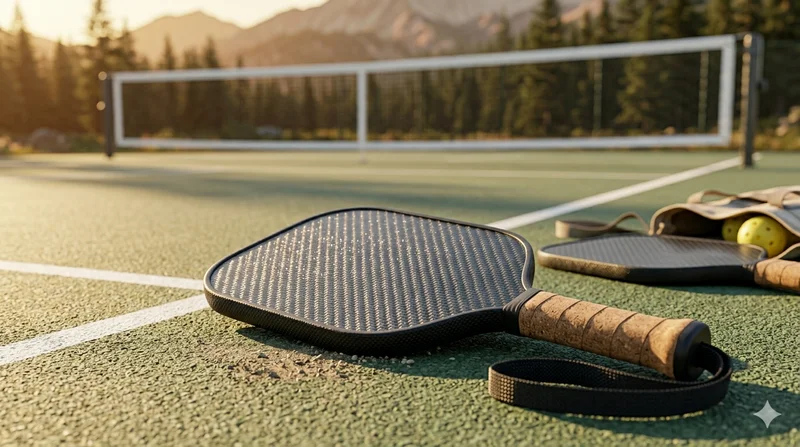
Carbon Fiber Pickleball Paddle
High-performance pickleball paddle with Toray T700 carbon fiber face and polypropylene honeycomb core. Delivers excellent power-to-weight ratio, spin generation, and vibration dampening for competitive play.
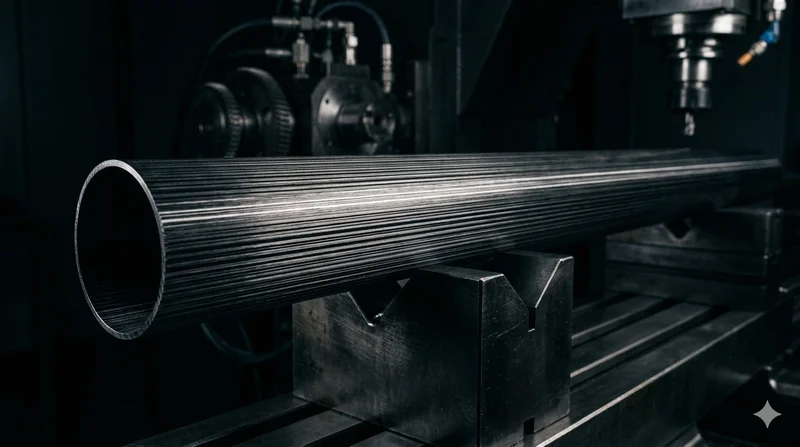
Round Carbon Fiber Tube — UD Unidirectional T700
Unidirectional (UD) round tube with all fibers aligned axially for maximum longitudinal stiffness. Ideal for applications requiring high bending rigidity with minimal weight, such as shafts, struts, and structural reinforcements.
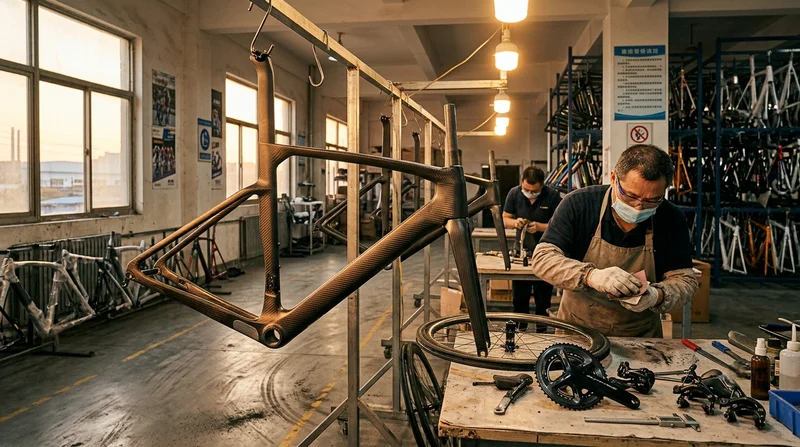
Custom Carbon Fiber Bicycle Frame
Full-custom carbon fiber bicycle frame manufactured to your geometry specifications. We produce road, gravel, mountain, and track frames using high-modulus carbon fiber layups optimized for each riding discipline. Monocoque construction with internal cable routing, available with disc or rim brake mounts.

Carbon Fiber Trekking Pole
Lightweight carbon fiber trekking pole manufactured from high-grade carbon fiber tube. Weighs only 160g per pole while providing superior shock absorption and durability for hiking, trail running, and backpacking.