Carbon fiber forged plate custom begins with a misleading name: forged carbon is not forged in the metallurgical sense. The name describes a compression-moulded composite made from randomly oriented chips of cured carbon laminate, weighed into a charge, pressed in a steel tool and cured into a near-
Introduction
Carbon fiber forged plate custom begins with a misleading name: forged carbon is not forged in the metallurgical sense. The name describes a compression-moulded composite made from randomly oriented chips of cured carbon laminate, weighed into a charge, pressed in a steel tool and cured into a near-net shape. The result is a marbled surface with no repeating weave and no visible direction, plus near-isotropic properties in-plane.
That combination is why custom forged plate exists as a product category. Designers want a carbon look that does not read as a wrapped sheet, engineers want stiffness without a layup schedule, and both want ribs and bosses that would be expensive to bond onto a flat laminate. Forged moulding delivers all three, provided drawing, tool and cosmetic standard are settled before the press is cut.
What carbon fiber forged plate custom actually means
The input is a chip charge rather than a fabric roll. Waste trim and off-spec laminate are cut into chips of roughly 10 to 50 millimetres, mixed with resin, weighed by part, and loaded into a heated cavity. Pressure closes the tool, resin flows, and the chips pack into a random three-dimensional orientation that shows as a mottled, stone-like surface once the part is demoulded and finished.
Three consequences follow. The surface never repeats, so two parts from the same tool are never identical. Fibre volume fraction sits lower than a well-made laminate because the chip packing is less efficient, typically 45 to 55 percent against 55 to 60 percent. And the process rewards geometry: ribs, bosses, thickness transitions and moulded inserts all come out of the same press cycle at little marginal cost.
Where forged carbon wins and where it loses
Forged plate and woven laminate are not interchangeable, and the choice usually follows from the drawing rather than from a material preference.
| Property | Forged plate | Woven laminate |
|---|---|---|
| Surface pattern | Random marble, no repeat | Regular twill, repeatable |
| In-plane stiffness | Isotropic, lower peak | Directional, higher along fibre |
| Complex geometry | Ribs and bosses in one cycle | Bonded or machined afterwards |
| Thickness control | Mould-defined, plus or minus 0.15 mm | Laminate-defined, tighter on flat areas |
| Tooling | Steel compression tool, high upfront | Flat platen or router fixture, low upfront |
| Economic quantity | Several hundred pieces upward | Tens of pieces upward |
The practical rule: a flat visible part needed in twenties goes to laminate and machining. A part with ribs, a curved shell or a moulded boss, in the hundreds, goes to forged moulding on total cost. Walls below 1.5 millimetres are the usual reason a forged design fails, because the charge cannot fill such a cavity reliably.
Specifying a forged plate: geometry, thickness and inserts
A forged part is defined by the tool, so the drawing has to describe what the tool must produce, not only what the finished part must measure. Four items carry most of the risk.
- Draft: one to two degrees on every vertical face, more on textured surfaces, or the part will drag and tear on ejection.
- Nominal wall: keep the main wall at 2 to 4 millimetres; below 1.5 millimetres the charge fill becomes variable and the reject rate climbs.
- Thickness tolerance: plus or minus 0.15 millimetres is realistic for a moulded face, tighter only where a post-machining operation defines the surface.
- Inserts: moulded-in threaded bushes need a wall around them and a flange against pull-out; design the boss before the tool is cut, not after.
Machined features are a separate conversation. A moulded pocket can be held to plus or minus 0.2 millimetres, a machined pocket to plus or minus 0.05 millimetres, and a hole that passes through a moulded rib needs a support fixture or it will chip at the exit.
The cosmetic question: controlling the marble
Marbling is the whole selling point and the hardest thing to specify. Three factors move it: chip size and mix, charge placement in the cavity, and the finish applied after demoulding. Large chips read as coarse stone; fine chips read as dense ash. Placement decides whether the pattern stays even across the face or concentrates at the flow front.
Write the cosmetic standard as accept and reject photographs agreed at first article, not as prose. Cover three points: whether any flow line, dry patch or resin-rich pool is acceptable on the A-face; how much colour variation between chips is allowed; and what gloss band the finish must land in. A gloss meter reading of 20 to 40 units at 60 degrees suits a satin clear coat, and the number prevents an argument after the visual comparison.
Tooling, MOQ, cost and lead time for carbon fiber forged plate custom
The tool is the order. Everything else in the quotation is small compared with the steel and the trial cycles behind it.
- Tooling: 3000 to 12000 US dollars for a single-cavity steel compression tool on a part under 300 millimetres, with two to three trial rounds included.
- MOQ: 300 to 500 pieces for a new tool, because the tooling amortisation only becomes tolerable at that volume; 100 pieces is possible if the tool already exists.
- Unit cost: 12 to 40 US dollars for a 3 millimetre plate of 200 by 300 millimetres with one rib, at 500 pieces, depending on finishing and insert count.
- Lead time: 25 to 35 working days for tooling and first article, then 15 to 20 working days per production batch.
Ask for the tool ownership clause in writing. A tool paid for by the buyer should be the buyer's property, stored at the supplier, with a removal right; without that sentence the second source for year two is not available.
Choosing a factory for forged carbon parts
The first question is not about the press but about the charge. Ask how the chip mix is controlled and whether the supplier weighs charges per part or per batch; per-batch weighing is the usual source of density drift between parts. Then ask how many trial rounds are included and whether the first article is dimensionally reported or only photographed.
Finally, ask what happens to a part that passes dimensional inspection and fails cosmetically. A shop that scraps cosmetic rejects internally has priced the risk into the unit rate; a shop that ships and negotiates later has priced it into your launch date. The answer also tells you whether the tool gets maintained or run until it flashes.
Forged plate custom from China: from tool to production
Chinese tooling shops quote forged carbon aggressively because press capacity exists and chip supply is local. The risk sits in the first article, not the press. Insist on a dimensional report plus a photographed cosmetic standard, and approve the tool before the first batch, because corrections after hardening cost a second tool.
Budget two trips of samples: one to prove fit and finish, one to prove repeatability across a second batch. The second batch is what tells you whether the process is controlled or whether the first article was lucky.
FAQ
Can a forged plate be flat like a laminate sheet?
Yes, and flat panels are common, but the economics differ. A flat forged panel still needs a steel tool, so it only pays above a few hundred pieces or when thickness exceeds 5 millimetres. Below that, a laminate sheet machined to shape is cheaper and holds thickness tighter.
Is forged carbon weaker than woven carbon?
In-plane stiffness is lower because the fibres are short and the volume fraction is lower, so it is not a drop-in substitute where a directional laminate was designed. It is more uniform in all directions, which often suits brackets and covers better than a laminate tuned for one load path.
How do I approve the marble pattern?
Approve it physically. Sign off two reference parts, one acceptable and one rejected, keep them at the tool, and photograph both under the same light as the production inspection station. Written descriptions of marbling fail because two people read the same sentence differently.
Conclusion
Carbon fiber forged plate custom is a tooling decision more than a material decision. Settle the ribs, draft, nominal wall and inserts before the tool is cut, agree the cosmetic standard on real parts, and treat the first article as a gate rather than a formality. To see moulded shapes and finishes, browse the carbon fiber products range, or send the drawing and annual volume to the technical team for a tooling and unit-cost quotation.
Part of topic
Related Articles
- Carbon Fiber Sheet for Furniture: Design, Specs and Sourcing | YongXian
- Carbon Fiber Plate for Medical Device: Design, Specs and Sourcing | YongXian
- Carbon Fiber Sheet for Sporting Goods: Design, Specs and Sourcing | YongXian
- Carbon Fiber Sheet for Automotive Parts: Design, Specs and Sourcing | YongXian
- Carbon Fiber Rod for Fishing Rod Blank: Design, Specs and Sourcing | YongXian
- Carbon Fiber Plate for Robotics: Design, Specs and Sourcing | YongXian
Interested in Our Products?
Contact our team for competitive pricing and technical specifications.
Get a QuoteRelated Products
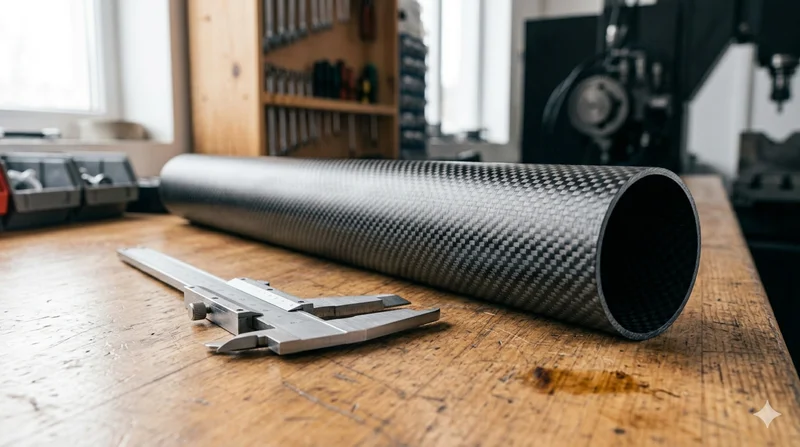
Round Carbon Fiber Tube — 3K Plain Weave T700
Standard round carbon fiber tube manufactured from Toray T700 grade fiber with 3K plain weave. Offers balanced strength and stiffness for general industrial applications including robotics, automation, sports equipment, and aerospace structures.
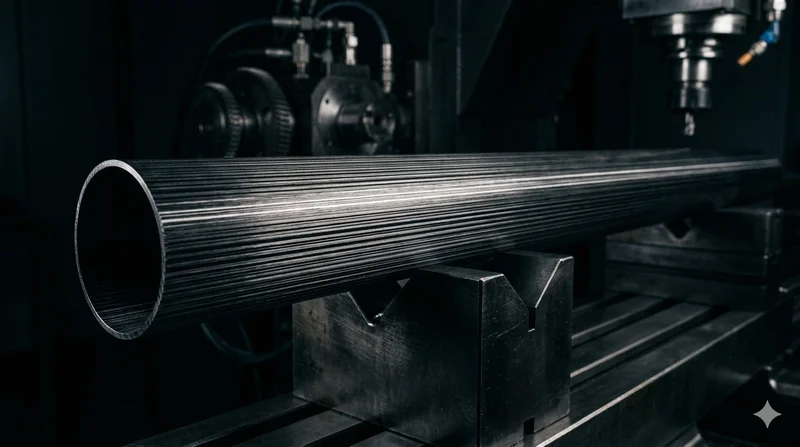
Round Carbon Fiber Tube — UD Unidirectional T700
Unidirectional (UD) round tube with all fibers aligned axially for maximum longitudinal stiffness. Ideal for applications requiring high bending rigidity with minimal weight, such as shafts, struts, and structural reinforcements.
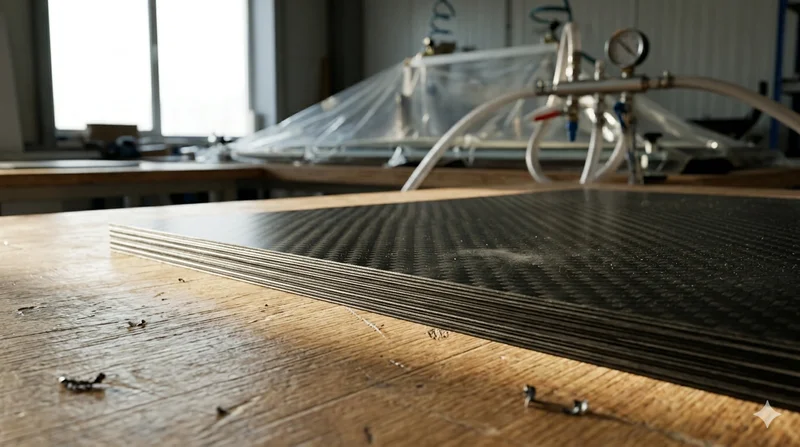
Carbon Fiber Plate — 3K Twill T700 3.0mm
Medium-thickness 3.0mm carbon fiber plate offering significantly higher load capacity while maintaining attractive 3K twill finish. Suitable for structural brackets, reinforcement plates, and load-bearing panels.
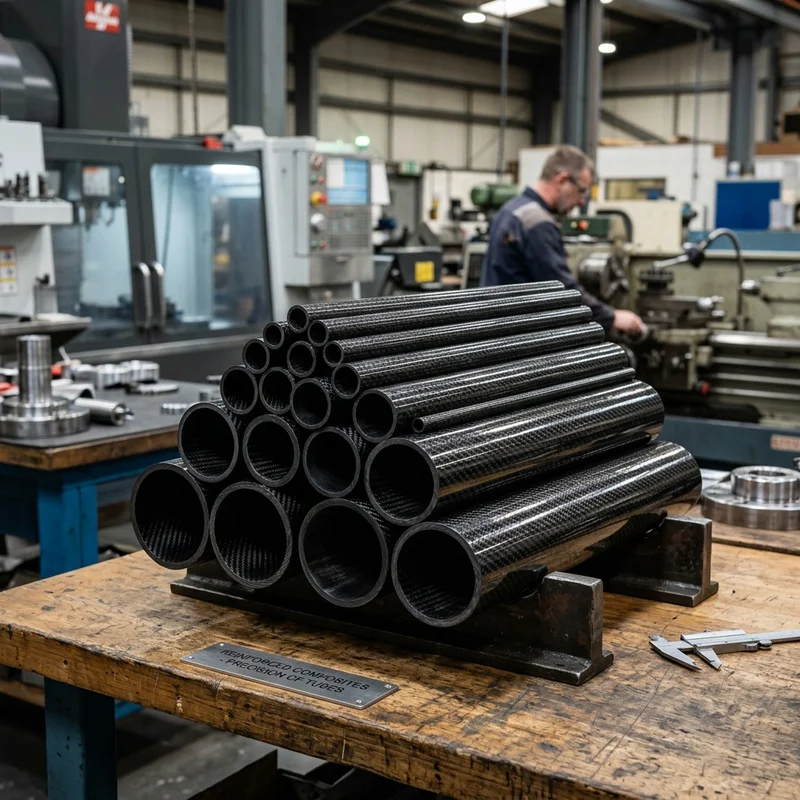
Round Carbon Fiber Tube — 3K Twill
Lightweight and ultra-stiff round tubes ideal for drone frames, robotics, and structural applications.
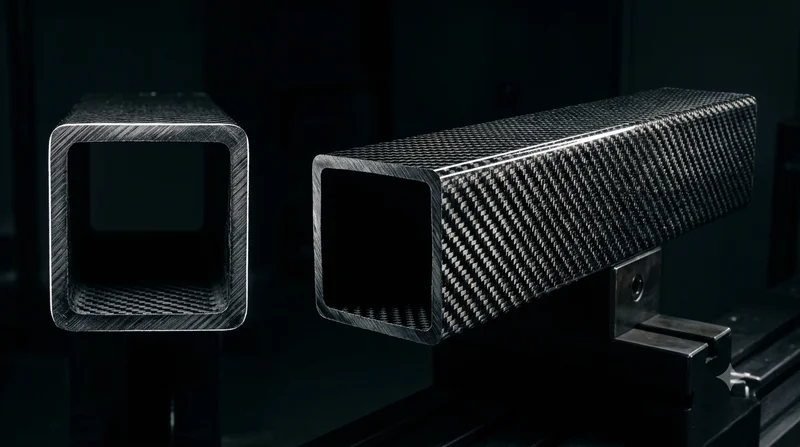
Square Carbon Fiber Tube — 3K Twill T700
Square cross-section carbon fiber tube manufactured with 3K twill weave for torsional strength. Preferred for structural frames, trusses, and support columns where rectangular geometry offers design flexibility.