Searching for carbon fibre suppliers near me usually returns a mix of stockists, fabricators and manufacturers, and the right choice depends entirely on what you are buying. A local stockist can cut a carbon fibre tube or plate to length the same day, a fabricator can build a custom part from raw ma
Introduction
Searching for carbon fibre suppliers near me usually returns a mix of stockists, fabricators and manufacturers, and the right choice depends entirely on what you are buying. A local stockist can cut a carbon fibre tube or plate to length the same day, a fabricator can build a custom part from raw material, and a manufacturer produces the laminate itself. Understanding the difference saves money, time and failed orders.
This guide explains the types of carbon fibre suppliers you will find locally, what to verify before placing an order, and how local supply compares with direct import on price, lead time and minimum order. Whether you need one prototype component or a recurring production supply, the same framework applies.
Types of Carbon Fibre Suppliers Near Me
Local suppliers fall into three categories, each with a different role in the supply chain. The category you need is determined by what you are buying, not by which shop appears first in search results.
| Supplier Type | What They Do | Typical Lead Time | Typical MOQ | Best For |
|---|---|---|---|---|
| Stockist / distributor | Hold imported stock of tubes, plates, sheets, fabrics | Same day - 5 days | 1 piece | Prototypes, repairs, small orders, standard sizes |
| Fabricator / job shop | Cut, machine and assemble parts from stock or custom material | 1-3 weeks | 1-5 parts | Custom parts, machining, assemblies, fixtures |
| Manufacturer | Produce laminate, tubes or components from raw fibre | 3-8 weeks | 10+ pieces or 100+ m | Production volume, custom layups, certified parts |
Stockists are the entry point for most local buying. A distributor holding imported carbon fibre material can supply standard tubes, plates and woven fabric without a minimum quantity, which makes them ideal for prototypes and one-off jobs. Their range is limited to standard products, so anything with a custom layup, unusual thickness or certified performance will need a fabricator or manufacturer.
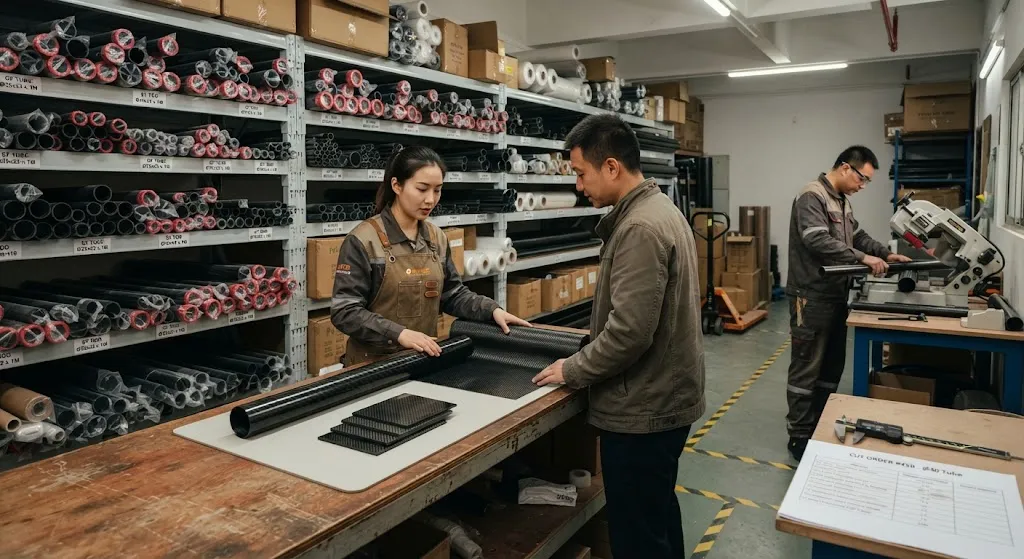
Fabricators and job shops add value by machining and assembling. A local fabricator can cut a plate to a complex profile, drill and countersink it, bond fittings, and deliver an assembly rather than raw material. For buyers searching carbon fibre dealers near me, fabricators are often the hidden half of the results — they look like dealers but take the part from raw material to finished component, which is what many local buyers actually need.
Manufacturers produce the material itself. Compression molders, pultruders and roll-wrappers convert raw fibre into laminate, tubes and profiles. Local manufacturers are rare outside industrial regions, but where they exist they offer the shortest supply chain for custom material and the best prices at volume, because no freight or import margin sits between you and the production line.
What to Check Before Buying from a Carbon Fibre Supplier Near You
Buying locally removes freight and import concerns, but it does not remove specification risk. The same checks apply whether the supplier is two streets away or on another continent.
- Material specification: confirm fibre grade (T300, T700), weave, resin system and whether the product is pultruded, compression-molded or autoclave-cured.
- Dimensions and tolerance: state thickness, diameter or length tolerances in writing — a local handshake does not protect you from a part that is 0.2 mm oversize.
- Stock vs custom: ask whether the item is from stock or made to order; stock is fast, custom carries setup time and minimum quantities.
- Material certificates: for structural or certified applications, request batch records and a material certificate covering fibre and resin.
- Machining capability: if you need cutting, drilling or bonding, confirm the supplier can do it in-house rather than subcontracting with added lead time.
- Pricing transparency: ask for itemised quotes covering material, cutting, finish and delivery, so you can compare against import prices on equal terms.
Local suppliers are at their best when you know exactly what you want. The buyer who walks in with a specification sheet gets a better price, faster turnaround and fewer misunderstandings than the buyer who asks for advice on a vague requirement. Prepare the specification before visiting, and use the visit to verify stock, finish and capability that photographs cannot show.
Local Supply vs Import: Price and Lead Time
The decision between a carbon fibre supplier near you and a direct import is a trade between speed, cost and flexibility. Local stock carries a margin for freight, warehousing and resale, while direct import trades lead time and logistics risk for lower unit cost.
| Factor | Local Stockist | Direct Import |
|---|---|---|
| Lead time | Same day - 1 week | 3-8 weeks including freight |
| Unit price | Higher (retail margin) | Lower at volume |
| Minimum order | 1 piece | Often container or volume-based |
| Specification control | Limited to stock range | Full custom possible |
| Logistics risk | None | Duties, customs clearance, damage in transit |
| Local support | Face-to-face, fast replacement | Remote, slower issue resolution |
For prototypes, repairs and one-off jobs, local supply is almost always the right answer. The premium you pay for a stockist's margin is smaller than the cost of a delayed project or a wrong import. For production volume, import wins on price — but only if the specification is fixed and the volume justifies the freight and lead time. Many buyers use a hybrid approach: local stockists for prototypes and urgent supply, import for production runs.
Buyers searching under the American spelling — carbon fiber suppliers near me — will find the same stockists and fabricators, because most local suppliers serve both search terms. The type of supplier you need is determined by the product and quantity, not by which spelling you use.
How to Verify a Local Carbon Fibre Supplier
Local does not automatically mean reliable. A short verification list separates suppliers worth returning to from one-off transactions.
First, inspect the material physically. Carbon fibre products should have clean machined edges, consistent weave and no visible voids on cut surfaces. Second, ask about their supply source — do they manufacture in-house, or do they resell a specific brand or importer? Knowing the origin tells you who to chase if a batch is defective. Third, request a small trial order before committing to volume, even if the unit price is slightly higher on the trial. A trial order of one or two pieces reveals cutting quality, finish and reliability at a cost measured in tens of dollars rather than in a wasted production run. Fourth, check whether they hold certifications such as ISO 9001, and whether they can produce batch records for structural material.
Frequently Asked Questions
Are carbon fibre suppliers near me more expensive than importing?
Generally yes on unit price, because local stockists carry margins for freight, warehousing and resale. The premium is usually worth paying for prototypes, repairs and small orders, where the cost of a delayed or wrong import exceeds the price difference. For production volume with a fixed specification, direct import typically offers lower unit cost, and many buyers use local suppliers for urgent or small work and import for production runs.
What can I buy from a local carbon fibre supplier without a minimum order?
Standard stock products — tubes, plates, sheets and woven fabric in common sizes — are usually available in single-piece quantities from stockists. Custom products such as special layups, unusual thicknesses or certified aerospace material require manufacturing with a minimum quantity and lead time. Ask the stockist what they hold locally; if the item is not on the shelf, expect a minimum order and delivery time from their manufacturer.
How do I know if a local supplier can machine carbon fibre properly?
Ask about their tooling and machining process. Carbon fibre requires diamond-coated or carbide tooling, sharp edges and controlled feed rates to avoid delamination and resin heating. Ask to see a machined sample or an example of their work, and inspect cut edges for fuzzing and fraying. A supplier that machines carbon fibre routinely will show you finished examples without hesitation.
Should I use a local fabricator instead of buying raw material?
If you need a finished part rather than raw material, a fabricator is often the better choice. They handle cutting, drilling, bonding and assembly, which removes the need for you to own machining capability or manage multiple suppliers. The cost is the fabricator's labour margin, which is usually justified when the part is complex or when assembly is required. For simple flat parts, buying raw material and machining in-house may be cheaper.
Conclusion
Finding carbon fibre suppliers near me works best when you know which category you need: a stockist for standard material in small quantities, a fabricator for finished parts, or a manufacturer for production volume and custom layups. Verify material quality, specification and capability before the first order, and use a small trial order to test reliability. Local supply costs more per unit but buys speed and flexibility that import cannot match for small and urgent work.
YongXian supplies carbon fibre tubes, plates and sheets worldwide with export documentation and international delivery, complementing local stockists where specific products or volumes are not available locally. View our carbon fibre range or request a quote with your specification and quantity.
Part of topic
Related Articles
Interested in Custom Carbon Fiber Products?
Contact our team for competitive pricing and technical specifications.
Get a QuoteRelated Products
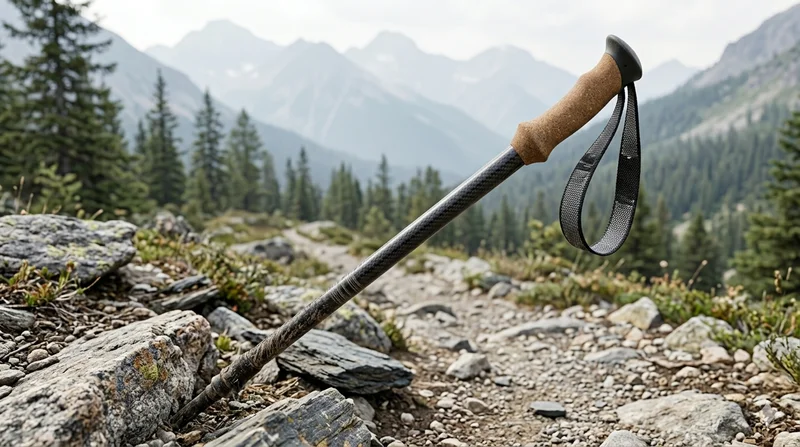
Carbon Fiber Trekking Pole
Lightweight carbon fiber trekking pole manufactured from high-grade carbon fiber tube. Weighs only 160g per pole while providing superior shock absorption and durability for hiking, trail running, and backpacking.
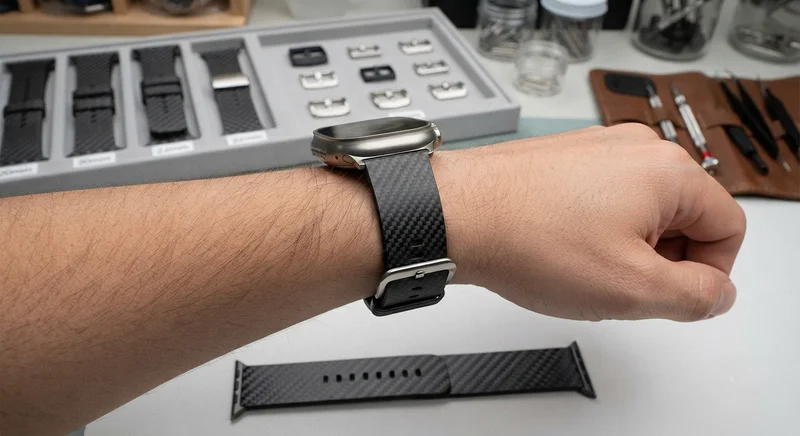
Carbon Fiber Watch Strap — 20mm/22mm Quick-Release
Premium carbon fiber watch strap with quick-release spring bars. Woven from T700 3K twill prepreg with a flexible resin system that conforms to the wrist. Available in 20mm and 22mm lug widths, compatible with Apple Watch, Samsung Galaxy Watch, Garmin, and traditional mechanical watches. Features a stainless steel buckle and carbon fiber keepers. The natural weave pattern makes each strap unique.
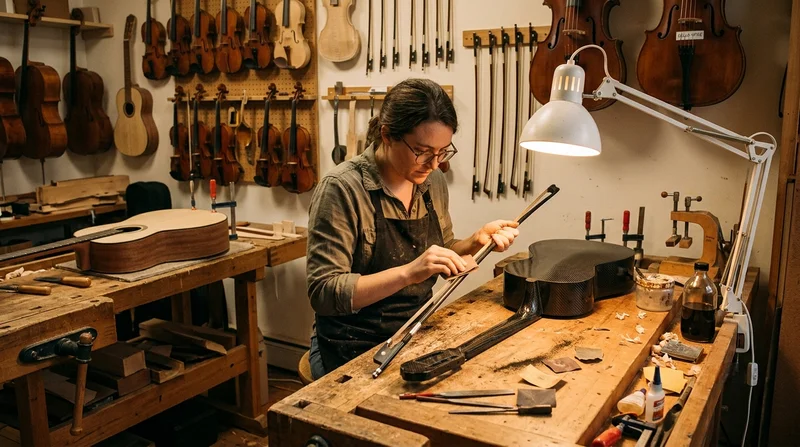
Custom Carbon Fiber Musical Instrument Parts
Carbon fiber components for musical instrument manufacturing offering superior dimensional stability, low weight, and consistent acoustic properties. We produce carbon fiber bows, guitar necks, violin chin rests, drum shells, and wind instrument bodies. Carbon fiber instruments are immune to humidity changes and temperature fluctuations that affect wooden instruments.
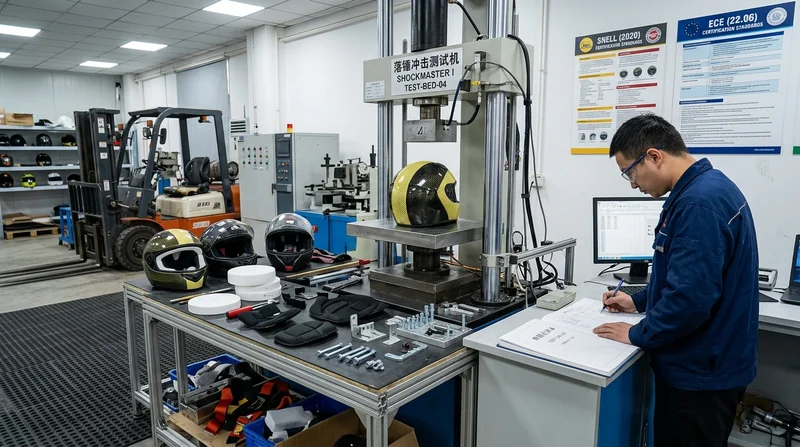
Custom Carbon Fiber Sports Protective Gear Components
High-impact carbon fiber components for protective sports gear. Our multi-layer carbon/Kevlar hybrid layups provide superior impact resistance while keeping weight minimal. Used in motorcycle helmet shells, knee brace frames, chest protectors, and shin guard inserts. EPS foam integration available for complete helmet shell manufacturing.
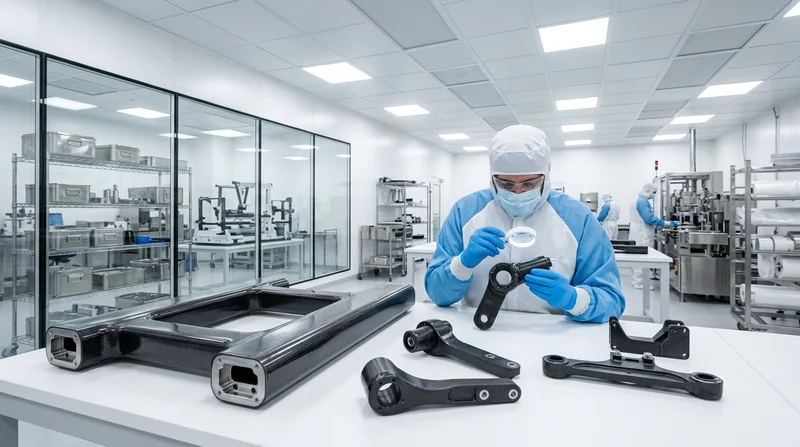
Custom Carbon Fiber Medical Device Components
Medical-grade carbon fiber components manufactured for imaging equipment, surgical instruments, and patient support systems. Carbon fiber's radiolucency (X-ray transparency) and high strength-to-weight ratio make it ideal for CT scanner beds, wheelchair frames, surgical robot arms, and MRI-compatible accessories. Biocompatible resin systems available.