Choosing a carbon fiber tube supplier is one of the most consequential procurement decisions in composite manufacturing. Tubes are used in drone arms, camera gimbals, robotics, medical devices, and structural aerospace components, and the supplier you select determines dimensional tolerance, mechani
Introduction
Choosing a carbon fiber tube supplier is one of the most consequential procurement decisions in composite manufacturing. Tubes are used in drone arms, camera gimbals, robotics, medical devices, and structural aerospace components, and the supplier you select determines dimensional tolerance, mechanical performance, consistency across batches, and delivery lead time. The market is fragmented: hundreds of manufacturers operate worldwide, ranging from large aerospace-tier producers to small custom shops, and their capabilities differ far more than their marketing materials suggest.
This article provides a practical directory of carbon fiber tube suppliers — a working CFRP tube supplier list organized by process and region — and explains how to evaluate them. We cover the supplier categories you are likely to meet, the regional strengths of the major sourcing hubs, and a checklist of questions that separate a serious CFRP tube supplier from a reseller with no manufacturing control. The goal is to help you shortlist vendors on technical merit rather than on website polish alone.
How to Evaluate a Carbon Fiber Tube Supplier
Not all carbon fiber tube manufacturers are equivalent. A supplier that excels at pultruded round tubes may have no capability for tapered filament-wound parts, and a shop that produces aerospace-grade components may be unable to offer competitive pricing for high-volume commercial orders. Evaluate any candidate supplier across five dimensions before requesting a quote:
- Process capability: Does the supplier operate pultrusion, filament winding, roll wrapping, or a combination? The process determines the fiber architecture, surface finish, and price of the finished tube.
- Material control: What fiber grades and resin systems does the supplier stock? Ask for the fiber supplier and grade (T300, T700, T800) and the resin type (epoxy, vinyl ester, thermoplastic) for each quote.
- Quality system: ISO 9001 certification is the baseline. Aerospace suppliers should also hold AS9100, and medical applications may require ISO 13485. Ask for certificates and inspection records.
- Dimensional capability: Confirm achievable wall-thickness tolerance, straightness, and outer diameter tolerance. A typical pultruded tube holds OD tolerance within ±0.05 mm and straightness within 0.5 mm/m.
- Commercial terms: Minimum order quantity, lead time, tooling ownership, and whether the supplier offers custom cutting, drilling, or bonding services.
Request a sample or a short first article before committing to volume production. The fastest way to compare suppliers is to send the same drawing to three vendors and compare their quoted tolerances, lead times, and prices — discrepancies of 30-50% in price for nominally identical tubes usually reflect differences in fiber grade, resin system, or process quality.
Supplier Categories and Manufacturing Processes
Carbon fiber tube suppliers fall into three broad categories, each with distinct strengths. Understanding the categories makes the directory below easier to use, because the right supplier type for a drone prototype is rarely the right type for a serial automotive component.
| Supplier Type | Primary Process | Typical Diameter Range | Best For | Cost Position |
|---|---|---|---|---|
| Pultrusion specialists | Continuous pultrusion | 5-100 mm round and square | High-volume straight tubes, constant cross-sections, cost-sensitive commercial parts | Lowest per meter at volume |
| Filament winding shops | Filament winding | 20-500 mm round | Pressure vessels, large diameters, tapered tubes, high hoop strength, custom angles | Medium, tooling cost per part |
| Custom fabricators | Roll wrapping, bladder molding, autoclave | 10-300 mm, complex shapes | Prototypes, tapered and stepped tubes, aerospace and medical qualification | Highest, best for low volume and complex geometry |
Pultrusion dominates the commodity end of the market: continuous production makes long straight tubes inexpensive, and the process produces excellent fiber alignment along the tube axis. Filament winding offers superior hoop strength and the ability to create tapered profiles, which is why it dominates pressure vessels and drive shafts. Roll wrapping gives the best surface finish and dimensional control for small-diameter tubes and is the process of choice for aerospace-grade components produced in moderate volumes.
Carbon Fiber Tube Supplier Directory by Region
The carbon fiber tube supply base is concentrated in three regions, each with a different character. Asia — led by China, Taiwan, and Japan — offers the broadest range of standard pultruded tubes at the lowest cost, with many manufacturers operating at high volume. Europe combines strong aerospace and motorsport heritage with a dense network of specialty fabricators, particularly in Germany, Italy, and the United Kingdom. North America is dominated by aerospace-tier suppliers and custom shops serving defense, medical, and robotics customers.
- Asia: High-volume pultrusion specialists and filament winding shops; strong standard-size inventory; lead times of 2-4 weeks for standard tubes; competitive pricing driven by domestic carbon fiber production from Toray, Mitsubishi, and Chinese producers.
- Europe: Specialty fabricators with aerospace and motorsport heritage; strong capability in roll wrapping, tapered tubes, and autoclave curing; premium pricing with shorter lead times for custom work.
- North America: Aerospace-tier suppliers with AS9100 certification; strong in medical and defense applications; higher minimum order quantities; robust domestic fiber supply for government-flagged programs.
For buyers, the practical implication is that the lowest total cost often combines an Asian pultrusion supplier for standard tubes with a local fabricator for prototype and qualification work. Many buyers run dual sourcing this way to manage both price and supply risk.
Questions to Ask Before Placing an Order
Once you have shortlisted a composite tube vendor, the following questions close the technical gaps that marketing materials leave open. Send them with your request for quotation and compare the answers.
- What fiber grade and resin system are quoted, and can you provide the fiber certificate of analysis?
- What wall-thickness and outer-diameter tolerances can you guarantee for this tube size?
- What is the straightness specification, and how is it measured?
- Do you offer custom cutting, drilling, bonding, or end-finishing services?
- What is the lead time for the first article versus serial production?
- Can you provide mechanical test data (tensile, flexural, compressive) for this tube family?
A supplier that answers these questions with documented data rather than vague assurances is almost always a manufacturer rather than a trader. Suppliers that cannot identify the fiber grade in their quote should be treated with caution, because the fiber grade is the single largest driver of tube performance and price.
Frequently Asked Questions
How much does a carbon fiber tube cost from a supplier?
Standard pultruded carbon fiber tubes typically cost between 5 and 25 USD per meter depending on diameter, wall thickness, and fiber grade. A 20 mm outer diameter tube with a 2 mm wall in T700 fiber might cost 8-12 USD per meter in volume, while a 60 mm filament-wound tube can reach 40-80 USD per meter. Custom fabrications with aerospace qualification cost substantially more. The spread within each size range reflects fiber grade, resin system, and process — always compare like-for-like specifications, not headline prices.
What is the difference between pultruded and filament-wound carbon fiber tubes?
Pultruded tubes are drawn continuously through a die with fibers aligned along the length, which gives excellent axial stiffness and the lowest cost but limited hoop strength and no taper capability. Filament-wound tubes are built by wrapping fiber tows around a mandrel at controlled angles, which delivers much higher hoop and torsional strength and allows tapered profiles, at a higher cost. If your load is primarily axial (struts, booms, frames), pultrusion is usually sufficient; if you need internal pressure resistance or torque transmission, filament winding is the right choice.
How do I verify that a carbon fiber tube supplier is legitimate?
Ask for the company's ISO 9001 (or AS9100) certificate, visit the facility or request a video tour, and order a small first article before scaling up. Cross-check the quoted fiber grade against the certificate of analysis, and request mechanical test data for the tube family. Check the supplier's export documentation capability if you are importing, and consider a third-party pre-shipment inspection for large orders. A legitimate manufacturer will welcome these requests; a reseller or trading company will typically resist them.
Conclusion
Selecting a carbon fiber tube supplier is a technical decision that rewards diligence. Evaluate process capability, material control, quality systems, dimensional tolerances, and commercial terms before comparing prices, and remember that the cheapest quote for a nominally identical tube usually differs in fiber grade or resin quality. Pultrusion specialists serve high-volume commodity needs, filament winding shops handle pressure and torque applications, and custom fabricators cover prototypes and qualified aerospace work — and the best strategy for many buyers is a dual-source combination of an Asian volume supplier and a local fabricator.
If you are sourcing carbon fiber tubes, we manufacture pultruded and filament-wound tubes with documented T700 fiber, ISO 9001 quality control, and custom cutting and finishing services. Explore our carbon fiber tube products or contact our engineering team for a quotation with full specifications.
Part of topic
Related Articles
- Carbon Fiber Rods for Sale: Bulk Pricing and Wholesale Distribution
- Carbon Fiber Sheet Amazon: What to Buy Online vs Direct from Manufacturer
- Carbon Fiber Rod for Sale: In-Stock Sizes and Custom Cutting Services
- Carbon Fiber Manufacturing Near Me: Finding Local Production Partners
- Carbon Fiber Sheet for Sale: In-Stock Inventory and Custom Order Lead Times
- Carbon Fiber Sheet Supplier: Direct Factory Pricing and Custom Cut-to-Size Services
Interested in Our Products?
Contact our team for competitive pricing and technical specifications.
Get a QuoteRelated Products
Carbon Fiber Fishing Rod Blank
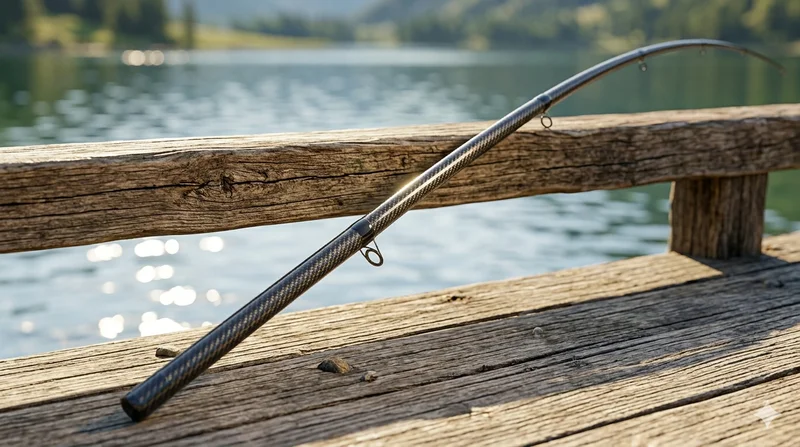
High-quality carbon fiber fishing rod blank manufactured from multiple grades of Toray carbon fiber cloth. Available in a wide range of lengths, powers, and actions for freshwater and saltwater applications. Suitable for OEM rod building.
Carbon Fiber Plate — 3K Twill T700 3.0mm
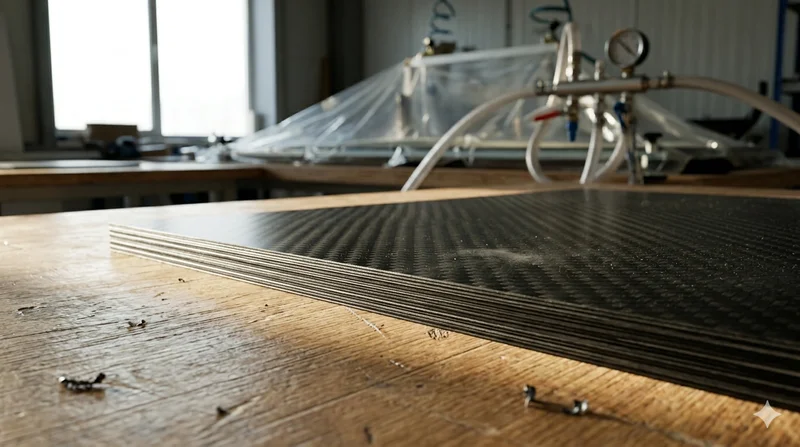
Medium-thickness 3.0mm carbon fiber plate offering significantly higher load capacity while maintaining attractive 3K twill finish. Suitable for structural brackets, reinforcement plates, and load-bearing panels.
Carbon Fiber Plate — 3K Twill T700 1.5mm
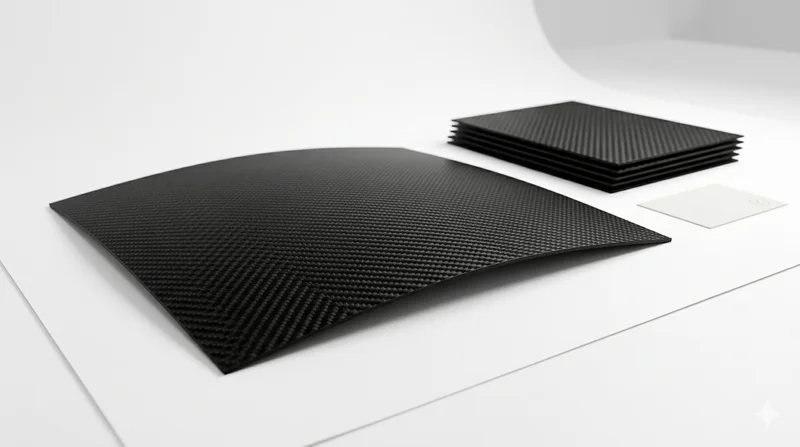
Thin 1.5mm carbon fiber plate with 3K twill weave surface. Lightweight and stiff, commonly used for covers, panels, drone bodies, and applications requiring a premium aesthetic appearance.
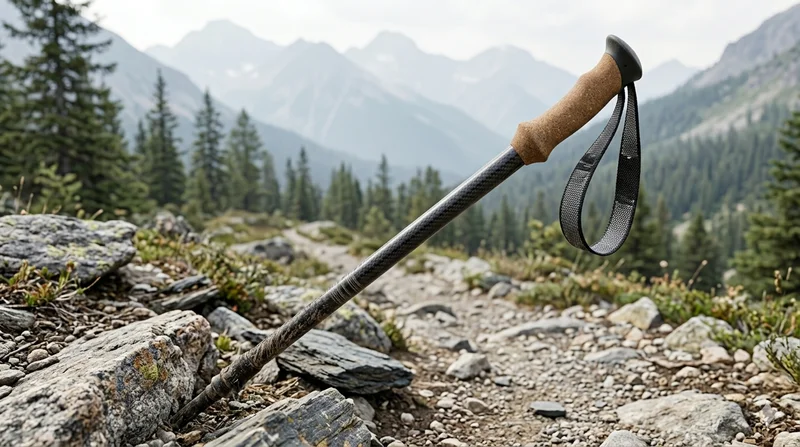
Carbon Fiber Trekking Pole
Lightweight carbon fiber trekking pole manufactured from high-grade carbon fiber tube. Weighs only 160g per pole while providing superior shock absorption and durability for hiking, trail running, and backpacking.
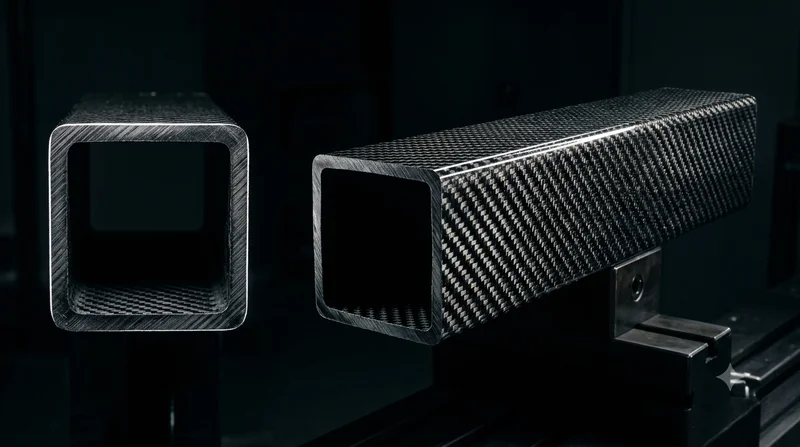
Square Carbon Fiber Tube — 3K Twill T700
Square cross-section carbon fiber tube manufactured with 3K twill weave for torsional strength. Preferred for structural frames, trusses, and support columns where rectangular geometry offers design flexibility.