When buyers search for carbon fiber sheet for sale, they are usually asking one of two questions: can I get this material immediately from stock, or how long will a custom order take? The two paths have different economics, different lead times, and different quality expectations, and mixing them up
Introduction
When buyers search for carbon fiber sheet for sale, they are usually asking one of two questions: can I get this material immediately from stock, or how long will a custom order take? The two paths have different economics, different lead times, and different quality expectations, and mixing them up is one of the most common sourcing mistakes in the composites industry. An in-stock carbon fiber sheet ships within days at a published price; a custom laminate is manufactured to order, carries a longer lead time, and usually requires specification review before production starts.
This article explains the practical difference between buying carbon fiber sheet for sale from inventory and ordering custom material, the standard sizes and grades most suppliers hold in stock, how lead times are structured for both paths, and the buying process that gets the right sheet at the right price without unnecessary delay.
What "In Stock" Really Means for Carbon Fiber Sheet
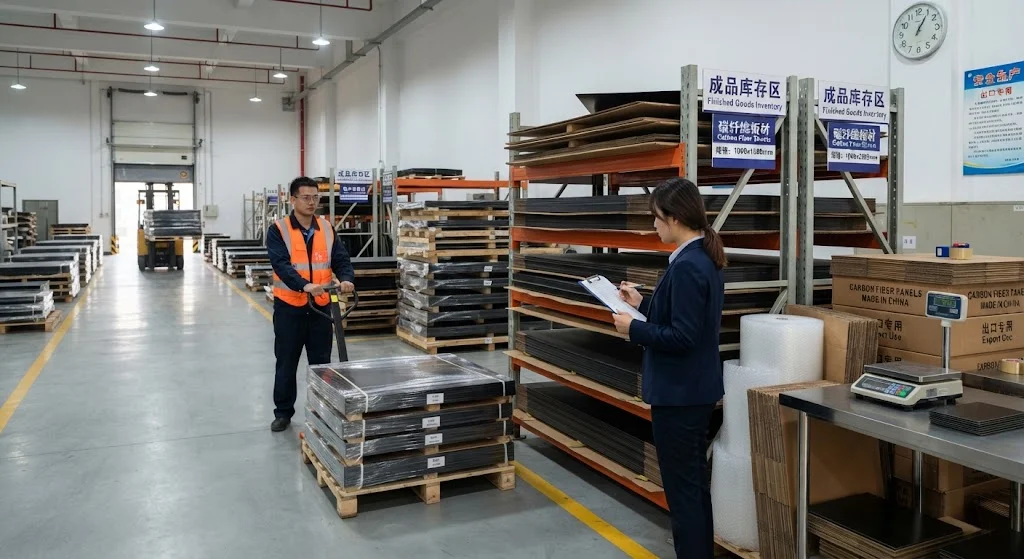
Carbon fiber sheet inventory is not a warehouse of random panels. A well-run CFRP sheet inventory is deliberately stocked with a narrow set of standard products that cover the majority of demand: 1,000 × 1,000 mm and 1,000 × 2,000 mm panels in the most common thicknesses, made from T300 or T700 fiber with a standard epoxy system. The table below shows a typical stock matrix:
| Thickness | Typical Stock Sizes | Fiber Grade | Lead Time from Stock |
|---|---|---|---|
| 1.0-1.5 mm | 1,000 × 1,000 / 1,000 × 2,000 mm | T300 / T700 | 2-5 days |
| 2.0-3.0 mm | 1,000 × 1,000 / 1,000 × 2,000 mm | T300 / T700 | 2-5 days |
| 5.0-6.0 mm | 1,000 × 1,000 mm | T300 / T700 | 3-7 days |
| 8.0-10.0 mm | 1,000 × 1,000 mm | T700 | 5-10 days |
| Custom thickness | Any | Per specification | 2-5 weeks |
Several points matter here. First, stock panels are standard-grade material: they meet published datasheet properties but are not tailored to a specific aerospace or medical qualification. Second, stock availability varies with demand, so a supplier's published inventory list is a planning tool, not a guarantee; the buyer should confirm availability at order time. Third, many suppliers hold stock in the semi-finished sense — panels ready in standard sizes that can be cut to the buyer's dimensions within days, which is different from true custom lamination.
Custom Orders: When Inventory Is Not Enough
A custom carbon fiber sheet order is the right path when the application demands something the stock matrix does not cover: a non-standard thickness, a different fiber grade such as T800 or high-modulus fiber, a specialized resin system, a woven versus unidirectional architecture, or certified material with full traceability. Custom orders are laminated to order, which is why they carry lead times of two to five weeks for standard custom work and longer for qualified aerospace material. The lead time breaks down roughly as follows:
- Week 1: Specification review, material selection, and confirmation of the layup, cure cycle, and test requirements.
- Weeks 2-3: Fiber and resin procurement, laminate fabrication, and consolidation in the press or autoclave.
- Weeks 4-5: Cutting to size, inspection, testing, and packaging for shipment.
Two factors extend custom lead times beyond the nominal range. First, fiber availability: exotic grades such as T800 or IM series are produced in limited campaigns, so a supplier may need to wait for the next fiber production run. Second, qualification testing: if the buyer requires full mechanical test reports or certification to a standard such as ASTM D5687, the testing itself adds one to two weeks. Buyers should state qualification requirements at the quoting stage, not after production has started.
Carbon Fiber Sheet for Sale: Pricing Stock versus Custom
Stock carbon fiber sheet for sale is priced on a per-square-meter basis that reflects standard production economics: the supplier spreads the cost of continuous laminate runs across many customers, so a stock panel is the cheapest way to buy carbon fiber sheet. Custom orders carry a price premium because each order is a dedicated production run: setup, material procurement, and inspection are all allocated to a small quantity. The premium is typically 20-50% over equivalent stock material for custom thicknesses, and higher for exotic fiber grades or qualified material. Volume has the opposite effect on custom pricing: a 50-panel custom order is proportionally cheaper than a 5-panel order, because the fixed setup costs are spread over more panels.
Two pricing details deserve attention. First, cut-to-size work on stock panels is usually priced separately but cheaply — the supplier cuts on the same line that serves its own production. Second, freight and customs terms differ between the two paths: stock orders ship immediately and can use expedited air freight, while custom orders are usually shipped by sea to control cost, which adds two to four weeks of transit time on top of production lead time.
How to Buy Carbon Fiber Sheet Efficiently
An efficient buying process separates the stock decision from the custom decision and asks the right questions at each step:
- Step 1 — Define the requirement: Thickness, size, fiber grade, resin system, and whether the application is structural or cosmetic. This determines which path applies.
- Step 2 — Check stock first: If a standard thickness and grade meet the requirement, request stock availability and pricing. Ask whether cut-to-size is available from the stock panel.
- Step 3 — Request custom quotes for the rest: For non-standard requirements, send a specification sheet and ask for lead time, MOQ, and the premium over stock pricing.
- Step 4 — Compare landed cost: Include freight, duties, and transit time in the comparison, not just the material price.
- Step 5 — Place a combined order: If the program needs both stock and custom material, order them together to consolidate freight and administration.
Buyers who follow this sequence typically cut their sourcing cycle by one to two weeks, because they stop waiting for custom quotes on requirements that stock can already satisfy.
Frequently Asked Questions
What sizes and thicknesses of carbon fiber sheet are usually available in stock?
The most commonly stocked carbon fiber sheets are 1,000 × 1,000 mm and 1,000 × 2,000 mm panels in thicknesses from 1.0 to 3.0 mm, made from T300 or T700 fiber with standard epoxy. Thicker stock, from 5.0 to 10.0 mm, is available but in more limited quantities and usually only in 1,000 × 1,000 mm panels. Availability fluctuates with demand, so the supplier's inventory list should be confirmed at order time. If a buyer needs a non-standard thickness or grade, that is a custom order with a two-to-five-week lead time rather than a stock purchase.
How long does a custom carbon fiber sheet order take?
A standard custom order — a non-standard thickness, size, or weave using common T300/T700 fiber — typically takes two to five weeks from order confirmation to shipment. The lead time covers specification review in week one, material procurement and lamination in weeks two to three, and cutting, inspection, and packaging in weeks four to five. Exotic fiber grades such as T800 or IM series, qualified aerospace material with full traceability, and certification testing each add one to two weeks. Buyers should state qualification and testing requirements when requesting the quote so the supplier can plan the schedule accurately.
Is it cheaper to buy carbon fiber sheet from stock or as a custom order?
Stock material is always cheaper per square meter, typically 20-50% less than an equivalent custom order, because the supplier spreads standard production runs across many customers. For requirements that a standard thickness and grade can meet, stock is the right choice. A custom order becomes worthwhile when the requirement is non-standard and functionally necessary — a specific thickness for a structural part, a specialized resin for a service environment, or certified material for a regulated application. Within custom orders, larger quantities reduce the per-panel premium because fixed setup costs are spread across more panels.
Conclusion
Buying carbon fiber sheet for sale is straightforward once the stock-versus-custom decision is made correctly. Stock inventory of standard thicknesses and grades satisfies the majority of demand at the lowest per-square-meter price and the shortest lead time, while custom orders cover non-standard requirements with a predictable two-to-five-week schedule and a clear premium. Whether the buyer needs a single composite plate for sale off the shelf or a recurring production supply, checking stock availability first, comparing landed cost, and combining stock and custom material in one order are the three habits that keep both cost and schedule under control.
YongXian holds carbon fiber sheet inventory in standard sizes and thicknesses for immediate shipment, and manufactures custom laminates to specification. Browse our in-stock carbon fiber sheet range or contact our engineering team for stock availability and a custom order quotation for your application.
Part of topic
Related Articles
- Carbon Fiber Sheet Supplier: Direct Factory Pricing and Custom Cut-to-Size Services
- Carbon Fiber Sheet Roll: Continuous Roll Supply for High-Volume Production
- Carbon Fiber Parts Houston: Texas Manufacturing Hub and Energy Sector Demand
- Carbon Fibre for Sale: Reading Listings, Grades and Lead Times
- Carbon Fiber Near Me: Why Local Sourcing Beats Cross-Border for Prototyping
- Carbon Fiber Rod Blanks: Supply Chain and Custom Cutting Services
Interested in Our Products?
Contact our team for competitive pricing and technical specifications.
Get a QuoteRelated Products
Carbon Fiber Fishing Rod Blank
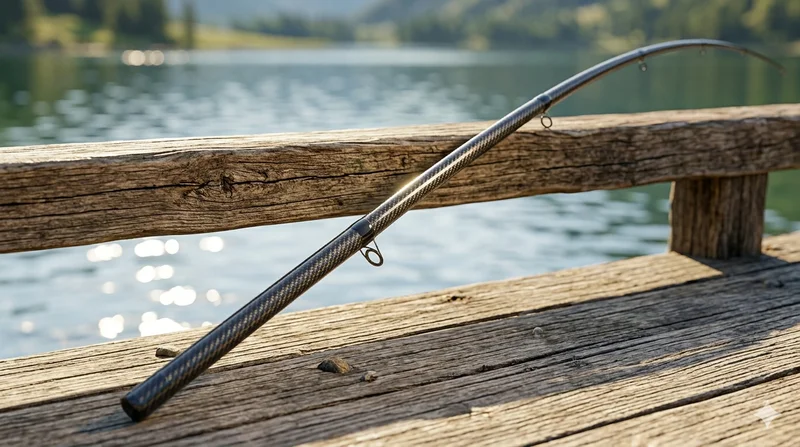
High-quality carbon fiber fishing rod blank manufactured from multiple grades of Toray carbon fiber cloth. Available in a wide range of lengths, powers, and actions for freshwater and saltwater applications. Suitable for OEM rod building.

Carbon Fiber Plate — 3K Twill T700 3.0mm
Medium-thickness 3.0mm carbon fiber plate offering significantly higher load capacity while maintaining attractive 3K twill finish. Suitable for structural brackets, reinforcement plates, and load-bearing panels.

Carbon Fiber Plate — 3K Twill T700 1.5mm
Thin 1.5mm carbon fiber plate with 3K twill weave surface. Lightweight and stiff, commonly used for covers, panels, drone bodies, and applications requiring a premium aesthetic appearance.

Carbon Fiber Trekking Pole
Lightweight carbon fiber trekking pole manufactured from high-grade carbon fiber tube. Weighs only 160g per pole while providing superior shock absorption and durability for hiking, trail running, and backpacking.

Square Carbon Fiber Tube — 3K Twill T700
Square cross-section carbon fiber tube manufactured with 3K twill weave for torsional strength. Preferred for structural frames, trusses, and support columns where rectangular geometry offers design flexibility.