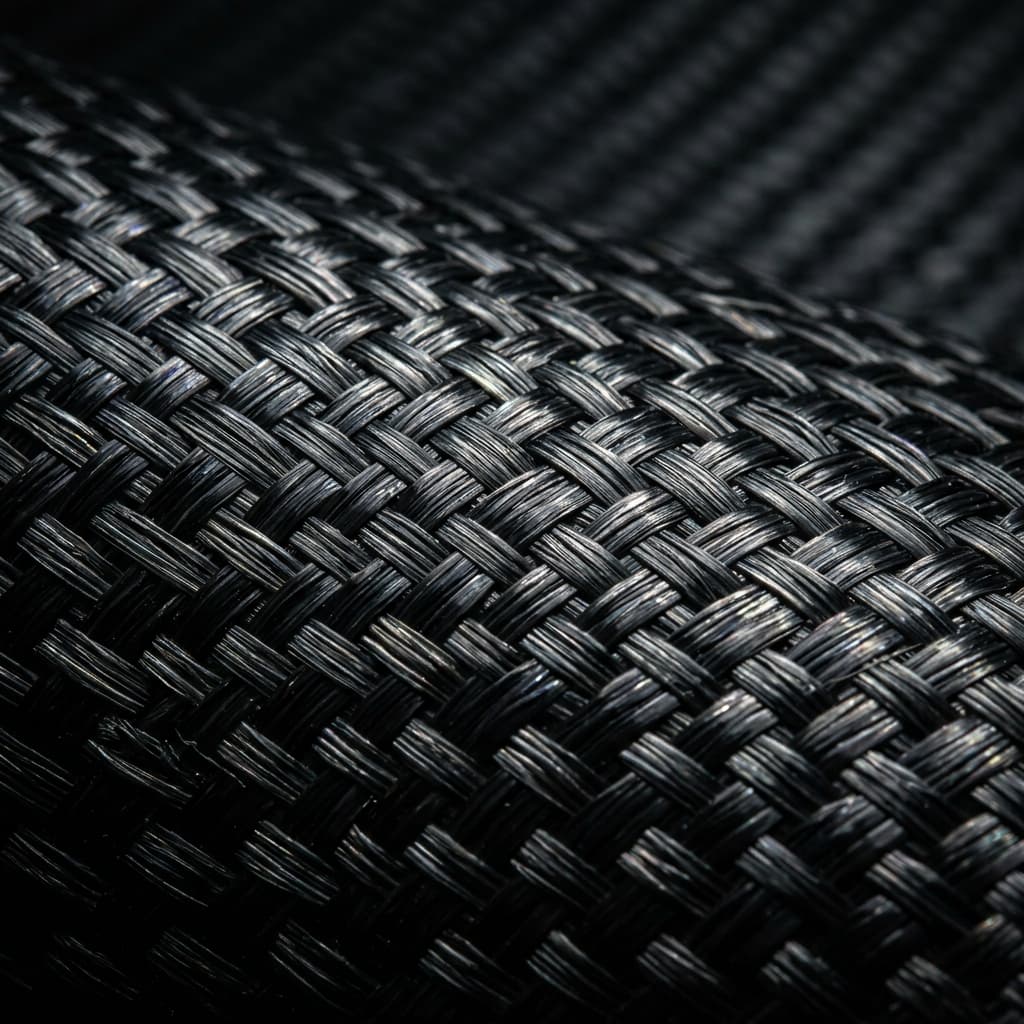
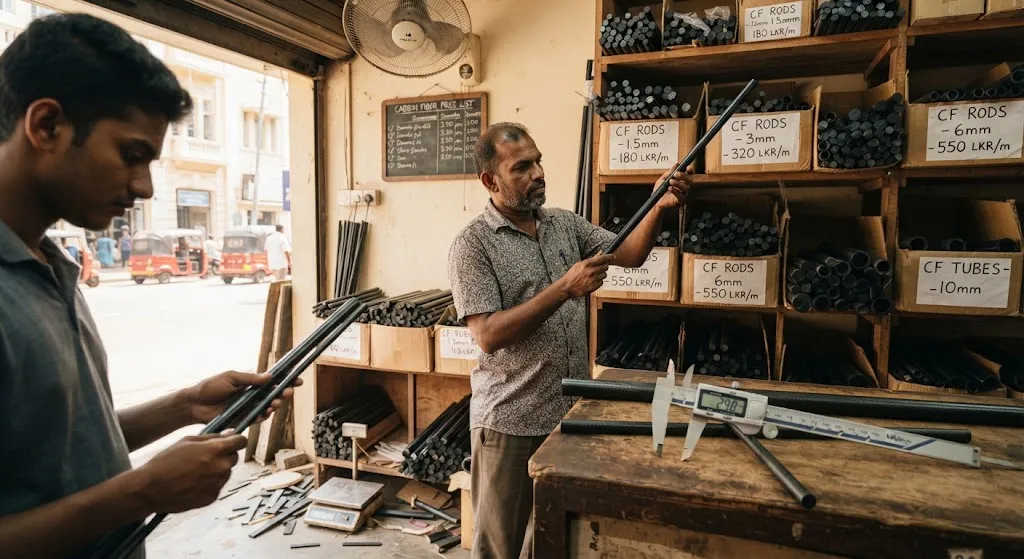
Carbon fiber rod price in Sri Lanka is built from the same three forces that set rod prices everywhere — material grade, construction and order volume — plus two local factors: import duty and the channel you buy through. Sri Lanka has a small but active composite user base: fishing rod manufacturer
Introduction
Carbon fiber rod price in Sri Lanka is built from the same three forces that set rod prices everywhere — material grade, construction and order volume — plus two local factors: import duty and the channel you buy through. Sri Lanka has a small but active composite user base: fishing rod manufacturers in the coastal belt, drone builders, kite and sports equipment makers, and an engineering sector that uses carbon rod for lightweight structures and antenna masts. Because domestic production of carbon fiber rod is minimal, virtually all stock is imported through Colombo, which means duty, freight and currency movement sit inside the price you are quoted.
This guide explains how carbon fiber rod prices are built in the Sri Lankan market, what local suppliers actually charge, how order volume changes the picture, and how to request a quote that reflects the real cost of your project.
How Carbon Fiber Rod Price In Sri Lanka Is Built
Rod pricing starts with material cost, the largest single component. Pultruded carbon fiber rod is made by pulling continuous fibre through a resin bath and a heated die, so the price tracks the fibre grade (T300, T700) and the quantity of fibre in the cross-section. Construction follows: a solid round rod contains more fibre than a hollow tube of the same outer diameter, so solid rods cost more per metre. Surface finish adds a small premium, and cutting to length adds little.
| Rod Specification | Typical Export Price (per metre) | Typical Sri Lanka Retail Price |
|---|---|---|
| 1.5 mm solid rod, T300, pultruded | $0.30-0.60 | $0.80-1.50 |
| 3 mm solid rod, T300, pultruded | $0.80-1.40 | $1.80-3.20 |
| 6 mm solid rod, T700, high strength | $2.50-4.00 | $5.00-8.50 |
| 8 mm rod, high-modulus grade | $5.00-8.00 | $10.00-16.00 |
The gap between export and local retail prices is the practical reality of the Sri Lankan market. Import duty, VAT, freight and the importer's margin stack on top of the factory price, and small retail quantities carry the largest percentage markup because fixed costs are spread over few metres. Prices are quoted in dollars in this guide because the rod itself is priced in USD at the factory; in Colombo retail, the price you pay in Sri Lankan rupees depends on the day's exchange rate.
Where the Extra Cost Comes From
Buyers comparing carbon fiber rod price in Sri Lanka against international prices often assume the difference is pure markup. In practice, four cost layers sit between the factory and the retail counter.
- Import duty and VAT: carbon fiber products enter Sri Lanka under HS headings that carry customs duty, and VAT is charged on the landed value at clearance. These are fixed costs that do not change with order size.
- Freight and insurance: air freight for small shipments can exceed the value of the goods; sea freight through Colombo port is cheaper but slower and requires a minimum volume.
- Importer margin and warehousing: the importer carries working capital, storage and risk, and prices these into the per-metre rate.
- Retail markup: resellers add their own margin, and for single-metre sales this is proportionally the heaviest layer of all.
The practical consequence is that the price per metre falls sharply as quantity rises. A 3 mm T300 rod bought as one metre can cost three times the export price; the same rod ordered as a 100-metre box from an importer approaches the international price plus duty. For any project with real volume, the correct strategy is to quote the annual requirement to an importer or manufacturer and let the volume amortise the fixed costs.
Local Suppliers vs Direct Import
Sri Lankan buyers can source carbon fiber rod through three channels, and each has a different price and risk profile.
| Channel | Typical Price Level | Lead Time | Best For |
|---|---|---|---|
| Local stockist / retail shop in Colombo | Highest per metre | Immediate | Prototypes, repairs, single-piece needs |
| Local importer with stock | Mid-range, volume-sensitive | 1-7 days | Regular small-batch supply |
| Direct import from manufacturer | Lowest per metre | 4-10 weeks | Production volume, custom specifications |
For a first project or a prototype, a local stockist is the pragmatic choice: you can inspect the rod, buy one metre and test it before committing. For recurring supply, a local importer who holds stock removes the long lead time while keeping prices reasonable at volume. For production runs — fishing rod blanks, drone frames, kite spars — direct import from a manufacturer delivers the lowest per-metre cost and full control over grade and diameter, at the price of lead time and the administrative work of import clearance.
How to Get an Accurate Quote for Carbon Fiber Rod Price In Sri Lanka
An accurate quote starts with a complete specification. Suppliers cannot price a rod reliably without knowing the diameter, the fibre grade, the length per piece, the total quantity and the required delivery timeline. A quote request that omits any of these will come back padded with assumptions.
When requesting a quote from a manufacturer or importer, state the diameter and grade (for example 3 mm T700), the cut length and the annual or per-order quantity. Ask for the price broken into material, cutting and freight components where possible, and confirm whether the quoted price is FOB (factory) or CIF (delivered). The FOB price lets you compare manufacturers on equal terms; the CIF price tells you the total you will actually pay, including the cost of getting the rod through Colombo.
Compare at least three sources before committing. The spread between the first quote and the best quote for the same specification is often 30-50% in this market, purely from channel and margin differences. It is also worth confirming whether the supplier can provide a material certificate and whether the rod meets the strength you need — a cheap rod from an unknown source may be a lower grade fibre than labelled, which is a risk in load-bearing applications.
Frequently Asked Questions
Why is carbon fiber rod more expensive in Sri Lanka than internationally?
The difference is import duty, VAT, freight and the importer's margin, which all sit between the factory price and the retail counter. These fixed costs are proportionally heaviest on small orders — a single metre of rod can cost two to three times the export price. As quantity rises, the price per metre approaches the international price plus duty, which is why quoting annual volume to an importer or manufacturer produces a materially better rate.
What is the best diameter of carbon fiber rod for fishing rod and drone projects in Sri Lanka?
For drone frames, most hobby and light-commercial builds use 3 mm or 4 mm solid pultruded rod, which balances stiffness and weight at a moderate price; heavy lifting drones step up to 6 mm or 8 mm T700 rod for the arms. For fishing rod blanks, the rod section diameter is set by the lure weight and casting action — typical builds step from 1.5 mm tip sections up to 8 mm butt sections. Match the diameter to the load, not to the price: the cost difference between 3 mm and 6 mm is smaller than the cost of a blank that flexes or breaks.
Can I buy carbon fiber rod in small quantities in Sri Lanka?
Yes. For a carbon fiber rod price in Sri Lanka near me search, the local stockist in Colombo is the fastest answer: they sell single metres of common diameters such as 1.5 mm, 3 mm and 6 mm, which suits prototypes and repairs. Small quantities carry the highest per-metre price because fixed import and handling costs are spread over few metres. If you need a regular supply, moving to an importer with stock or ordering a larger quantity at once will cut the per-metre cost significantly.
How long does it take to import carbon fiber rod to Sri Lanka?
Air freight typically takes 1-2 weeks door to door for small shipments; sea freight via Colombo port takes 4-8 weeks but costs far less per kilogram. Customs clearance in Sri Lanka adds several days and requires the correct HS code and import documentation. For recurring supply, order ahead of the requirement by one full shipping cycle so clearance time never stalls production.
Conclusion
Carbon fiber rod price in Sri Lanka reflects material grade, construction and volume, with import duty, freight and channel markup layered on top. Local stockists are right for prototypes and small needs at a premium; importers with stock suit regular supply; direct import wins on per-metre cost for production volume. Specify the diameter, grade, length and quantity in every quote request, compare at least three sources, and confirm whether the price is FOB or CIF before comparing.
YongXian exports carbon fiber rods in T300 and T700 grades to Sri Lanka with export documentation for customs clearance and international delivery. View our carbon fiber rod range or request a quote with your diameter, grade and quantity.
Related Articles
Interested in Our Products?
Contact our team for competitive pricing and technical specifications.
Get a QuoteRelated Products

Carbon Fiber Plate — 3K Twill T700 3.0mm
Medium-thickness 3.0mm carbon fiber plate offering significantly higher load capacity while maintaining attractive 3K twill finish. Suitable for structural brackets, reinforcement plates, and load-bearing panels.

Carbon Fiber Plate — 3K Twill T700 1.5mm
Thin 1.5mm carbon fiber plate with 3K twill weave surface. Lightweight and stiff, commonly used for covers, panels, drone bodies, and applications requiring a premium aesthetic appearance.
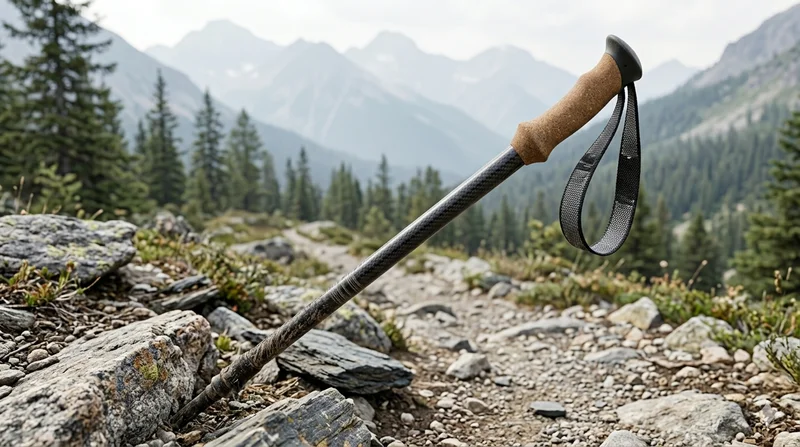
Carbon Fiber Trekking Pole
Lightweight carbon fiber trekking pole manufactured from high-grade carbon fiber tube. Weighs only 160g per pole while providing superior shock absorption and durability for hiking, trail running, and backpacking.
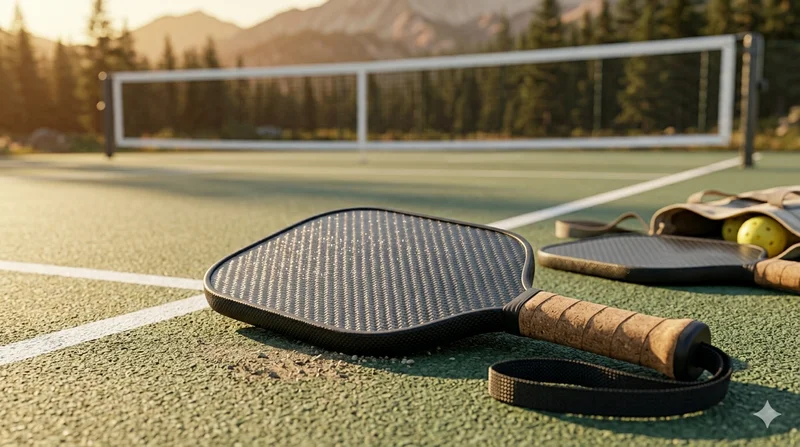
Carbon Fiber Pickleball Paddle
High-performance pickleball paddle with Toray T700 carbon fiber face and polypropylene honeycomb core. Delivers excellent power-to-weight ratio, spin generation, and vibration dampening for competitive play.

Square Carbon Fiber Tube — 3K Twill T700
Square cross-section carbon fiber tube manufactured with 3K twill weave for torsional strength. Preferred for structural frames, trusses, and support columns where rectangular geometry offers design flexibility.