Searching for carbon fiber manufacturing near me is usually the first step for a company that has outgrown prototype shops but is not ready for a full offshore supply chain. Local production offers faster iterations, easier quality control, no customs complexity, and face-to-face engineering collabo
Introduction
Searching for carbon fiber manufacturing near me is usually the first step for a company that has outgrown prototype shops but is not ready for a full offshore supply chain. Local production offers faster iterations, easier quality control, no customs complexity, and face-to-face engineering collaboration — advantages that matter more than the raw price gap when a part is still evolving. Yet the search often ends in frustration because composite manufacturing is fragmented: capabilities are distributed across small specialist shops, and few of them market themselves well enough to appear in a simple local search.
This article explains how to find and evaluate carbon fiber manufacturing near you, whether you are looking for local composite production, a carbon fiber factory near me, or a full-service partner with molding and finishing in one place. We cover the types of composite production partners you are likely to find locally, the capability questions that separate a genuine CFRP manufacturer from a reseller or a shop that only cuts and finishes imported stock, and the cost and lead-time comparisons that tell you when local production is the right call. The goal is to turn a vague search into a shortlist of qualified partners you can visit, audit, and test with real parts.
Carbon Fiber Manufacturing Near Me: Partner Types
Local carbon fiber manufacturing capabilities come in several distinct forms, and matching the right type to your stage of development saves both time and money. The four most common types you will encounter when looking for a CFRP manufacturer nearby are:
| Partner Type | Core Capability | Best For | Typical Lead Time | Cost Position |
|---|---|---|---|---|
| Prototype and R&D shops | Hand layup, vacuum bagging, small autoclave, CNC trimming | Design validation, one-off parts, low-rate pilot production | 1-3 weeks | Highest per part, no tooling commitment |
| Serial production facilities | Compression molding, RTM, prepreg layup, automated cutting | Production volumes from hundreds to thousands of parts per year | 4-12 weeks with tooling | Medium, tooling cost amortized |
| Process specialists | Filament winding, pultrusion, braiding, tape laying | Specific geometries and fiber architectures | 2-8 weeks | Process-dependent |
| Finishing and integration shops | Machining, bonding, painting, assembly | Converting raw laminate into finished assemblies | 1-4 weeks | Low per operation |
Most companies searching for carbon fiber manufacturing near me actually need a combination of local composite production and a specialist partner: a prototype shop for development, a production facility for volume, and a finishing shop for the final assembly steps. Visiting these partners in person is one of the strongest arguments for local sourcing — you can see the process, touch the parts, and build a working relationship that survives design changes.
What to Look for in a Local CFRP Manufacturer
Not every shop that advertises carbon fiber work has real manufacturing capability, and a CFRP manufacturer nearby still needs the same scrutiny as a distant one. Before you shortlist a candidate, verify these fundamentals during a facility visit or video walkthrough:
- In-house process control: Does the shop actually lay up, mold, and cure laminates on site, or does it subcontract the molding and only finish parts? In-house control of layup and cure is the difference between a manufacturer and an assembler.
- Cure equipment: Confirm the available oven or autoclave size, temperature range, and pressure capability. A shop with only a small oven cannot cure large parts or achieve aerospace-grade consolidation.
- Material handling: Look for temperature-controlled prepreg storage, documented fiber and resin lot traceability, and a clean layup environment. These details predict part quality better than any brochure.
- Quality system: ISO 9001 is the baseline; AS9100 for aerospace customers, ISO 13485 for medical, and IATF 16949 for automotive programs are the relevant higher certifications.
- Reference parts: Ask to see parts made for other customers in your industry. The finish, thickness uniformity, and dimensional accuracy of real parts tell you more than any capability statement.
A genuine local carbon fiber factory will be proud to show its process and open its records. If a shop resists facility visits, has no documented cure cycles, or cannot name the fiber and resin it uses, treat it as a trading or finishing operation and price its quotes accordingly.
Local vs. Offshore Sourcing: Making the Call
The decision between a local CFRP manufacturer and an offshore supplier is not a simple price comparison. Local production carries a per-part premium but buys capabilities that matter at different stages of a product's life. Offshore sourcing delivers the lowest material cost but adds lead time, minimum order quantities, and communication overhead. The comparison below summarizes the practical trade-offs:
- Development stage: Local wins. Iteration speed of days rather than weeks, no minimum order friction, and engineers can visit the shop when a design changes. Offshore tooling changes are slow and expensive.
- Established production: Offshore often wins on cost per part once volumes are stable, especially for commodity parts like pultruded tubes and standard plates where specifications are fixed.
- Custom and qualified parts: Local wins for aerospace, medical, and defense work where qualification, traceability, and on-site audits are requirements, not preferences.
- Mixed model: Many companies keep a local partner for prototypes, tooling trials, and low-volume custom work, while running stable high-volume parts through an offshore supplier. This dual strategy is common in the industry and usually offers the best total cost.
The tipping point between the two usually comes down to volume and specification stability. If the part design and volume are still changing month to month, the local premium buys the flexibility that offshore cannot offer. Once the part is frozen and volume is predictable, the economics shift.
How to Qualify a Local Partner with Test Parts
The fastest way to evaluate a local carbon fiber manufacturing partner is to give them a real part and measure the outcome. A structured qualification run — typically three to five parts from a drawing you control — reveals capability, communication, and quality control in a single cycle.
- Provide a complete drawing: Include dimensions, tolerances, fiber orientation, surface finish, and the applicable standard. Ambiguity in the drawing transfers directly into ambiguity in the part.
- Define acceptance criteria: Agree on dimensional checks, visual standards, and any mechanical tests before the run starts, and put them in writing.
- Measure consistency across parts: Three identical parts that vary by 0.1 mm tell you more than one perfect part. Batch consistency is the strongest predictor of production quality.
- Assess responsiveness: How quickly the partner flags problems, asks clarifying questions, and delivers test results is a preview of how the relationship will work at scale.
Companies that skip the qualification run discover problems later, at production volumes, when they are far more expensive to fix. A small test order is the cheapest insurance available when choosing a carbon fiber factory partner near you.
Frequently Asked Questions
How do I find carbon fiber manufacturing near me?
Start with industry directories such as CompositesWorld's supplier database, regional composite associations, and trade show exhibitor lists, then filter by your city or state. Search for specific capability terms rather than generic ones — "autoclave composite molding" or "filament winding" will surface real manufacturers that a search for "carbon fiber" might miss. Check whether candidates hold relevant certifications (ISO 9001, AS9100) and visit the shortlisted shops in person. Networking at local industry events is also effective, since many composite shops work primarily through referrals and never market to a general audience.
Is local carbon fiber manufacturing more expensive than importing?
Usually yes on a per-part basis, but the gap is smaller than it appears once total cost is counted. Imported parts carry shipping, customs, minimum order quantities, longer lead times, and communication overhead, all of which add real cost. For a part still in development, the local premium typically pays for itself in faster iterations and easier engineering collaboration. For a frozen design at high volume, offshore sourcing usually wins on unit cost. The practical answer depends on volume and specification stability, which is why many companies run a dual model: local for development and custom work, offshore for stable high-volume parts.
What should I check when visiting a carbon fiber factory?
Verify that molding and curing happen on site, not just finishing. Check the cure equipment — oven and autoclave size and temperature range — against your largest part. Look for temperature-controlled prepreg storage and documented material traceability. Review their quality system certificate and ask for reference parts from your industry. Watch the actual layup process and check housekeeping: a clean, organized layup area correlates strongly with part quality. Finally, ask about their lead time and minimum order quantities for your part size, and request a small test order before committing to volume.
Conclusion
Finding carbon fiber manufacturing near me is the right first move when a part is still evolving, when qualification matters, or when engineering collaboration will shorten your development cycle. Prototype shops, serial production facilities, process specialists, and finishing houses each play a distinct role, and most successful buyers combine local and offshore sourcing as volumes mature. Evaluate candidates on in-house process control, cure equipment, material handling, and quality systems, then qualify the shortlist with a small test order — the cheapest and most reliable way to predict production performance.
Whether you need a local production partner or an experienced offshore manufacturer, we work with customers around the world on custom carbon fiber parts, tooling, and serial production. Explore our manufacturing capabilities or contact our engineering team to discuss your part and get a qualified recommendation on the best sourcing route.
Related Articles
- Carbon Fiber Rods for Sale: Bulk Pricing and Wholesale Distribution
- Carbon Fiber Sheet Amazon: What to Buy Online vs Direct from Manufacturer
- Carbon Fiber Rod for Sale: In-Stock Sizes and Custom Cutting Services
- Carbon Fiber Tube Suppliers: Global Directory and Comparison
- Carbon Fiber Sheet for Sale: In-Stock Inventory and Custom Order Lead Times
- Carbon Fiber Sheet Supplier: Direct Factory Pricing and Custom Cut-to-Size Services
Interested in Our Products?
Contact our team for competitive pricing and technical specifications.
Get a QuoteRelated Products
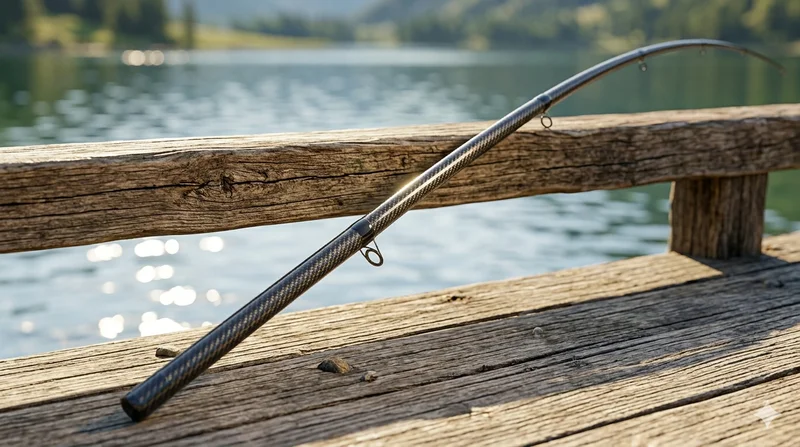
Carbon Fiber Fishing Rod Blank
High-quality carbon fiber fishing rod blank manufactured from multiple grades of Toray carbon fiber cloth. Available in a wide range of lengths, powers, and actions for freshwater and saltwater applications. Suitable for OEM rod building.

Carbon Fiber Plate — 3K Twill T700 3.0mm
Medium-thickness 3.0mm carbon fiber plate offering significantly higher load capacity while maintaining attractive 3K twill finish. Suitable for structural brackets, reinforcement plates, and load-bearing panels.

Carbon Fiber Plate — 3K Twill T700 1.5mm
Thin 1.5mm carbon fiber plate with 3K twill weave surface. Lightweight and stiff, commonly used for covers, panels, drone bodies, and applications requiring a premium aesthetic appearance.
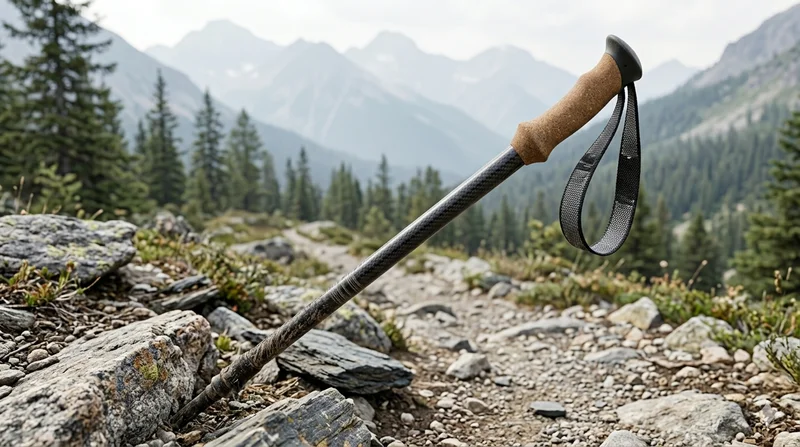
Carbon Fiber Trekking Pole
Lightweight carbon fiber trekking pole manufactured from high-grade carbon fiber tube. Weighs only 160g per pole while providing superior shock absorption and durability for hiking, trail running, and backpacking.

Square Carbon Fiber Tube — 3K Twill T700
Square cross-section carbon fiber tube manufactured with 3K twill weave for torsional strength. Preferred for structural frames, trusses, and support columns where rectangular geometry offers design flexibility.