Choosing a carbon fiber tow supplier is the first purchasing decision that shapes everything downstream, because tow is the raw form that gets wound, pultruded, woven or chopped before it ever becomes a part. This guide explains what a carbon fiber tow supplier actually ships — filament count, sizin
Introduction
Choosing a carbon fiber tow supplier is the first purchasing decision that shapes everything downstream, because tow is the raw form that gets wound, pultruded, woven or chopped before it ever becomes a part. This guide explains what a carbon fiber tow supplier actually ships — filament count, sizing chemistry, tensile grade and bobbin weight — with real commercial numbers, then walks through MOQ, pricing and lead time so you can compare offers from a carbon fiber tow supplier in China on the same basis as any other source.
Tow is a bundle of continuous filaments counted in thousands: 1K is one thousand filaments per strand, 12K is twelve thousand, 48K is forty-eight thousand. The count changes surface area, resin uptake, handling behavior and price per kilogram. If you buy carbon fiber tow without pinning down count, sizing and tensile grade, every later problem — poor wet-out, broken filaments on the winder, inconsistent laminate strength — turns into a dispute instead of a specification.
What a carbon fiber tow supplier actually ships
Every tow quotation is a bundle of five decisions. Get them wrong and the price comparison is meaningless.
| Parameter | Typical range | Why it matters |
|---|---|---|
| Filament count | 1K, 3K, 6K, 12K, 24K, 48K | Surface area, wet-out, downstream process |
| Tensile grade | Standard (T300 class), high strength (T700 class) | Strength per filament and cost per kg |
| Sizing type | Compatible with epoxy, polyester, vinyl ester, PA | Resin bonding and processing stability |
| Tensile strength | 3,500–4,900 MPa | Design allowables for winding and pultrusion |
| Bobbin weight | 1 kg, 5 kg, 10 kg cones or spools | Changeover time on your machine |
| Winding form | Cross-wound package, tubeless cake | Pay-off behavior at high line speed |
Sizing deserves special attention. An untinted, unsized tow will shed filaments on a creel and starve a pultrusion die of reinforcement; a tow sized for nylon will not bond to an epoxy matrix. A competent carbon fiber tow supplier asks which resin you run before quoting, not after the first shipment fails a pull test.
Choosing a carbon fiber tow supplier in China
China produces the majority of the world's carbon fiber tow, which gives buyers leverage but also means the field ranges from integrated precursor producers to small re-spooling workshops. Use these checks before you commit.
- Ask where the precursor came from: a real carbon fiber tow supplier can name the precursor line and the carbonization process behind the tensile data, not just the brand on the box.
- Request a tensile test report per batch: strength, modulus and elongation measured to a standard method, traceable to a lot number that also prints on the bobbin label.
- Check sizing compatibility in writing: specify your resin system in the purchase contract so a substitution does not surface as a bonding failure three months later.
- Verify re-spooling capability: consistent tension and package build decide whether your winder sees uniform pay-off or mid-run breaks.
- Confirm grade stability over the contract: ask for three consecutive lot certificates before locking annual volume.
A trading company can still be a good partner for first orders and mixed volumes, but you should know which model you are buying from: only the factory can re-run a batch when the data drifts.
MOQ, pricing and lead time when you buy carbon fiber tow
Commercial terms vary more than technical ones. Use this table as a sanity check when you compare offers to buy carbon fiber tow.
| Order type | MOQ | Indicative lead time |
|---|---|---|
| Stock grade, standard count (12K/24K) | 100–300 kg | 1–2 weeks |
| Custom sizing or 1K/3K fine count | 300–500 kg | 3–5 weeks |
| High-strength grade (T700 class) | 200–500 kg | 3–6 weeks |
| Trial lot for qualification | 20–50 kg | 1–2 weeks plus testing |
Price follows grade first, count second and volume third. High-strength tow typically costs 30–60% more than a standard grade at the same count, and going from 24K to 12K adds cost because more filament surface must be sized and handled. Freight matters less than storage: tow dislikes moisture and UV exposure, so packs arrive sealed with desiccant and should stay in their wrappers until the creel is loaded.
A carbon fiber tow supplier factory will also quote differently depending on package form. Cone-wound packages for filament winding and chop-ready spools for molding compound come off different lines, and asking for the wrong form is the fastest way to get a price you cannot use.
Quality checks before the first shipment
Run these checks on the trial lot before you release production volume.
- Visual package inspection: no broken filaments at the cake surface, no banding or loose wraps that will snag on the creel.
- Count verification: weigh a known length and compare filament count against the certificate — mismatch here invalidates every downstream calculation.
- Wet-out trial: run a short pull or wind sample in your own resin and inspect for dry spots and filament float.
- Label traceability: lot number, grade, sizing code and weight on every bobbin must match the shipping documents.
- Storage audit: confirm the supplier stores sealed packs indoors away from direct sunlight and floor moisture.
ISO 9001 or IATF 16949 certification tells you the process is documented; it does not prove the bobbins you received match the bobbins you approved. Always ask for the lot certificate that ships with the material, and keep it with your own incoming-inspection record.
Frequently Asked Questions
What is the difference between carbon fiber tow and carbon fiber yarn?
Tow is a bundle of untwisted continuous filaments held together by sizing alone, while yarn is twisted for textile machinery. Most winding, pultrusion and weaving operations prefer tow because twist introduces crimp that reduces translated strength; yarn suits knitting and braiding where cohesion at high speed matters more than uncrimped fiber alignment.
Can a carbon fiber tow supplier slit or rewind to my package format?
Yes, if you specify the target package, tension and bobbin core in the contract. Rewinding is where package quality shows up: uneven tension produces soft spots that stall a high-speed winder, so ask for a sample package and run it on your own machine before agreeing to a production format change.
How should carbon fiber tow be stored between deliveries?
Keep sealed packs indoors at stable temperature, off the floor and away from windows; ultraviolet light and moisture both degrade sizing before you ever load the creel. Rotate stock first-in first-out, and do not open a pack until the full bobbin set is going onto the machine in that shift.
Conclusion
A carbon fiber tow supplier is judged on five things: filament count discipline, grade consistency, sizing matched to your resin, package quality and traceable lot data. Pin those down in your RFQ, run a qualification lot on your own equipment, and demand the tensile report per batch before you commit annual volume. If you are ready to compare specifications side by side, browse the current carbon fiber products catalog or contact the technical sales team with your count, resin system and annual tonnage — you will get a written spec sheet back, not just a price.
Part of topic
Related Articles
- Carbon Fiber Rod Wholesale Price: Market Benchmarks and Drivers
- Carbon Fiber Plate Wholesale Price: Market Benchmarks and Drivers
- Carbon Fiber Tube Wholesale Price: Market Benchmarks and Drivers
- Carbon Fiber Sheet Wholesale Price: Market Benchmarks and Drivers
- Carbon Fiber Rod Distributor: Stock, Pricing, and Sourcing Guide
- Carbon Fiber Tube Distributor: Stock, Pricing, and Sourcing Guide
Interested in Our Products?
Contact our team for competitive pricing and technical specifications.
Get a QuoteRelated Products

Round Carbon Fiber Tube — 3K Plain Weave T700
Standard round carbon fiber tube manufactured from Toray T700 grade fiber with 3K plain weave. Offers balanced strength and stiffness for general industrial applications including robotics, automation, sports equipment, and aerospace structures.

Carbon Fiber Pickleball Paddle
High-performance pickleball paddle with Toray T700 carbon fiber face and polypropylene honeycomb core. Delivers excellent power-to-weight ratio, spin generation, and vibration dampening for competitive play.

Round Carbon Fiber Tube — UD Unidirectional T700
Unidirectional (UD) round tube with all fibers aligned axially for maximum longitudinal stiffness. Ideal for applications requiring high bending rigidity with minimal weight, such as shafts, struts, and structural reinforcements.

Custom Carbon Fiber Bicycle Frame
Full-custom carbon fiber bicycle frame manufactured to your geometry specifications. We produce road, gravel, mountain, and track frames using high-modulus carbon fiber layups optimized for each riding discipline. Monocoque construction with internal cable routing, available with disc or rim brake mounts.
Carbon Fiber Trekking Pole
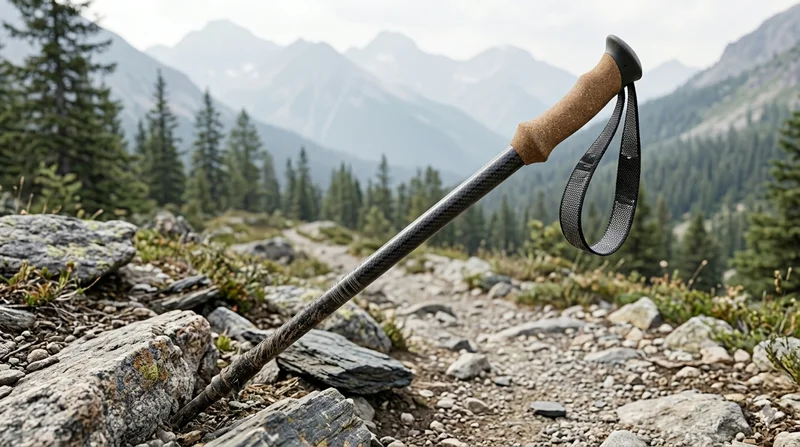
Lightweight carbon fiber trekking pole manufactured from high-grade carbon fiber tube. Weighs only 160g per pole while providing superior shock absorption and durability for hiking, trail running, and backpacking.