A carbon fiber tapered tube manufacturer sells a stiffness gradient, not a tube. A carbon fiber tapered tube manufacturer who quotes a single wall thickness will deliver a part that is heavy at the tip and weak at the butt, because the whole point of a taper is that wall schedule and winding angle c
Introduction
A carbon fiber tapered tube manufacturer sells a stiffness gradient, not a tube. A carbon fiber tapered tube manufacturer who quotes a single wall thickness will deliver a part that is heavy at the tip and weak at the butt, because the whole point of a taper is that wall schedule and winding angle change along the length. The specification you send therefore needs a taper ratio, two end diameters and a wall at three stations at minimum.
Tapered sections win wherever the bending moment falls faster than the diameter: a golf shaft, an arrow, a drone boom, a tent pole or a fishing rod all carry a large moment at the butt and almost none at the tip. Matching the material to that moment curve removes mass exactly where it does no work, and a tapered mandrel releases almost by itself, which makes the tooling cheaper than an oval or square mandrel despite the extra winding complexity.
What a carbon fiber tapered tube manufacturer actually ships
Ask for a table with both ends, the taper ratio and the wall at three stations. Anything less and the quotation describes a different part.
| Parameter | Typical range | What it controls |
|---|---|---|
| Small end diameter | 6 mm to 20 mm | Tip stiffness and fitting size |
| Large end diameter | 20 mm to 60 mm | Butt stiffness and joint land |
| Taper ratio | 1:8 to 1:25, or 0.4 to 3 degrees included | How fast stiffness falls toward the tip |
| Wall schedule | 0.8 mm at tip to 3.5 mm at butt | Local crush, spine and mass distribution |
| Winding angle | 15 to 45 degrees to the axis | Axial stiffness versus hoop and torsion |
| Straightness | 0.5 mm per meter, tighter for shafts | Tracking, spine consistency, assembly |
Two numbers decide whether the part works: the wall at the tip and the wall taper rate between stations. A tip wall of 0.8 mm is enough for a fishing rod and far too thin for a seatpost, and a wall that steps down too early creates a hard stiffness transition that becomes a fatigue crack origin under repeated bending.
Buy carbon fiber tapered tube: taper ratio and tip stiffness
Taper ratio is usually quoted as a diameter change per unit length, for example 1:12. The table below holds the butt diameter and tip load constant and shows how the ratio moves tip deflection and mass.
| Taper ratio | Relative tip deflection | Relative mass | Typical use |
|---|---|---|---|
| 1:8 | 0.82 | 1.08 | Stiff boom, short strut |
| 1:12 | 1.00 | 1.00 | Drone arm, tripod leg |
| 1:20 | 1.34 | 0.92 | Fishing rod, tent pole |
| 1:25 | 1.56 | 0.88 | Fine tip rod, antenna whip |
The table explains why a customer who asks for a lighter part and a stiffer part in the same message cannot have both. Moving from 1:12 to 1:20 saves 8 percent of mass and gives up 34 percent of tip stiffness. A competent carbon fiber tapered tube manufacturer will put that trade in front of you before cutting a mandrel, because it is the only decision that cannot be reversed later.
Choosing a carbon fiber tapered tube manufacturer in China
Tapered capacity overlaps with fishing rod and golf shaft production, so the same shops often quote both a consumer sports part and an industrial boom. Five checks tell you which discipline you are buying.
- Mandrel taper matched to your ratio: a tapered mandrel is ground to a specific ratio and cannot be re-used for a different one, so ask for the mandrel drawing and the achieved ratio.
- Wall at three stations: tip, mid and butt must each have a target and a tolerance, with the measurement method named.
- Winding angle schedule: the angle at the butt and at the tip, because a constant angle over a changing diameter produces a stiffness curve nobody planned.
- Spine and straightness data: for shafts, ask for spine spread across a production lot, not a single best sample.
- Fatigue evidence: a three-point bending cycle test at the stiffness transition, since that is where tapered parts actually fail.
A supplier who only quotes a tip diameter and a butt diameter is quoting a cosmetic taper. The winding schedule is what turns a cone into a spring, and it is the first thing to demand in writing.
MOQ, pricing and lead time when you buy carbon fiber tapered tube
Tapered tube is cheaper to tool than oval tube because the mandrel self-releases, but the winding time per part is longer, so the cost sits in labour rather than tooling.
| Order type | MOQ | Indicative price | Lead time |
|---|---|---|---|
| Stock taper, wound | 100 pieces | USD 12 to 25 per piece | 10 to 15 days |
| Custom ratio, wound | 300 pieces | USD 18 to 38 per piece | 18 to 28 days plus tooling |
| Multi-station wall schedule | 500 pieces | USD 25 to 55 per piece | 22 to 32 days plus tooling |
| Painted, decal, assembled | 500 pieces | Add USD 3 to 15 per piece | Add 6 to 10 days |
The tapered mandrel usually costs USD 800 to 2500, well below an oval or square mandrel of the same length. That is why small runs are viable here and not in oval tube, and why a first order of 100 pieces can be an honest production order rather than a sample.
Auditing a carbon fiber tapered tube manufacturer factory
Look for the taper grinder and the wall mapping sheet. If neither is visible, the plant is buying finished tube and reselling it.
- Mandrel grinding record: each ratio should map to a ground mandrel with a measured profile and a re-grind history, because wear changes the ratio silently.
- Station wall map: tip, mid and butt thickness recorded per part, since the wall schedule is the product.
- Winding angle log: angle and pass count at each station, with the machine program archived for re-runs.
- Straightness and spine station: a roller or laser check on full length, and a spine tester for shaft products, both recorded per lot.
Ask what happens to a part that misses the wall at mid-station. A plant that sorts and re-maps is measuring; a plant that ships it and calls the taper cosmetic is not, and the difference shows up as field failures two seasons later.
Frequently Asked Questions
Can one tapered mandrel serve several taper ratios?
No. A tapered mandrel is ground to a fixed profile, so a 1:12 mandrel cannot produce a 1:20 tube without machining a new profile. That is why a custom ratio carries tooling, and why buyers consolidating several ratios should expect one mandrel per ratio even when the end diameters are identical.
Why does a tapered tube cost less to tool than an oval tube?
Because a taper releases itself. As soon as the cured tube is pushed toward the small end, the clearance opens along the whole length, so extraction needs no split mandrel and no hydraulic puller. Oval and square mandrels grip along flats and need extra extraction hardware, which is where their tooling premium comes from.
How do I specify the wall schedule without over-constraining the supplier?
Give the wall at three stations with tolerances plus a minimum stiffness target at the tip, and let the supplier choose the ply drops between them. Over-specifying every station removes the winder's freedom to place ply drops where the bending moment allows, which usually makes the part heavier for the same stiffness.
Conclusion
A carbon fiber tapered tube manufacturer is judged on the taper ratio, the wall at three stations, the winding angle schedule and the straightness or spine data across a lot. Fix those in your RFQ, ask for the mandrel grinding record and a fatigue test at the stiffness transition, and confirm the ratio before tooling is cut, because it is the one decision that cannot be changed later. To compare tapers and finishes side by side, browse the current carbon fiber products catalog or contact the technical sales team with your end diameters, taper ratio, tip load and annual quantity, and you will receive a written specification sheet rather than a bare price.
Part of topic
Related Articles
- Carbon Fiber Rod Wholesale Price: Market Benchmarks and Drivers
- Carbon Fiber Plate Wholesale Price: Market Benchmarks and Drivers
- Carbon Fiber Tube Wholesale Price: Market Benchmarks and Drivers
- Carbon Fiber Sheet Wholesale Price: Market Benchmarks and Drivers
- Carbon Fiber Rod Distributor: Stock, Pricing, and Sourcing Guide
- Carbon Fiber Tube Distributor: Stock, Pricing, and Sourcing Guide
Interested in Our Products?
Contact our team for competitive pricing and technical specifications.
Get a QuoteRelated Products
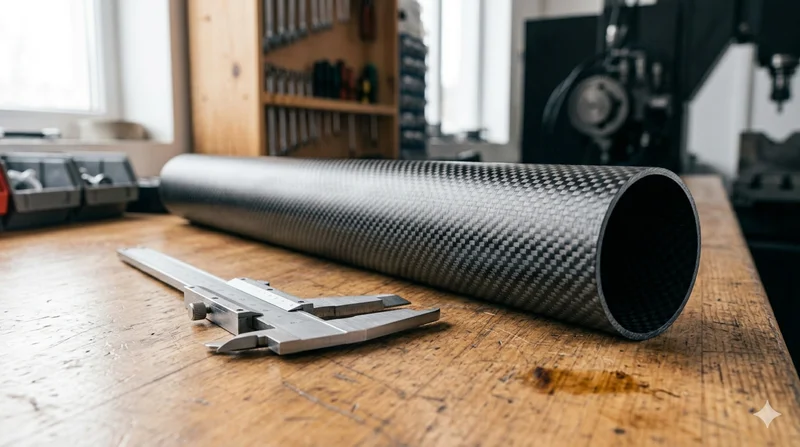
Round Carbon Fiber Tube — 3K Plain Weave T700
Standard round carbon fiber tube manufactured from Toray T700 grade fiber with 3K plain weave. Offers balanced strength and stiffness for general industrial applications including robotics, automation, sports equipment, and aerospace structures.
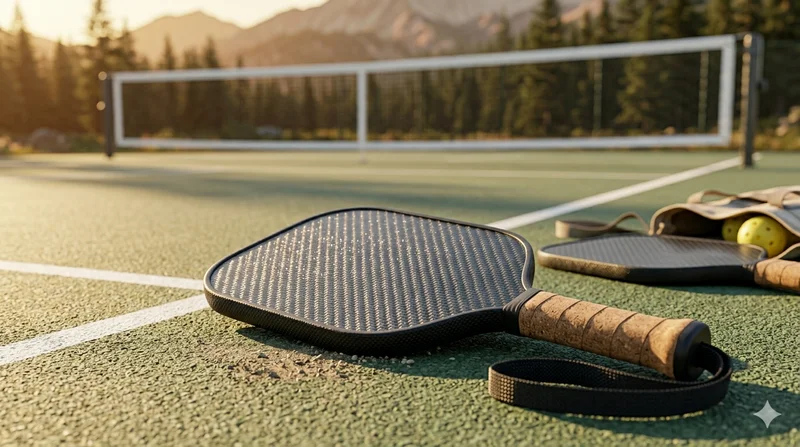
Carbon Fiber Pickleball Paddle
High-performance pickleball paddle with Toray T700 carbon fiber face and polypropylene honeycomb core. Delivers excellent power-to-weight ratio, spin generation, and vibration dampening for competitive play.
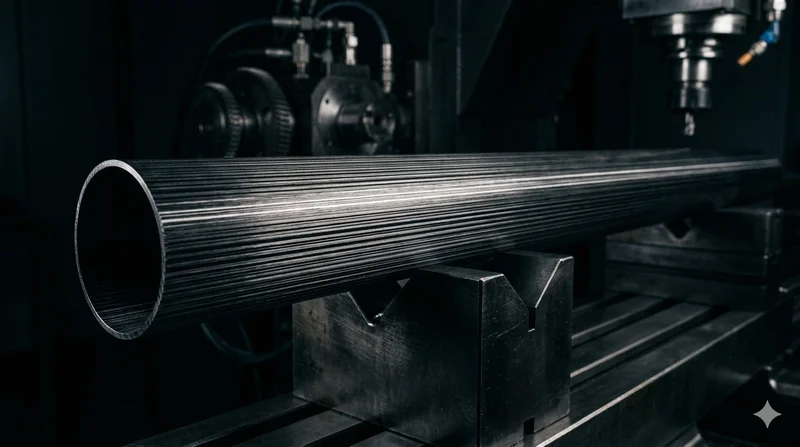
Round Carbon Fiber Tube — UD Unidirectional T700
Unidirectional (UD) round tube with all fibers aligned axially for maximum longitudinal stiffness. Ideal for applications requiring high bending rigidity with minimal weight, such as shafts, struts, and structural reinforcements.

Custom Carbon Fiber Bicycle Frame
Full-custom carbon fiber bicycle frame manufactured to your geometry specifications. We produce road, gravel, mountain, and track frames using high-modulus carbon fiber layups optimized for each riding discipline. Monocoque construction with internal cable routing, available with disc or rim brake mounts.
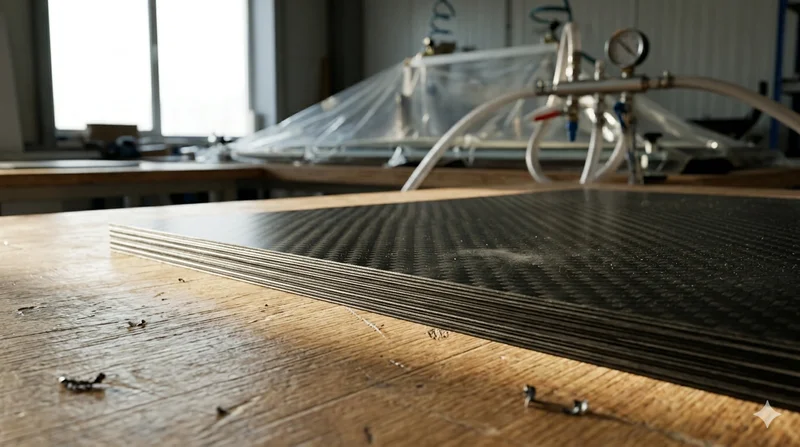
Carbon Fiber Plate — 3K Twill T700 3.0mm
Medium-thickness 3.0mm carbon fiber plate offering significantly higher load capacity while maintaining attractive 3K twill finish. Suitable for structural brackets, reinforcement plates, and load-bearing panels.